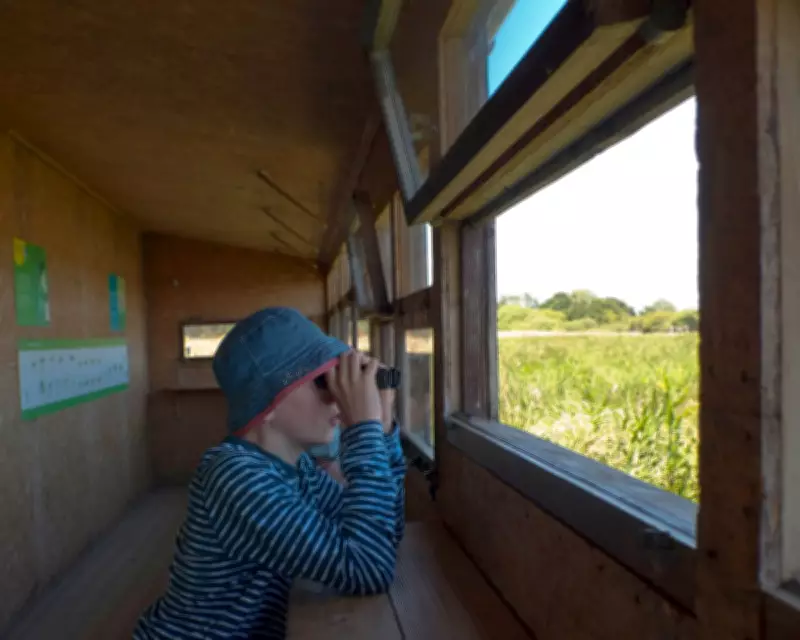
Birdwatching has become the second fastest growing hobby among young people in Britain, according to a multiyear study of more than 24,000 people. The research, conducted by Fifty5Blue and published by the RSPB, reveals that nearly 750,000 Generation Z individuals (aged 16 to 29) in Britain regularly enjoy watching birds, marking a 1,088% increase since 2018.
Rising Popularity Across Generations
The hobby has seen a 47% increase overall across all age groups over the past eight years. Among millennials, birdwatching has risen by 216%, while Generation X has experienced a 66% increase. This surge indicates that birdwatching is no longer considered a niche or old-fashioned pastime, but is attracting a younger and more diverse crowd.
Personal Stories and Social Media Influence
Jess Painter, 24, a member of the RSPB’s Youth Council, noted that more young people are taking up birdwatching, with knowledge and passion shared through social media. “When I’m watching birds, I’m not thinking about anything else – it’s a moment of peace and a way to reconnect with nature, and with myself,” she said. “By taking a moment to be curious, to watch, listen and learn, you open yourself up to endless small moments of wonder.”

Molly Brown, 29, a wildlife adviser at the RSPB, added: “It’s brilliant to see so many young people choosing to get into birdwatching. This new research shows that watching birds is no longer a niche or old-fashioned pastime and is attracting a younger, more diverse crowd. It’s something that everyone can do, no matter how much or little they know about birds. It’ll inspire you to get outside and discover beautiful green spaces, exercise and generally slow down, which everyone can benefit from.”
International Dawn Chorus Day
The research was published ahead of International Dawn Chorus Day, which falls on the first Sunday in May. This day marks the peak of spring when early morning birdsong reaches its crescendo as birds breed and defend their territories. The RSPB is encouraging people to set their alarms and wake up earlier than usual to enjoy the song.
“Most of us are asleep when the dawn chorus happens, but it’s truly a sound worth waking up for,” said Brown. “There’s no right way to experience it, whether you listen from your bedroom window, walk along a riverbank or through a woodland, or visit a nature reserve. The most important thing is that you’re ready to hear it around 45 minutes before dawn, when the air is still and the light is low.”
Health Benefits and Expert Insights
Amir Khan, a doctor and broadcaster who serves as president of the RSPB, highlighted the mental health benefits of birdsong. “Hearing birdsong, especially during the dawn chorus when they’re at their loudest and most beautiful, can produce more serotonin and make us feel good,” he said. “For millennia, humans have evolved alongside nature, so it’s inherent that we want to connect with it. There’s even a scientific term for this theory, the biophilia hypothesis, which means we actively seek out nature, and a perfect example of this is listening to birdsong – hearing a blackbird or a song thrush singing is one of the purest joys of life.”
A recent study also found that watching birds may even slow age-related cognitive decline, adding to the list of benefits associated with this increasingly popular hobby.