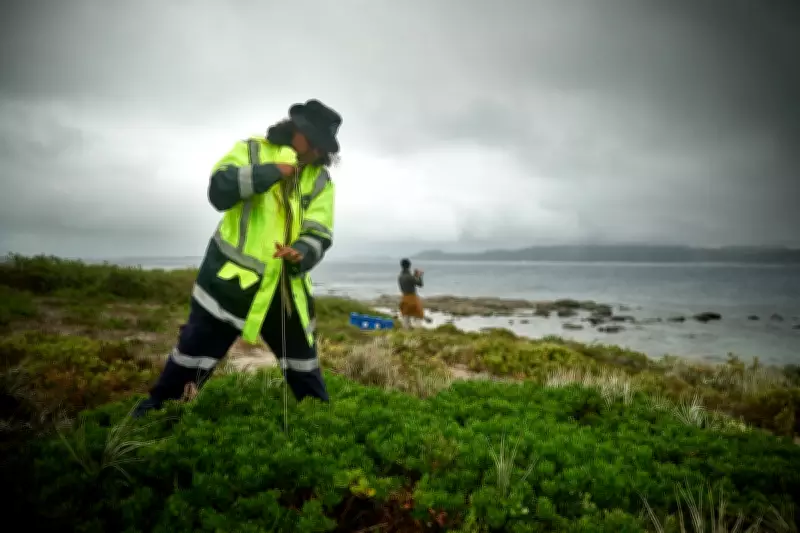
Indigenous groups from Australia and Alaska have joined forces to track the migration of the short-tailed shearwater, a seabird that travels vast distances across the Pacific Ocean. This collaboration blends traditional ecological knowledge with modern tracking technologies, offering new insights into the bird's behavior and the health of marine ecosystems.
Traditional Knowledge Meets Technology
The project involves Yolngu people from northern Australia and Yup'ik communities from Alaska, who have long observed these birds. By attaching small tracking devices to the shearwaters, researchers can monitor their movements in real time. The data reveals that the birds travel up to 15,000 kilometers annually, crossing international borders and linking distant ecosystems.
Cultural Significance
For Indigenous communities, the short-tailed shearwater holds deep cultural significance. In Australia, the bird is known as the muttonbird and is traditionally harvested for food and oil. In Alaska, it is a key species in Yup'ik lore. The tracking project helps preserve this cultural heritage while contributing to conservation efforts.

Conservation Implications
The short-tailed shearwater faces threats from climate change, overfishing, and pollution. Understanding its migration routes is crucial for protecting its habitats. The collaboration also empowers Indigenous communities to participate in global environmental monitoring, blending ancestral wisdom with scientific rigor.
This initiative is part of a broader trend of integrating Indigenous knowledge into mainstream science, recognizing its value for addressing complex environmental challenges. The success of the project could inspire similar partnerships worldwide, highlighting the importance of cross-cultural cooperation in conservation.