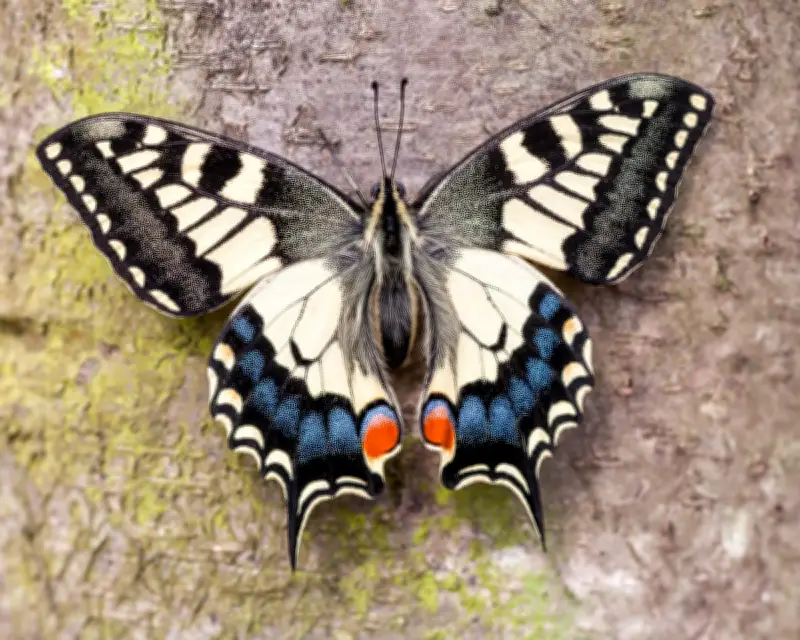
The endangered British swallowtail butterfly, Papilio machaon britannicus, has been a distinct subspecies for at least 200,000 years, according to a new genetic study published in Insect Conservation and Diversity. This finding challenges previous estimates that the butterfly developed its distinctive form only 8,000 years ago, after the flooding of Doggerland confined it to the wetlands of eastern England.
Genetic distinctiveness revealed
Whole-genome sequencing of swallowtail populations across Europe revealed that britannicus is a wetland specialist that may have once occurred much more widely in north European wetlands. The separation from its continental cousins occurred between 200,000 and 1.7 million years ago. The study found some evidence of inbreeding in britannicus but concluded that its surviving populations are not suffering from damaging mutations.
Conservation implications
The study is likely to transform conservation approaches to the swallowtail in Britain. Some butterfly experts had recently argued that the continental swallowtail, Papilio machaon gorganus, which is more common and feeds on a variety of plants including fennel and wild carrot, could be introduced into Britain, potentially hybridising britannicus out of existence. However, Mark Collins, president of the Swallowtail and Birdwing Butterfly Trust and a co-author of the paper, said the genetic distinctiveness of britannicus makes it worthy of renewed conservation effort.
“We’re looking at a relict population in the Norfolk Broads that’s not just a relict for Britain but a relict from a once much wider distribution in wetlands across Europe,” Collins said. “Britannicus is part of our own natural heritage, it’s protected by law for good reason because it’s a unique thing, and we should not allow it to be wiped out.”
Threats from climate change
Britannicus is found nowhere else in Europe and is vulnerable to extinction because global heating is causing rising sea levels that threaten its freshwater wetland habitats. In the wild, the caterpillars of britannicus will only reliably eat a rare wetland plant, milk parsley, which is why the butterfly is so scarce in Britain. Both plant and butterfly are threatened by rising seas causing the salination of the Norfolk Broads, England’s largest freshwater wetland. With most of Britain’s breeding populations living at or below sea level, and salty water rapidly killing milk parsley, the species will need to be translocated to new wetland sites protected from rising seas in the longer term.
Future outlook
Meanwhile, global heating is enabling the continental swallowtail to more regularly reach Britain. It is regularly seen in Kent and Sussex and often successfully breeds in these counties during fine summers. While some lepidopterists believe it is inevitable that the continental subspecies will eventually meet britannicus and hybridise it out of existence, Collins said britannicus would survive in wetlands if given a helping hand.
“There’s every chance that the specialist wetland subspecies could survive into the future with the general swallowtail species, gorganus, flying around the wider countryside,” he said. “Hybridisation may occur on the fringes but britannicus could endure if we preserve our wetlands.”
Collins added: “We know now we are dealing with a distinctive butterfly that must be conserved. We need to urgently identify the best sites to make sure we can grow milk parsley there and introduce the butterfly and it will thrive, whether that’s Lakenheath in Suffolk, Shapwick in Somerset or sites in Yorkshire. That’s a project we have in our sights.”