
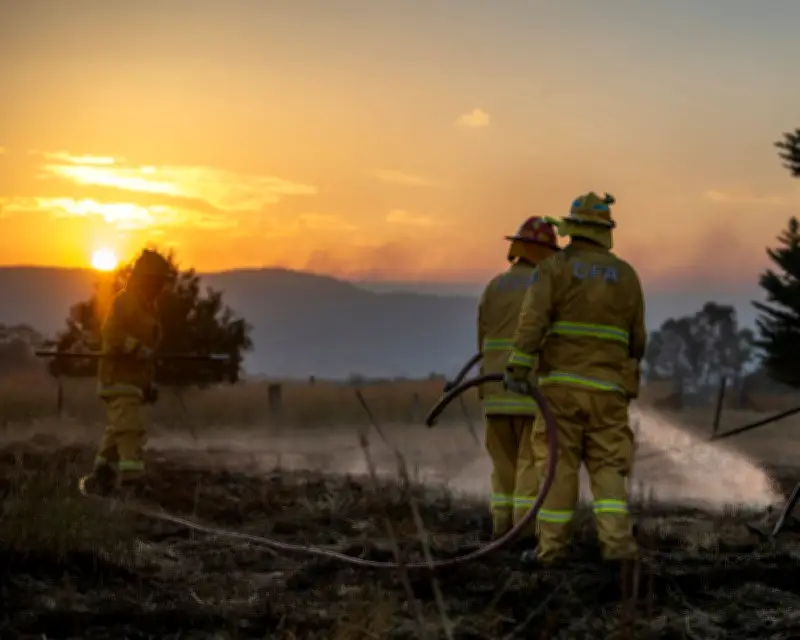
Australia's next summer is not guaranteed to be the hottest on record, but forecasters warn it is looking increasingly likely, following an unusually warm start to winter that has already broken temperature records across many parts of the country.
Record-breaking winter warmth
Many areas in southern Australia have experienced record-breaking early winter maximum and minimum temperatures. Sydney and Melbourne recorded their warmest-ever starts to winter, with daily observations showing above-average June temperatures almost every day of the month. Adelaide also saw above-average June temperatures in its first three weeks, while Hobart and Canberra had mild starts with temperatures well above normal. Perth was the only southern capital with typical June temperatures so far.
According to Milton Speer, visiting fellow at the School of Mathematical and Physical Sciences at the University of Technology Sydney, and Lance M Leslie, professor at the same school, this warm start is part of a global trend of extreme and unseasonable temperatures caused by global heating. They note that the world is experiencing unseasonably high temperatures, including the early summer heatwave in western Europe and parts of Asia.
Outlook for the rest of winter
The Bureau of Meteorology's seasonal outlooks indicate that abnormally warm conditions are likely to continue for at least the coming weeks, with long periods of dry weather expected, especially in late winter and spring, following the recent El Niño development. However, infrequent cold polar outbreaks can still impact southern Australia due to jet stream waviness south of the continent.
The 2026 Australian ski season has started poorly, with unfavourable outlook for sufficiently deep snow cover, though one or two unexpected heavy snowstorms could produce a major turnaround.
Global context of extreme heat
The current conditions in Australia exemplify a worldwide trend of unseasonably high temperatures. In Europe, an early summer heatwave produced record June maximum temperatures. On 26 June, the UK recorded its hottest-ever June day at 37.3°C, surpassing the previous record of 36.1°C set in 1976. Much of France, Spain, Italy and Germany reached or exceeded 40°C, with high humidity levels.
Speer and Leslie explain that this extreme heat is due to accelerated global warming since the 1990s caused by human-made climate change. The United Nations predicts hot and cold extremes in nearly all inhabited regions with increasing global warming. Their research, published earlier this year, confirmed that unseasonable warmth is due to the warming of Earth's atmosphere and oceans, which causes changes in large-scale southern hemisphere atmospheric circulation patterns and amplifies the impacts of known climate drivers.
Likelihood of a record-breaking Australian summer
Forecasters warn that south-east Australia should expect hotter, drier conditions in this El Niño year, a combination that suggests record heatwaves, droughts and extreme bushfire danger are likely. Melbourne is particularly vulnerable to dry weather due to low dam levels; its catchment level is at 64% and falling, the lowest since the Tinderbox drought of 2017–19. Daily observational data shows Melbourne missed the rain that replenished other southern capital cities in autumn and spring, as it lies in the rain shadow of the Great Dividing Range.
However, there is still a possibility that Australia's summer won't break records. An El Niño does not always generate extreme temperatures, dry conditions and fire weather. Also, the southern annular mode, a climate driver that can influence rainfall and temperature, might bring more cold fronts. Speer and Leslie conclude that while extreme heat might not occur in late spring or early summer, the current trends make it look likely.



