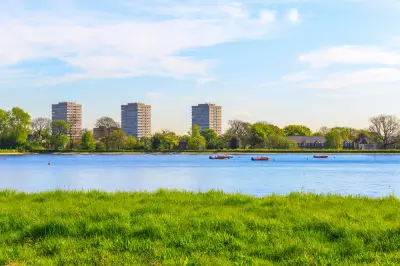
The Lincoln Memorial reflecting pool in Washington DC has been in the news since April when President Trump vowed to renovate it and paint it 'American flag blue' by 4 July. Despite stripping, cleaning, coating and refilling the pool, algae returned within days. This persistent problem has plagued the pool for decades.
Why Algae Blooms Occur
Algae blooms happen when nutrients like phosphorus and nitrogen are present in warm, shallow water. The reflecting pool, built in the 1920s, is only 18 inches deep and receives sunlight, creating ideal conditions. Dr Linda May, a freshwater ecologist at the UK Centre for Ecology & Hydrology, explains that algae thrive in such environments. 'The pool is essentially a giant petri dish,' she says.
Challenges in Tackling Algae
Removing algae is difficult because it can regrow from spores or residual cells. The recent renovation involved draining, scrubbing, and applying a blue coating, but nutrients remained in the water and sediment. According to Dr May, 'Unless you remove the nutrients, the algae will come back.'

What Trump Could Try Next
Options include using algaecides, installing a filtration system, or adding plants that compete for nutrients. However, these solutions are costly or may alter the pool's historic appearance. Dr May suggests that 'a combination of methods, such as reducing nutrient input and using barley straw, might help.' The pool continues to be a metaphor for the challenge of managing natural systems.