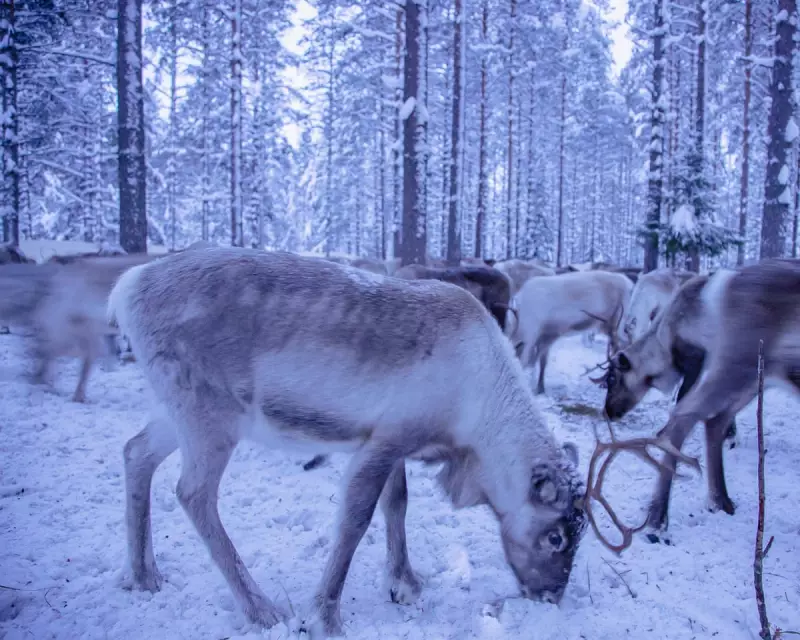
Reindeer, the iconic species of the frozen north, are facing an unexpected and severe threat from a warming climate. While they are superbly adapted to dig through deep snow for food, new research reveals that increasing winter rain is creating impenetrable ice layers, locking away their sustenance and causing a worrying drop in birthrates.
The Icy Paradox of a Warming Arctic
For centuries, reindeer have survived the brutal Arctic winter by using their specially adapted, wide hooves to scrape away snow. This reveals the lichen and moss that form their crucial winter diet. However, climate change is now undermining this survival strategy in a counterintuitive way.
As the Arctic warms, winters are experiencing more frequent rainfall instead of snow. When this rain falls onto existing snow cover, it melts the surface and then refreezes, forming solid layers of ice. This ice crust acts as a formidable barrier, preventing reindeer from reaching the vital vegetation underneath.
Data Links Weather Shifts to Herd Declines
Scientists have meticulously compared climate records dating back to 1960 with birth statistics from reindeer herds in Norway and Finland. The correlation is clear and concerning. Summers that follow winters with a high number of 'rain-on-snow' events consistently show lower reindeer birthrates.
The research, presented at the American Geophysical Union's annual conference in New Orleans in December, confirms these problematic weather events are not only becoming more common but are also starting earlier in the season. Furthermore, they are spreading into interior Arctic regions that were previously less affected.
Competition and Conservation in a Changing Landscape
The problem is exacerbated in areas with dense reindeer populations. With food access severely restricted by ice, competition for the remaining, scarce foraging grounds intensifies, putting additional strain on the herds.
These critical findings are more than just an ecological warning; they offer a practical path forward for conservation and herding communities. The data can help inform land-use decisions, allowing herders winter access to regions historically less impacted by rain-on-snow events. This kind of adaptive management may be key to safeguarding reindeer populations as the Arctic climate continues to evolve in unpredictable ways.
The plight of the reindeer stands as a stark indicator of how interconnected and fragile Arctic ecosystems are. A shift from snow to rain, driven by global warming, is having a direct and measurable impact on the survival of one of the region's most celebrated species.