
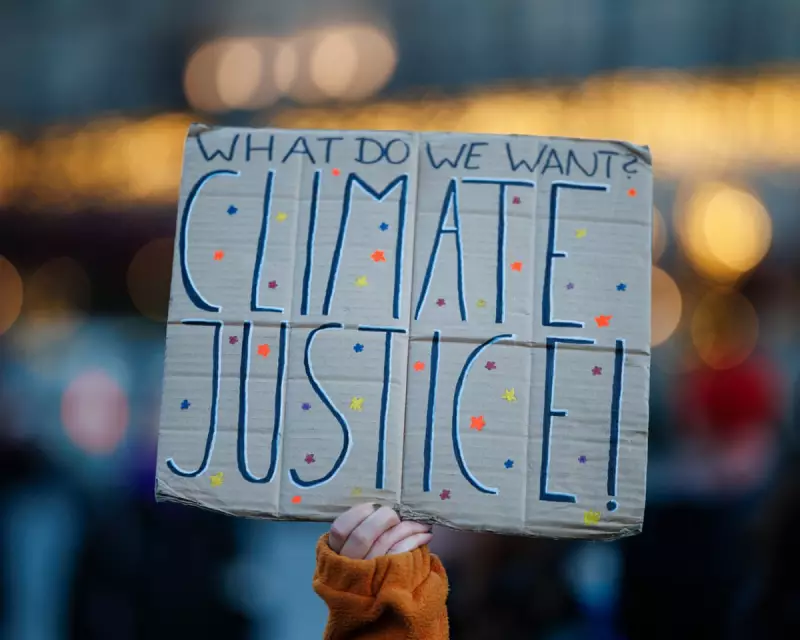
The year 2025 has proven to be a watershed moment for climate justice, with courts across the globe delivering a series of groundbreaking rulings that have forced tangible changes upon both governments and major corporations. This surge in successful climate litigation, marking a decade since the historic Urgenda case in the Netherlands, is creating a formidable new legal architecture for environmental protection.
Fossil Fuel Projects Halted and Scrapped
The legal year began powerfully when the Scottish Court of Session ruled the UK government's approval of the Rosebank and Jackdaw North Sea oil and gas fields illegal. The court found the government failed to account for emissions from burning the extracted fuels, a decision heavily influenced by a 2024 Supreme Court ruling. This precedent also led to the collapse of plans for a new coal mine in Whitehaven, Cumbria.
In a significant victory in the Southern Hemisphere, plans for Brazil's largest coal plant were formally scrapped in February. The Nova Seival plant and Guaíba mine, opposed for years by civil society, were abandoned by developer Copelmi after a court suspended its licences in 2022 for breaching Brazil's climate duties.
Similarly, in New South Wales, approval for a major coalmine expansion was annulled in July. The Court of Appeal found the state's planning commission failed to consider the project's full 'Scope 3' emissions when the coal is burned overseas.
The trend continued into November, when a Norwegian court declared licences for three North Sea oilfields—Breidablikk, Yggdrasil, and Tyrving—illegal. The Borgarting Court of Appeal upheld a challenge by Greenpeace Nordic, stating the approvals were granted without proper consideration of their full climate impacts.
Corporations Held Accountable for Green Claims
2025 also saw a major crackdown on corporate greenwashing. In a landmark Australian case, EnergyAustralia settled a lawsuit in May brought by the group Parents for Climate. The company admitted carbon offsets used to market 'carbon neutral' products did not equate to real emissions cuts and apologised to 400,000 customers.
Tech giant Apple was forced to scale back its environmental marketing after a Frankfurt court ruled in August it could not call its Apple Watch 'carbon neutral'. The court agreed with claims that the supporting forestry projects were not long-term. Apple subsequently stopped using the term in marketing new watches globally.
In France, TotalEnergies was found by the Paris Judicial Court to have made misleading claims about its 2050 net-zero goal while continuing fossil fuel production. The court ruled its 'reinvention' campaign likely deceived consumers.
The pressure extended to the agriculture sector. In early November, JBS USA agreed to a $1.1m settlement with New York over misleading climate claims, while Tyson Foods agreed to stop marketing beef as 'climate friendly' and claiming it would reach net zero by 2050.
Governments Forced to Strengthen Climate Action
Legal action has compelled governments to bolster their climate policies. Following a successful lawsuit by environmental groups, the UK government published a revised, tougher Carbon Budget Delivery Plan in October, reaffirming commitments to decarbonise electricity by 2030 and slash emissions by 2037.
In a pioneering settlement from 2024, Hawaii delivered its 'groundbreaking' decarbonisation plan for transport in October 2025. The plan, which includes EV infrastructure and public transport investment, fulfils a settlement with young plaintiffs who argued the state was violating their constitutional right to a healthy climate.
Internationally, two courts issued landmark advisory opinions in July. The Inter-American Court of Human Rights established a human right to a healthy climate, while the International Court of Justice stated countries must prevent climate harm or face compensation claims. These opinions are already being cited in lawsuits worldwide.
Broader Legal Precedents and Community Wins
Other important victories set crucial legal precedents. Although a German court rejected Peruvian farmer Saúl Luciano Lliuya's case against RWE, it opened the door for climate damage claims, leading to a new lawsuit by Pakistani farmers against German polluters later in the year.
In Kenya, a decade-long legal battle ended in October when the Environment and Land Court upheld the revocation of a licence for a coal power plant in Lamu, citing a flawed environmental assessment that ignored climate impacts and public participation.
Collectively, these 13 cases demonstrate the growing power of climate litigation as a tool for accountability, forcing a tangible realignment of corporate and governmental plans with the urgent realities of the climate crisis.



