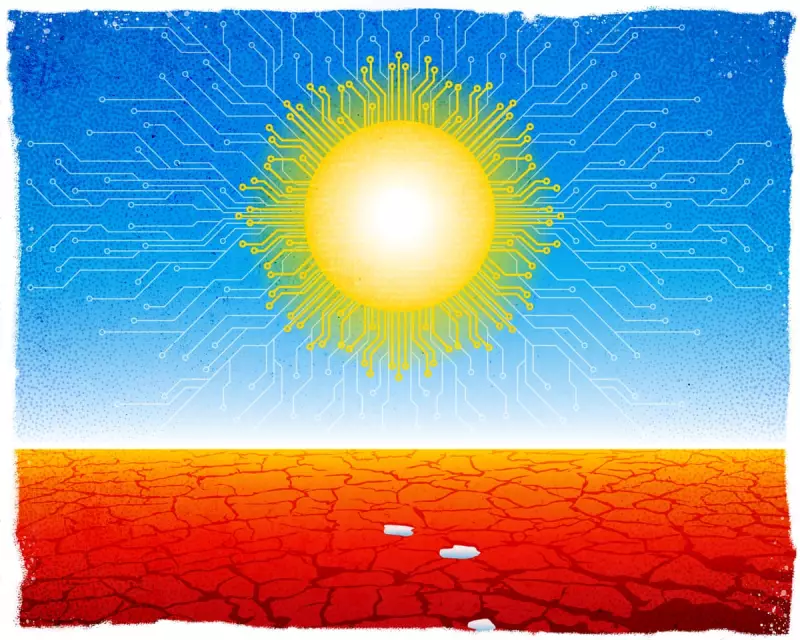
Australia's rapid expansion as a hub for artificial intelligence and data processing is placing unprecedented strain on the nation's precious drinking water supplies, with new forecasts revealing a looming crisis.
Projected Demand Dwarfs Capital's Supply
Sydney Water has estimated that servicing the datacentre industry could require up to 250 megalitres of water per day by 2035. To put that colossal figure in perspective, it is a larger volume than the total drinking water supply for the entire city of Canberra. In Sydney alone, the water demand for cooling these facilities is forecast to exceed the Australian capital's total consumption within the next decade.
The situation is similarly acute in Melbourne. The Victorian government has promoted a "$5.5m investment to become Australia's datacentre capital," yet the existing applications for hyperscale facilities already exceed the combined water demands of nearly all the state's top 30 business customers. Melbourne Water has admitted this surge was not accounted for in its demand forecasts.
The Thirst of Modern Computing
The core of the issue lies in cooling technology. As demand for computing power skyrockets, server racks generate more heat, forcing a shift from air cooling to methods that use water. Professor Priya Rajagopalan, director of the Post Carbon Research Centre at RMIT, explains the dilemma: "If you're just using evaporative cooling, there is a lot of water loss from the evaporation, but if you are using sealers, there is no water loss but it requires a huge amount of water to cool."
The industry measures its environmental impact with metrics like Water Usage Effectiveness (WUE) and Power Usage Effectiveness (PUE). However, even efficient facilities consume vast quantities when operating at scale. Companies like NextDC are pioneering more efficient liquid-to-chip cooling, which cools processors directly. This can achieve a very low PUE, but the scale of new developments remains a concern.
Community Backlash and Calls for Regulation
Community and environmental groups are raising the alarm. The Concerned Waterways Alliance in Victoria has called for a ban on using drinking water for server cooling and mandatory public reporting of water use. Spokesperson Cameron Steele warned that datacentre growth could increase reliance on expensive desalinated water, with costs passed to the community, and reduce water for environmental flows.
Water utilities are scrambling to respond. Sydney Water says it is exploring climate-resilient sources like recycled water and stormwater harvesting. Both Sydney and Melbourne Water are seeking upfront capital contributions from datacentre operators to fund necessary infrastructure upgrades, ensuring the burden doesn't fall on general customers.
Some companies highlight their sustainable models. CDC, building a massive 504MW campus in Sydney's Marsden Park, boasts a WUE of 0.01 using a closed-loop cooling system filled once and operating without ongoing water draw. Despite this, local health authorities have expressed concern about the project's scale and proximity to vulnerable communities, citing untested risks during extreme heat events.
With over 260 datacentres already operating and dozens more planned, the tension between technological ambition and environmental sustainability is becoming a defining challenge for Australia's future.