
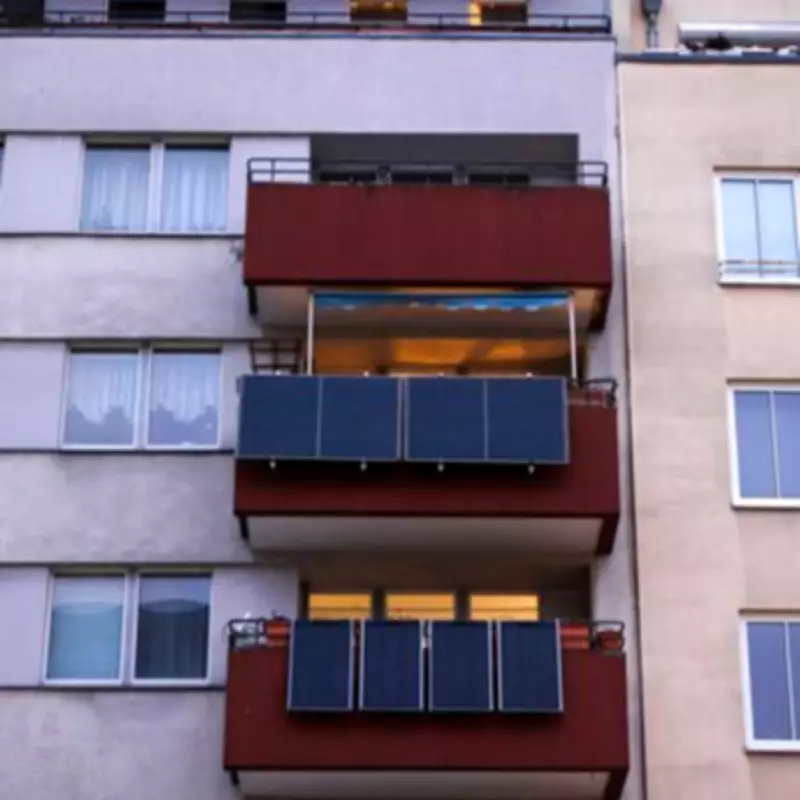
The UK government has made a significant announcement regarding the availability of plug-in solar panels, revealing they will be sold in shops "within months." This development coincides with the confirmation that new homes will be constructed with both solar panels and heat pumps installed as standard, marking a pivotal shift in the nation's approach to renewable energy and housing standards.
How Plug-in Solar Panels Work and Their Benefits
Unlike traditional solar panels, which often involve costly and complex installation processes, plug-in solar panels are designed for simplicity. These panels can be plugged directly into a standard mains socket, similar to any ordinary household device, making them accessible for use in various locations such as balconies or fences. This innovative approach reduces the amount of electricity drawn from the grid, leading to lower energy bills and decreasing the UK's reliance on volatile fossil fuel markets for electricity supplies, according to the Department for Energy Security and Net Zero (DESNZ).
Cost and Savings for Households
The government estimates that a typical UK home could save between £70 and £110 annually on energy bills by using plug-in solar panels. With panels currently available on the market from around £400, families could potentially recoup their investment in approximately four years. Since these appliances do not require professional installation, the upfront cost is limited to the purchase price, making them an affordable option for many households.
Implementation of the Future Homes Standard
This move to accelerate the delivery of plug-in solar aligns with new rules implementing the "future homes standard," building regulations that mandate solar panels and clean heating in new homes. Under these standards, homes will be equipped with heat pumps or connected to heating networks instead of gas boilers, and the majority will include onsite renewable electricity generation, primarily through solar power. The long-awaited implementation comes a decade after previous measures for net-zero carbon standards in homes were abandoned.
Government and Industry Reactions
Energy Secretary Ed Miliband emphasized the importance of clean power for energy security, stating, "The Iran war has once again shown our drive for clean power is essential for our energy security so we can escape the grip of fossil fuel markets we don't control. Whether through solar panels fitted as standard on new homes or making it possible for people to purchase plug-in solar in shops, we are determined to roll out clean power so we can give our country energy sovereignty."
Housing Secretary Steve Reed added, "Building 1.5 million new homes also means building high-quality homes that are cheaper to run and warmer to live in. As we make the switch to clean, homegrown energy, today's standard is what the future of housing can and should look like. Not only will these changes protect hardworking families from shocks abroad but will also slash hundreds of pounds off their energy bills every year."
The energy sector has welcomed these developments. Dhara Vyas, chief executive of industry body Energy UK, described the future homes standard as a "landmark moment" for clean energy in Britain. She noted that new homes built under this standard will benefit from clean heating solutions and solar, protecting households from volatile gas prices and enhancing energy security. Combined with higher fabric efficiency standards, these homes are expected to be warmer and more cost-effective to operate.
Availability and Retail Partnerships
The government is collaborating with retailers such as Amazon and Lidl, along with manufacturers including EcoFlow, to introduce plug-in solar panels to the UK market. DESNZ has promised availability in shops "within months," with EcoFlow expressing hope that people will be able to use them by this summer.
Georgina Hall, corporate affairs director at Lidl GB, commented, "At Lidl GB, we are committed to making sustainable living affordable for everyone and we welcome the Government's move to modernise regulations in the UK. Updating the regulatory landscape for this 'plug-and-play' technology is a positive step towards empowering British households to manage their energy costs and support the nation's net-zero ambitions."
Lorna Wallace-Smith, head of UK Communications for EcoFlow, added, "Allowing plug-and-play solar is a very positive step for expanding access to renewable energy in the UK. Seeing these systems available in stores by summer would be a major win for households, enabling people to take advantage of the longer, brighter days and start generating their own clean electricity straight away. For many households – particularly those living in flats or rented homes – solar has not always been straightforward. Plug-and-play systems remove that barrier, making it far easier to get started."
This initiative builds on the widespread use of plug-in solar panels in Germany, demonstrating a growing trend towards accessible renewable energy solutions. By integrating these panels into retail outlets and new housing developments, the UK aims to boost energy independence, reduce carbon emissions, and provide tangible financial benefits to consumers.



