
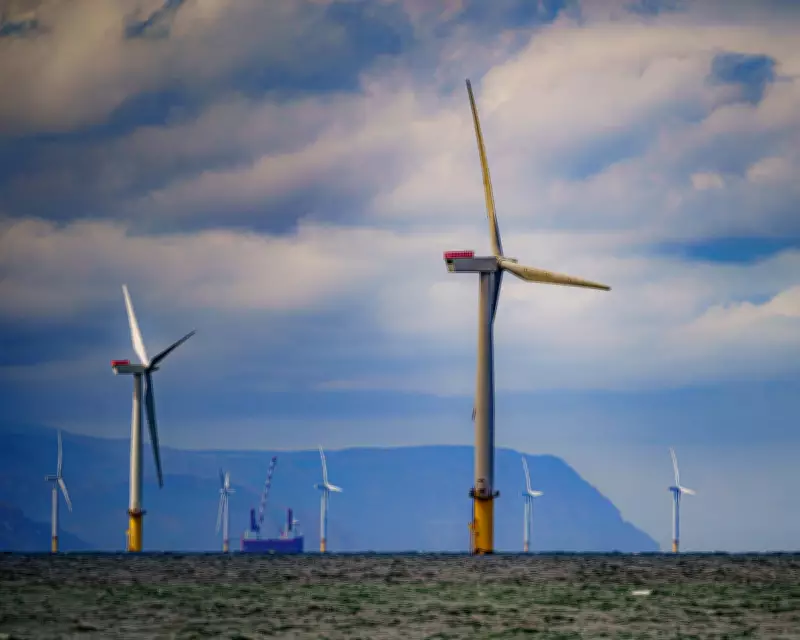
UK Government Targets Renewable Energy Generators with Higher Windfall Taxes
The UK government has unveiled a radical plan to impose higher windfall taxes on electricity generators, particularly those in the renewable energy sector, unless they agree to long-term fixed-price contracts. This move is designed to protect households from volatile energy costs and break the link between electricity and gas prices.
New Tax Measures and Contract Requirements
Under the new proposals, the Treasury will increase the windfall tax on excess profits made by electricity generators in Great Britain from 45% to 55% during periods of spiking gas prices. This tax hike will apply from July, targeting "legacy" renewable energy projects, such as older wind and solar farms, that currently earn subsidies on top of market prices. These generators must sign up to contracts that pay a set price for electricity to avoid the higher tax rate.
The initiative is part of a broader strategy to "delink" electricity prices from gas prices, as gas currently determines costs in Great Britain's electricity market about two-thirds of the time, despite renewables accounting for over half of generated power. The government aims to accelerate this decoupling, which is expected to occur naturally by the 2030s, to provide immediate relief to consumers.
Government Statements and Market Impact
Announcing the plans, Prime Minister Keir Starmer emphasized the need to shield households from global energy instability. "When global gas prices spike, people here shouldn't be picking up the tab. Our focus is simple: easing pressure on household budgets now, while building a homegrown energy system that protects families from global instability in the years ahead," he said.
Energy Secretary Ed Miliband reinforced this commitment, stating, "The era of fossil fuel security is over, and the era of clean energy security must come of age." The measures were detailed ahead of a speech by Miliband, highlighting the government's push to accelerate clean energy projects and promote alternatives like heat pumps, solar panels, and electric vehicles.
Background and Financial Implications
The plans, first reported by the Guardian, involve offering "legacy generators"—comprising about 30% of the UK's power capacity or roughly 35 gigawatts—the opportunity to sign wholesale contracts for difference (CfDs), similar to deals used by low-carbon projects since 2017. Failure to do so will result in the higher electricity generator levy (EGL) tax rate.
Chancellor Rachel Reeves explained, "Alongside moving generators on to the competitive pricing assured through wholesale contracts for difference, increasing the EGL to 55% will help to break the link between high gas prices and high electricity prices—offering households and businesses stronger protection against future energy shocks."
Since late 2022, generators have faced a 45% tax rate on electricity sold above £75 per megawatt hour under the EGL, implemented after the war in Ukraine caused record gas prices. Recent weeks have seen power market prices surge from about £74/MWh to over £100/MWh, with officials concerned about further increases if disruptions persist into winter.
Potential Savings and Market Exposure
Securing most of the UK's electricity through fixed-price contracts is expected to lower electricity costs and reduce bill payers' exposure to sudden market shocks. Analysts at the UK Energy Research Centre first proposed this approach in April 2022 to guard against surging gas prices post-Russia's invasion of Ukraine, estimating potential annual savings of £4bn to £10bn if market prices remain high.
The UK is particularly vulnerable to fossil fuel market volatility, as gas plants generate about 30% of its electricity and set the overall market price. This setup means higher market prices create windfalls for renewable energy, biomass, and nuclear reactors unless they operate under guaranteed fixed-price contracts, known in the industry as contracts for difference.
Broader Context and Future Outlook
The government's intervention comes as UK household energy bills are projected to rise from July, with the conflict in the Middle East driving up global energy costs. According to energy analysts at Cornwall Insight, a dual fuel bill could reach £1,836.84 under the quarterly price cap, an increase of nearly £200 annually from the current cap.
By pushing for fixed-price contracts and higher taxes, the government seeks to stabilize the energy market and support a transition to cleaner, more secure energy sources. This marks a significant step in addressing the high electricity costs that have made Britain one of the most expensive developed economies for energy, with the goal of fostering long-term resilience against global energy crises.



