London's Fly-Tipping Crisis Exposed: Croydon Tops UK's Worst Borough List
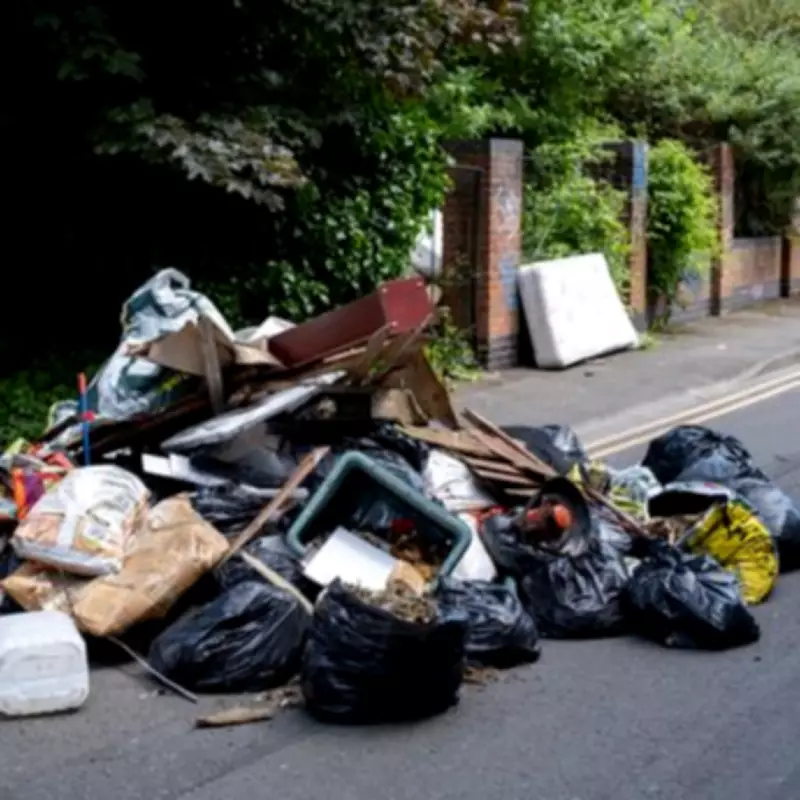
A new interactive map has starkly revealed London's escalating fly-tipping epidemic, identifying the capital's worst-affected boroughs. The data shows that eight of the top ten areas in England for illegal waste dumping are located within London, highlighting a severe urban environmental challenge.
National Scale of the Problem
In the year ending March 2025, local authorities across England confronted a staggering 1.25 million fly-tipping incidents, marking a concerning 9% increase from the previous year. This included 777,000 collections of household waste, 70,000 dumps of commercial waste, 7,000 incidents involving animal carcasses, and 3,000 dangerous cases with asbestos. London alone accounted for 481,088 separate illegal dumping events.
London's Troubling Dominance
The statistics paint a grim picture of London's waste management crisis. Croydon emerged as the national epicenter of fly-tipping, suffering 53,268 separate incidents. This included 1,585 large-scale dumps requiring tipper lorry cleanups, costing local taxpayers £585,584. Camden followed with 36,216 illegal dumps, while Lewisham recorded 33,471 incidents.

Barking and Dagenham faced the most severe impact from large-scale dumping operations. Across England, 3,432 incidents involving tipper lorry-sized loads cost taxpayers an astonishing £1.23 million in cleanup expenses. For Barking and Dagenham residents, this equates to £5.30 per person spent solely on addressing major dumping events.
Top Ten Areas for Fly-Tipping Incidents
- Croydon (53,268 incidents)
- Camden (36,216 incidents)
- Lewisham (33,471 incidents)
- Hackney (31,042 incidents)
- Newham (26,502 incidents)
- Nottingham (26,138 incidents)
- Ealing (25,394 incidents)
- Hounslow (25,177 incidents)
- Birmingham (24,664 incidents)
- West Northamptonshire (21,304 incidents)
Enforcement and Cleanup Efforts
London councils took 230,948 enforcement actions last year, including issuing 49,915 fixed penalty notices, collecting £83,292 in fines, and seizing 16 vehicles used in illegal dumping operations. Nationally, councils implemented 572,000 enforcement actions (an 8% increase) and issued 69,000 fixed penalty notices (a 9% rise).
However, court fines decreased by 9% to 1,250, with their total value dropping from £730,000 to £673,000. The Environment Agency handled 98 large-scale illegal dumping incidents, while councils seized 139 vehicles nationwide.
Patterns and Costs of Illegal Dumping
Household waste constituted nearly two-thirds (62%) of all fly-tipping, ranging from everyday black bags to furniture and clearance debris. Pavements and roads bore the brunt, accounting for 37% of incidents. Regarding scale, 31% involved small van loads, 27% were car boot-sized or smaller, but 52,000 cases involved tipper lorry loads or more—an 11% increase costing English councils £19.26 million to clear.
Government Response and New Measures
The Department for Environment, Food and Rural Affairs (Defra) has published new guidance to help councils combat fly-tipping more effectively. This includes enhanced powers to seize and crush vehicles used for illegal dumping or repurpose them for cleanup operations, along with improved legal strategies for court cases.
Defra Minister Mary Creagh stated: "We are empowering local authorities to clamp down on waste cowboys and restore pride in our local areas. I share the public's fury at seeing our streets, parks and fields used as dumping grounds. Fly-tippers should know—if you use your van to trash our countryside, don't be surprised when it ends up on the scrapheap."
Councils are also being encouraged to publicly identify fly-tippers on social media platforms as part of a broader 'name and shame' strategy to deter future offenses.