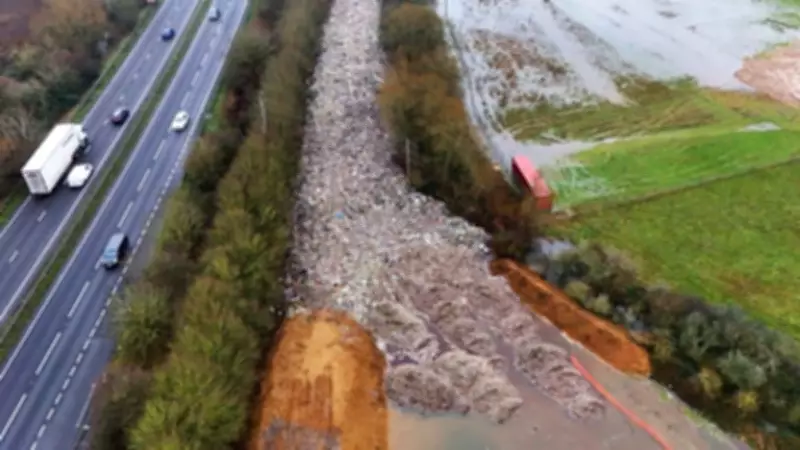
Fourth Suspect Detained in Major Kidlington Waste Dump Investigation
Police have made a fourth arrest in connection with a massive illegal waste dumping operation near Kidlington, Oxfordshire, as authorities intensify their crackdown on environmental crime. The latest development comes as part of an ongoing investigation that has already seen three other men detained in recent months.
Latest Arrest and Investigation Details
A 52-year-old man from Ashford, Surrey was arrested on Monday as part of the Environment Agency's investigation, supported by the South East Regional Organised Crime Unit. The arrest marks another significant step in the probe into what has been described as one of the most serious cases of illegal waste disposal in recent years.
The waste mountain, declared a "critical incident" by the Environment Agency, occupies a site between the River Cherwell and the busy A34 road that runs through Oxford towards Birmingham and Manchester. The illegal dump measures approximately 150 metres long, 15 metres wide, and 10 metres high, creating a substantial environmental hazard in the Oxfordshire countryside.
Previous Arrests and Bail Conditions
Last week, two men were arrested in separate locations - a 69-year-old in Andover and a 54-year-old in Slough - on suspicion of environmental offences and money laundering. Both individuals have been released on conditional bail while investigations continue.
This follows an earlier arrest in November when a 39-year-old man from the Guildford area was detained in connection with the same illegal dumping operation. He too was released pending further enquiries, highlighting the complex and ongoing nature of the investigation.
Environmental Impact and Official Response
Emma Viner, enforcement and investigations manager in the Environment Agency's National Environmental Crime Unit, stated: "The horrific dumping at Kidlington was a deliberate and organised act with no regard for the impact on the environment or communities. Our teams continue to work tirelessly with the South East Regional Organised Crime Unit on this investigation. This further arrest will be key in collecting new evidence and delivering justice for local residents."
Environment Secretary Emma Reynolds condemned the dumping as "completely and utterly unacceptable" and welcomed the latest arrest as an important step toward justice. She emphasised the government's commitment to strengthening enforcement measures, including increased funding, more officers, and tougher penalties for offenders.
The Growing Scourge of Waste Crime
The Kidlington case highlights a much broader national problem with waste crime that has been described by former Environment Agency officials as "the new narcotics" due to its profitability and environmental impact. Criminal gangs are exploiting loopholes in waste management systems, creating what has become a booming illegal industry.
Key statistics reveal the scale of the problem:
- Approximately one-fifth of all waste in England is believed to be illegally managed
- This amounts to around 34 million tonnes annually - enough to fill about four million skips
- The illegal waste industry costs the UK economy an estimated £1 billion each year
- Legitimate waste operators are thought to be losing a further £3 billion in missed business opportunities
The Environment Agency has committed more than £9 million to clear the waste at the Kidlington site, reflecting the significant resources required to address such environmental crimes. The dumping is believed to have started last summer, with investigations revealing how a previously grassy field transformed into an illegal waste site within just a few months.
National Context and Enforcement Challenges
Waste crime represents a growing challenge for authorities across the country, with organised criminal gangs increasingly involved in illegal dumping operations. The House of Lords Environment and Climate Change Committee warned in October that these groups are illegally dumping millions of tonnes of waste across the British countryside every year.
The problem has been exacerbated by the ease with which criminals can profit from waste disposal without proper sorting or tax payments, combined with what many describe as poorly-enforced legal repercussions. Recent investigations have revealed social media posts showing suspected fly-tippers flaunting cash after dumping waste in rural areas, highlighting the brazen nature of some operations.
As the investigation into the Kidlington waste dump continues, authorities remain determined to pursue all those involved in what they describe as a deliberate and organised environmental crime with significant consequences for local communities and the wider environment.