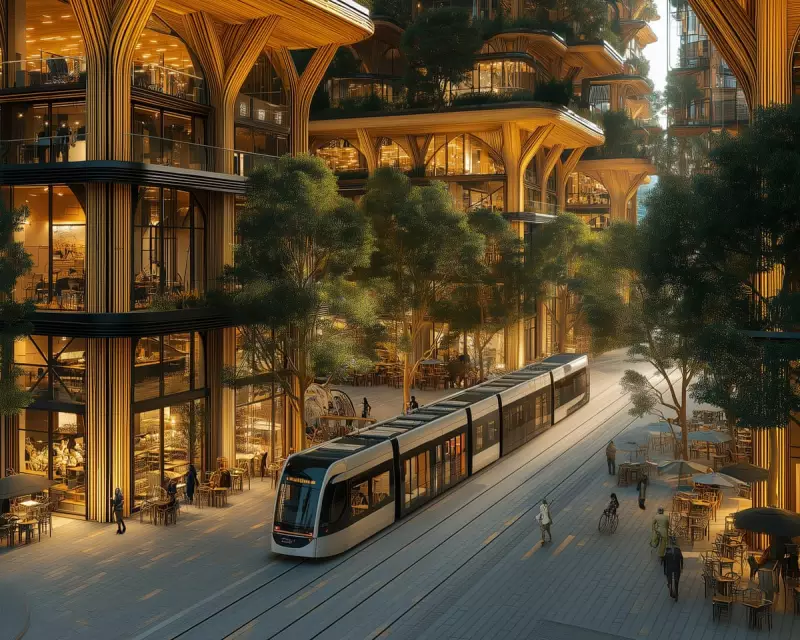
A radical plan to construct England's first purpose-built 'forest city' east of Cambridge, designed to house up to one million people while creating the country's largest new nature reserve in decades, could see construction begin before the end of this parliament.
The Vision for a Sustainable Metropolis
Spearheaded by Shiv Malik, a former Guardian journalist turned author and investor, the ambitious proposal envisions a city constructed primarily from wood, where four-bedroom homes would be available for around £350,000. The project aims to directly address the housing crisis and the generational inequality Malik has extensively documented, particularly affecting millennials.
"No one's done this before – building in this way which would create a huge net gain for nature. We are trying to build in natural infrastructure," Malik stated. His vision has garnered nearly 800 supporters from across the political spectrum, including Green party campaigners and leaders of rightwing thinktanks.
Community-Led and Nature-Positive Design
The proposed city would operate under a community land trust, a non-profit model designed to keep housing permanently affordable and prioritise residents' needs over corporate profit. The urban design principles focus on creating "pedestrianised, human-scale environments where children can run free."
Key features of the plan include:
- Homes built to high eco-standards using modular wooden designs.
- A tram system to minimise car dependency.
- 12,000 acres of native forest, largely through new planting to connect existing woodland pockets.
- New rail links, schools, and hospitals.
To ensure the city's development benefits the wider region, the plan addresses critical local issues like water scarcity in East Anglia. Malik claims the project's funding would be sufficient to "replenish the chalk streams" and build necessary reservoirs, resolving water issues for the entire area.
Navigating Challenges and Building Consensus
The project's backers are seeking development corporation powers, similar to those used for Milton Keynes and the London Olympics, to reduce costs and streamline the planning process. However, significant hurdles remain, not least the need to build on farmland.
Malik defends this approach, citing the influence of Guardian columnist George Monbiot, arguing that industrial farmland is "terrible for nature" and often ecologically sterile due to fertiliser and pesticide use.
In a notable move, nature campaigner and barrister Paul Powlesland has joined the board of the Albion City Development Corporation to represent nature's interests. "My job is to effectively speak for nature's interests as best as I can," Powlesland explained, highlighting the current lack of nature's voice in the planning system.
He remains cautiously optimistic, stating, "I do think there is a capacity to do things differently... to actually have a city that is where there is more nature and there's humans." However, he has made it clear that if the ambitious nature plans are diluted for cost reasons, he will become an opponent of the scheme.
The proposal has already influenced national policy, with the government announcing its own ambitions for a network of "forest towns" in a similar area shortly after the forest city plans were made public. The Ministry of Housing, Communities and Local Government has been contacted for further comment on this groundbreaking initiative.