
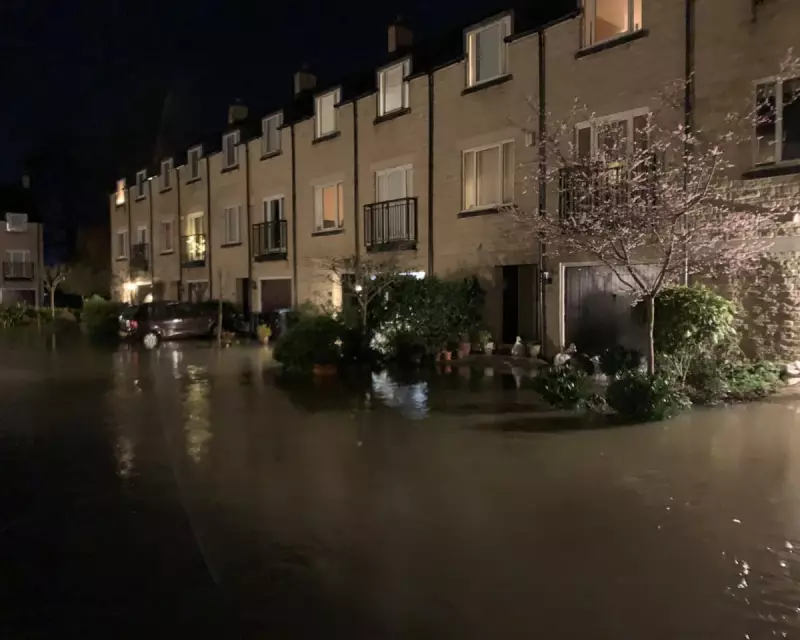
Millions of homes and businesses across England are now under threat from surface water flooding, which has become the leading cause of flood risk in the country. As climate breakdown accelerates, the number of properties at risk is projected to soar, leaving a growing number of Britons living in a state of permanent anxiety and trauma.
The Human Cost of a Relentless Threat
For Darren Ridley in Folkestone, life is dictated by the weather forecast. His home floods at least twice a year, with his garden inundated even more frequently. "Our whole family is permanently on edge," he admits, describing a routine of sleepless nights and constant vigilance for rain warnings. The water that invades his property is not clean but contaminated with raw sewage, arriving with terrifying force. "It's a raging torrent," Ridley says, recounting how an elderly neighbour was once knocked over by debris and feared drowning in the foul water.
The psychological scars run deep. Ridley suffers from PTSD and describes his family as "flood-scarred." "My children grew up in sewage," he states bluntly, painting a grim picture of condoms and sanitary products caught in his apple trees and gardens infested with insects feeding on the filth. Despite years of pleading with the local council and Southern Water to repair failing infrastructure, he feels ignored because only a handful of properties are affected. "We're easy to ignore," he concludes.
A Collective Voice Emerges from the Floodwaters
It is precisely this sense of isolation that led to the formation of Flooded People UK (FPUK) earlier this year. This non-profit organisation aims to unite victims, allowing them to support one another and build a powerful collective voice to lobby for systemic change. The group seeks to place the lived experience of flooded people at the heart of policy discussions, challenging the traditional dominance of engineers and regulators.
Heather Shepherd, a co-founder of FPUK from north Shropshire, embodies this fight. Her home has been flooded six times in three years. She has invested over £70,000 in flood adaptations, yet lives with constant alerts from October to March. "When it comes, it's an onslaught," she describes, with floodwaters reaching neck height at the bottom of her drive and leaving her isolated in a "vast, unbroken lake" for days. The trauma is cyclical and debilitating. "For at least six months of the year, I'm trapped in this revolving, repeating nightmare," she confesses.
A National Crisis Demanding Urgent Action
New research from the National Emergencies Trust and Lancaster University underscores the inadequate support for flood survivors. Almost half of those surveyed received no professional help, with many forced into debt due to bureaucratic hurdles blocking grants and insurance payouts. "The psychological scars persist long after the water recedes," notes Mhairi Sharp, Chief Executive of NET.
The scale of the problem is vast and evolving. Official assessments reveal that around 4.6 million homes and businesses in English towns and suburbs are threatened by surface-water flooding—caused when heavy rain overwhelms drainage systems. This now surpasses river and coastal flooding as the single largest contributor to flood risk.
William Wareing, Chair of the Witney flood group in West Oxfordshire, sees FPUK as the only way to amplify local concerns to a national level. Having been flooded three times since 2007, his group has had local successes with sensors and flood wardens, but feels like a "little pocket of protest." "Flooded People UK is bringing us all together, so that we can have one voice and change government policy," he asserts.
Wareing argues that while climate change is a long-term challenge, three other causes must be addressed urgently: inappropriate development, a lack of defences, and poor maintenance of existing infrastructure. Heather Shepherd echoes this call for immediate action. "The urgency could not be greater," she warns. Without robust planning reforms, significant infrastructure investment, and a coherent national strategy for sewage and drainage, countless more families will be condemned to live in fear, paying with their health, homes, and peace of mind.



