
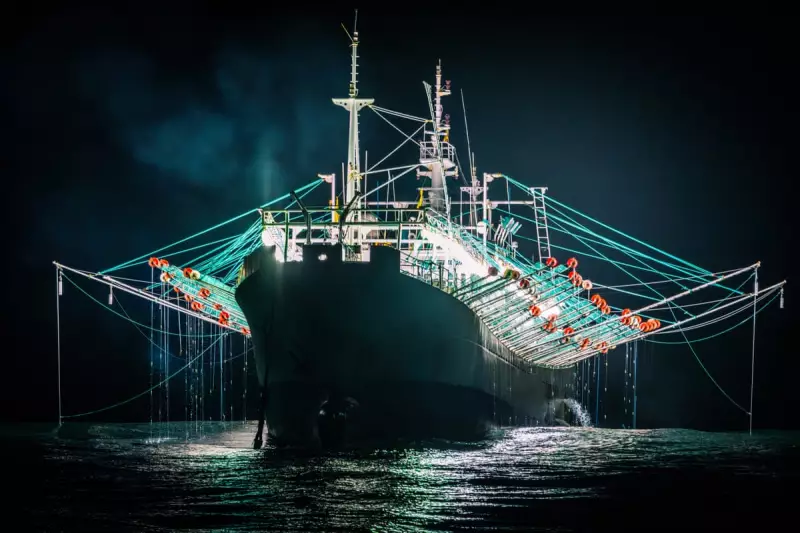
In the vast, ungoverned waters of the South Atlantic, a floating city of industrial fishing vessels, visible from space, is conducting what conservationists label a 'mad' plunder of marine life. This colossal fleet, dominated by Chinese ships, operates just beyond Argentina's maritime border in an area known as Mile 201, exploiting a critical lack of international regulation.
The Regulatory Vacuum and the Floating City
From a monitoring room in Buenos Aires, Argentinian coast guard officers watch in frustration as hundreds of foreign vessels congregate. Commander Mauricio López of the monitoring department states that this annual influx, lasting five to six months, is "creating a serious environmental problem." The area, just outside Argentina's 200-nautical-mile Exclusive Economic Zone (EEZ), has no internationally agreed catch limits for squid, creating a perfect storm for overexploitation.
The charity Environmental Justice Foundation (EJF) identifies this as one of the world's largest unregulated squid fisheries. Lt Magalí Bobinac, a marine biologist with the coast guard, warns that the sheer scale of fishing disrespects the squid's one-year life cycle, leaving no time for populations to recover.
Ecological Domino Effect and Dark Practices
The consequences are far-reaching. Squid are a cornerstone species, vital food for whales, dolphins, seals, seabirds, and commercially important fish like hake and tuna. Steve Trent, EJF founder, describes the fishery as a "free for all," cautioning that squid could vanish from the area, triggering a catastrophic cascade through the ecosystem.
Beyond overfishing, the lack of oversight enables brutality. An EJF investigation uncovered testimonies of deliberate seal killings on over 40% of Chinese squid vessels and a fifth of Taiwanese ones. Crews reported hunting marine megafauna for body parts, with evidence of seals hung on hooks and penguins trapped on decks.
Human Rights Abuses and Global Market Links
The crisis extends to the crews themselves. Workers on these vessels reported severe human rights abuses, including physical violence, wage deductions, intimidation, and debt bondage, trapping them at sea with excessive hours and little rest.
Despite this, much of the squid enters major global markets, including the European Union and the UK. This means consumers may unknowingly purchase seafood linked to environmental destruction, animal cruelty, and labour exploitation. The EJF is urgently calling for import bans on illegally caught seafood and a global transparency charter for high-seas fishing.
Compounding the problem, many vessels engage in "going dark" – turning off their identification systems to evade monitoring. Lt Luciana De Santis, a coast guard lawyer, explains their powerlessness: "Outside our exclusive economic zone, we cannot do anything – we cannot board them, we cannot survey, nor inspect." With the Chinese fleet's activity surging by 85% between 2019 and 2024, experts warn that without immediate international action, an ecological and humanitarian disaster is imminent.



