
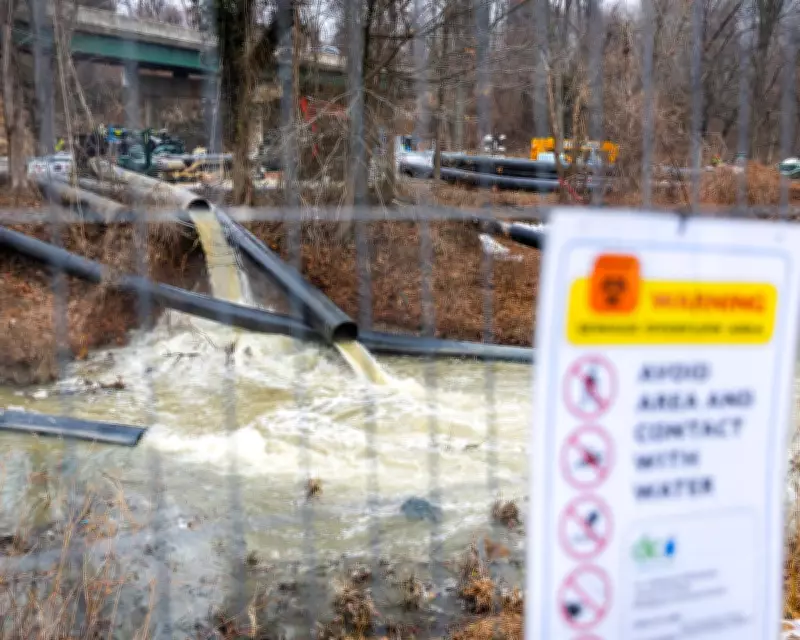
In a significant environmental crisis, millions of gallons of raw sewage have been flowing into the historic Potomac River due to a ruptured pipe, leading to a federal emergency declaration approved by Donald Trump. The spill, originating from a 72-inch Potomac Interceptor pipe break last month in Cabin John, Maryland, has raised alarms over public health and infrastructure maintenance, with potential impacts on the US's 250th anniversary celebrations in Washington DC this summer.
Emergency Response and Cleanup Efforts
The Federal Emergency Management Agency (FEMA) has been authorized to coordinate disaster relief efforts, aiming to protect property, public health, and safety while mitigating the catastrophe. According to FEMA, this action is designed to alleviate hardship for local populations in Washington DC, Maryland, and Virginia. A temporary bypass has been established, but earlier estimates from DC Water indicated that 243 million gallons of wastewater had leaked before this measure was implemented.
Environmental and Health Concerns
The sewage spill has resulted in dangerously high levels of E. coli bacteria in the Potomac River, prompting the DC department of energy and environment to advise against any contact with the water. Recreational advisories have been issued, and environmental groups are expressing grave concerns over the long-term ecological damage. Washington mayor Muriel Bowser declared a local public emergency earlier this week and requested a major disaster declaration from Trump, highlighting the urgency of the situation.
Political Feuds and Responsibility Disputes
Amid the cleanup efforts, political tensions have escalated over who is accountable for the spill. Donald Trump has criticized local and state officials, calling the incident an "ecological disaster" and urging immediate action from Bowser, Maryland governor Wes Moore, and Virginia governor Abigail Spanberger. In response, Moore's spokesperson, Ammar Moussa, blamed the Trump administration for failing to act over the past four weeks, noting that the federal government has overseen the Potomac Interceptor since the last century.
Jay Apperson, a spokesperson for the Maryland department of the environment, clarified that while the pipe break occurred in Maryland within the C&O Canal National Historical Park, DC Water owns and operates the interceptor, with federal oversight from the US Environmental Protection Agency. This complex jurisdictional issue has fueled debates on infrastructure responsibility and maintenance protocols.
Impact on Local Communities and Future Implications
The spill not only poses immediate health risks but also threatens to disrupt summer events in the capital, including the 250th anniversary celebrations. Residents and businesses in the affected areas are facing uncertainties, with questions mounting about the aging infrastructure and the need for more robust preventive measures. As FEMA mobilizes support, the focus remains on containing the spill and preventing further environmental degradation, while political leaders continue to spar over accountability and solutions.



