Groundbreaking Moth Tracking Project Launches in Australian Alps
In an unprecedented conservation effort, a team of twenty researchers and dedicated volunteers has embarked on a mission to tag approximately 10,000 bogong moths over a ten-day period. This first-of-its-kind project, modeled after the successful Monarch Watch program in North America, aims to trace the remarkable migration of these nocturnal insects from the Australian Alps to breeding grounds across southeastern Australia.
Low-Tech Innovation for High-Impact Science
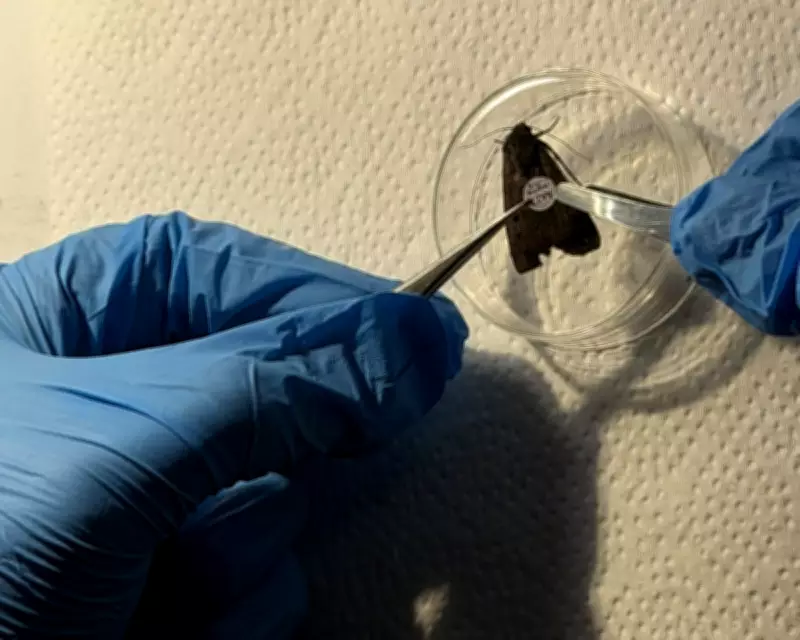
The tagging process involves attaching tiny, confetti-sized paper labels to each moth using specialized eyelash glue. Dr. Kate Umbers, associate professor in zoology at Western Sydney University and managing director of Invertebrates Australia, explains the methodology: "It's low-tech, high-effort tagging, where you put a little sticker on an individual moth and see if you can catch it again."
Before tagging, each moth undergoes a careful procedure where it is cooled down and temporarily anesthetized with carbon dioxide. Researchers have extensively tested this process in laboratory settings and confirm that the tags do not harm the moths or alter their natural behavior patterns.

Addressing Critical Knowledge Gaps
This ambitious project seeks to fill significant information voids about bogong moth migration routes and breeding locations. These knowledge gaps previously hindered the species' classification as threatened under national environmental legislation. The bogong moth has been listed on the International Union for Conservation of Nature's global endangered list since 2021.
"While we have indirect tools like genetic and chemical analysis," Umbers notes, "tagging provides the only definitive method to confirm that an individual has traveled from point A to point B." The goal of tagging 10,000 moths significantly increases the probability of re-sightings, with researchers hoping to document at least 100 tagged individuals during the migration period.
Citizen Science Network Activated
More than fifty households across southeastern Australia have been strategically selected as monitoring stations, equipped with specialized bug lanterns to attract and observe moths between March and May. These "sentinel" households, spread in all directions from Mount Kosciuszko, will play a crucial role in tracking the moths' progress.
Louise Freckelton, a sheep farmer near Adelong in the New South Wales Riverina region, expresses enthusiasm about participating: "We're deeply interested in the environment and ecology. We know the pygmy possums in the mountains rely on bogong moths when they emerge from winter hibernation. This is a tiny way we can help during both climate and extinction crises."
Suzanne Newnham, who lives on a bush property outside Wee Jasper, shares similar excitement: "I love bugs. When we put a light on outside, we have so many moths it's not funny. I thought it'd be interesting to be able to track them."
Public Participation Encouraged
The research team actively encourages public involvement in this conservation initiative. Anyone who spots a tagged bogong moth can contribute valuable data by photographing the insect or recording the two-letter, two-number code on its paper tag, then submitting this information through the project's official website.
"We need eyes out, all over, all of the time," emphasizes Dr. Umbers. Even a single verified sighting of a tagged moth would provide powerful evidence about migration patterns and help scientists better understand the challenges facing this endangered species.
This innovative project represents a significant step forward in invertebrate conservation, combining scientific rigor with community engagement to protect Australia's unique biodiversity.