
The Rising Threat of Arctic Oil Spills
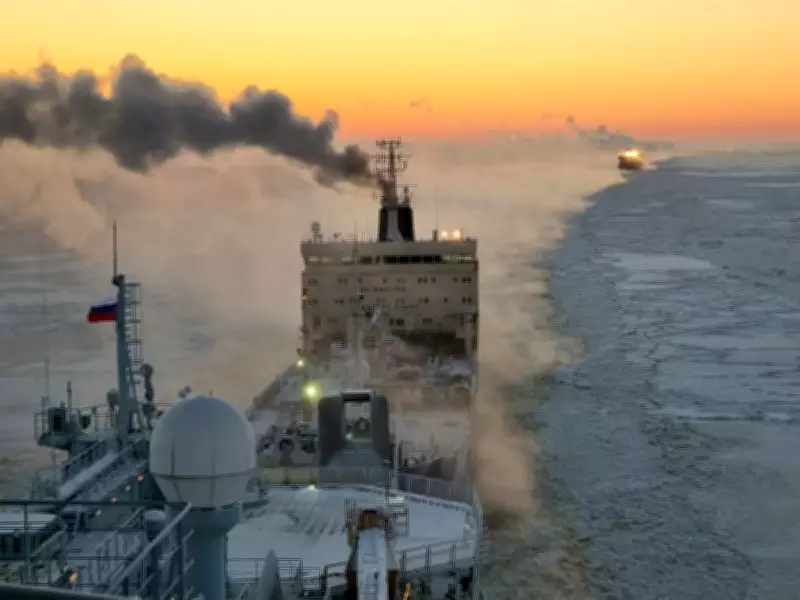
In February 2025, the nuclear-powered icebreaker Arktika escorted a vessel through the Gulf of Ob on the northern sea route, highlighting the growing maritime activity in the Arctic. This surge in shipping, particularly by unregulated shadow fleet ships, has heightened the risk of environmental disasters in one of Earth's most fragile ecosystems. Scientists are now in a desperate race to develop effective methods for containing oil spills in these icy waters, where traditional cleanup techniques often fail.
Microbial Experiments in Cold Waters
Last winter, researchers at the Churchill Marine Observatory in Canada conducted a groundbreaking experiment. They released 130 litres of diesel into an ice-covered pool filled with seawater from Hudson Bay and introduced oil-eating microbes. Initially, the microbes showed little activity over three weeks, but by eight weeks, one bacterium had proliferated significantly, feeding on the oil. Eric Collins, a microbiologist at the University of Manitoba leading the project, noted that while promising, a two-month wait is impractical during an actual spill, where time is critical.
The Shadow Fleet's Dangerous Presence
Data from the Bellona Foundation reveals a sharp increase in shadow fleet activity along Russia's northern sea route. In 2025, over half of these vessels were oil and liquefied natural gas tankers, with 18 lacking proper ice-class design. These ageing, unregulated ships, often carrying sanctioned oil, pose a significant threat. Ksenia Vakhrusheva, Arctic project manager at the Bellona Foundation, warns that such vessels, meant for scrap, are ill-equipped for icy conditions, increasing the likelihood of spills.
Challenges of Arctic Oil Spill Response
Oil behaves differently in the Arctic compared to warmer seas. Cold temperatures cause fuels to become viscous, forming globules that sink or stick to ice. Sea ice interferes with skimmers and booms, while pumping methods struggle with thicker oil. Synnøve Lofthus of the Norwegian Coastal Administration emphasizes the logistical hurdles: "If something happens, it's very hard to get there and do something about it." Despite millions invested in research, such as the Arctic Oil Spill Response Technology Joint Industry Programme, which ended in 2017, few new technologies have emerged.
Current Cleanup Methods and Their Drawbacks
Existing techniques include dispersants, which break oil into smaller particles but can harm marine life, and in situ burning, which produces black carbon that accelerates ice melting. The shift to low-sulphur fuels, mandated by the International Maritime Organization in 2020, has introduced new challenges, as these fuels often form lumps or have viscoelastic properties that complicate recovery. Sian Prior of the Clean Arctic Alliance notes that cleanup technology has stagnated over the past decade, failing to keep pace with evolving fuel types.
Broader Implications and Future Research
Beyond Russia, Arctic infrastructure development and militarization are driving increased investment in oil spill research. Collins' work in Churchill is funded by the Canadian government, coinciding with proposals to revitalize the port for North Atlantic connections. As shadow fleet vessels continue to navigate these waters, using whatever fuel is cheapest, the urgency for innovative solutions grows. The race to protect the Arctic from oil spills remains a critical environmental and scientific challenge, with researchers exploring everything from microbes to chemical agents in a bid to prevent disaster.



