
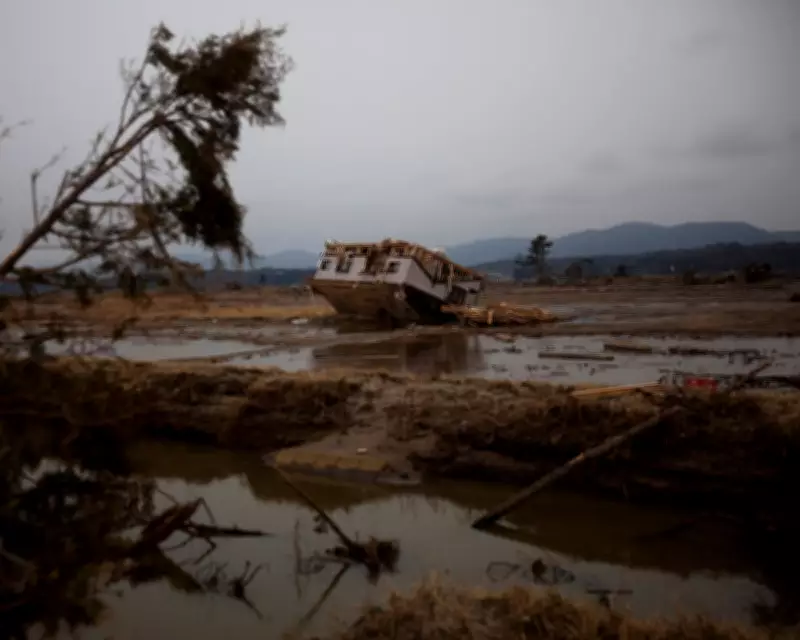
It has been just over 15 years since the catastrophic Tohoku earthquake and tsunami struck north-east Japan, an event that claimed nearly 20,000 lives and led to the Fukushima Daiichi nuclear disaster. A recent study has uncovered a critical factor that significantly amplified the tsunami's destructive power: the mud-rich coastline along the affected regions.
Analysis of Video Footage Reveals Key Insights
Patrick Sharrocks from the University of Leeds, along with his research team, conducted a detailed analysis using helicopter video footage and before-and-after images from Google Earth. Their goal was to estimate the speed, shape, and power of the tsunami's flow front as it moved inland. The findings, published in the Journal of the Geological Society, indicate that the wave underwent a dramatic transformation as it traveled over mud-rich rice paddies near areas like Yamamoto.
From Clear Water to Thick Mud Flow
Initially, the tsunami presented as a fast-moving, clear-water flow. However, upon encountering the sediment-laden agricultural fields, it morphed into a dense, gloopy, mud-laden current. This shift in composition had profound implications for the wave's destructive capabilities. A mud-rich flow, similar to the hazardous mud flows seen on volcanoes when water mixes with sediment, exerts considerably more force than a clear-water equivalent.
The increased force resulted in greater structural damage to buildings in its path and contributed to higher numbers of injuries and fatalities. The study highlights how coastal geology can play a pivotal role in tsunami impact, a factor previously underestimated in hazard assessments.
Recommendations for Future Preparedness
The authors of the study strongly recommend updating tsunami hazard assessments to account for the amplified risks associated with mud-rich coastal settings. This information should be used to inform coastal land use decisions in tsunami-prone regions globally, potentially saving lives and reducing property damage in future events. By integrating these findings, communities can better prepare for and mitigate the effects of similar natural disasters.



