
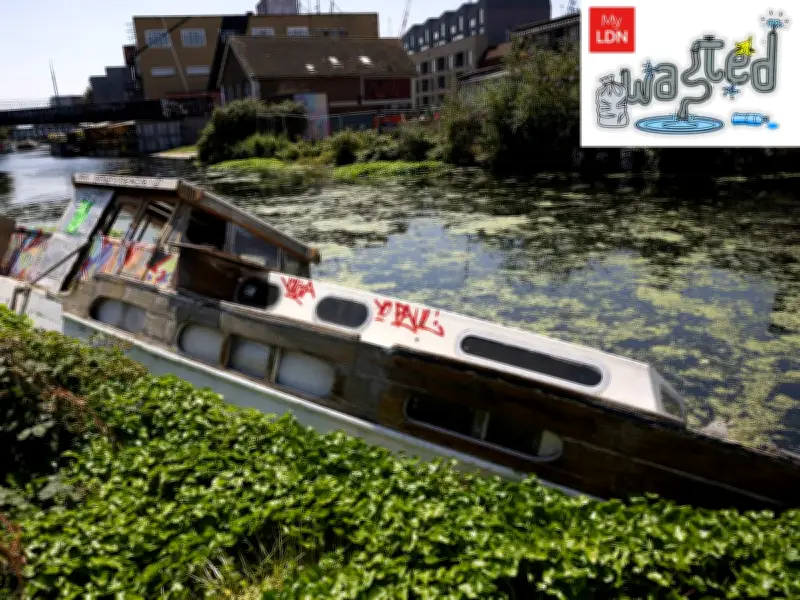
The Canal & River Trust (CRT) reports a backlog of 126 sunken boats across London's waterways as of April 2026, with abandoned vessels polluting canals and costing the charity over £700,000 annually. The issue is concentrated in areas like Hackney, where the Hertford Union Canal and River Lee Navigation meet.
Rising numbers of boat dwellers and abandoned vessels
An estimated 15,000 people live on narrow boats across London's 100 miles of canals. Between 2010 and 2018, the number of boats roughly doubled and has continued to increase, with up to 2,500 being 'continuous cruisers' without permanent moorings. However, rising costs are leading some owners to abandon their boats. In 2024, the CRT announced above-inflation licence fee increases, rising 25% by 2028. The National Bargee Travellers Association warns boaters face 'increasingly unpredictable and financially insecure' futures.
Environmental impact and owner responsibility
Sunken boats release oil and other pollutants into water already contaminated by sewage and industrial debris. Scott MacDonald, a 62-year-old lifelong canal dweller moored at Hackney Wick, said: 'We hate it because it gives us a bad name. If you dispose of it correctly, you’ve got a licence, you know how to get it removed. But it’s the unlicensed who don’t give a sh*t. It’s unacceptable.' He noted that reporting a sunken boat to the CRT can be ineffective, with staff sometimes directing callers to the London Fire Brigade, which has no formal role in removal.
Removal process and costs
Under the British Waterways Act 1983, the CRT can remove abandoned boats after exhausting communication with owners and serving a statutory notice. The process takes an average of 257 days. In 2024/5, the CRT paid contractors over £700,000 for removals, equivalent to 2.6% of boat licence fees. A CRT spokesperson said: 'The responsibility for removal lies primarily with the boat owner. But the Trust can also take action, which we’re most likely to do where a boat is blocking navigation.' They added that as a charity with limited resources, the Trust's primary goal is keeping the network open, a 'constant balancing act.'
Local council limitations
Local authorities like Hackney Council have no jurisdiction over waterways and focus on air quality instead, such as issuing Smoke Control Orders for boat emissions. Most narrow boat engines are diesel-powered. The CRT has committed to a three-year work programme to salvage remaining wrecks.



