
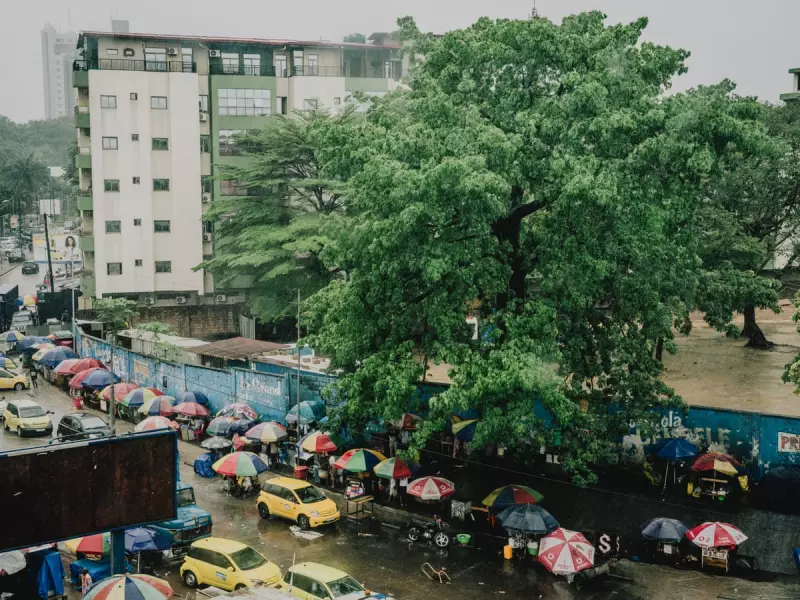
In the heart of Kinshasa, a frantic race against time is unfolding. Environmentalists and local residents are mobilising to protect what they call the 'soul of the city' – the last remaining century-old baobab tree in the historic centre of Gombe. This majestic symbol of the Democratic Republic of the Congo's capital now stands alone on a plot earmarked for commercial development, its future hanging in the balance.
A Lone Sentinel in a Concrete Jungle
The story of this baobab is inextricably linked to Kinshasa's own turbulent history. Older inhabitants recall a greener city, where baobabs with their iconic, thick trunks stood proudly before government buildings and trees lined main avenues. Today, that vision has all but vanished. Jean Mangalibi, a 60-year-old gardener and activist, laments the frenzied, unplanned expansion that has erased the city's greenery. "We're destroying the city," he says, his words competing with the sound of drilling from a nearby construction site.
Kinshasa, now a megacity with an estimated 17.8 million inhabitants, has undergone breakneck growth. Built largely during the Belgian colonial era, its transformation into one of the world's fastest-growing and most polluted urban centres has come at a heavy environmental cost. Regular flooding and a reliance on charcoal for cooking, due to limited electricity access, have decimated its tree population. The loss makes the fight for this single baobab not just symbolic, but urgent.
Under Threat: A Site Steeped in History
The baobab in question stands on land owned by the state transport company, Onatra, adjacent to the main ferry port. Until recently, it was the heart of a bustling fabric market. However, the site is now sealed off, with initial signs of building work appearing. Activists and local officials allege Onatra has sold the land to a private developer, though the company has not responded to enquiries.
The tree's significance is profound. Across Africa, baobabs are revered as sources of food and as traditional gathering places for meetings and speeches. Local tradition holds that explorer Sir Henry Morton Stanley negotiated for land under a baobab here in the 1870s, marking the birth of the colonial settlement that became Kinshasa. Mangalibi believes this specific tree is over a hundred years old, planted to commemorate the port's construction. "It's a continuation of history," he states.
The threat became imminent in August when diggers arrived. Mangalibi and fellow activists from the newly formed group Autour du Baobab (Around the Baobab) intervened, physically blocking the machinery. Sifa Kitenge, a 70-year-old fabric trader, confirms the activists saved the tree just in time. "They were ready to cut it down," she said, describing the baobab as "an important symbol." While the tree still stands, construction plans have not been abandoned, leaving its fate uncertain.
The Uphill Battle for Urban Greenery
The challenge of preserving green space in Kinshasa is monumental. Francis Lelo Nzusi, a geographer at the University of Kinshasa, cites a catastrophic mix of non-existent planning and the desperate need for fuel. With only 41% of the population connected to the electricity grid, charcoal remains a primary energy source, leading to rampant deforestation with no reforestation. Planned green spaces quickly become illegal dumping grounds due to a lack of waste management.
Past promises offer little hope. In 2010, city authorities felled hundreds of terminalia trees along the Boulevard du 30 Juin, pledging to replant them. The boulevard remains bare to this day. Against this bleak backdrop, Mangalibi's activism is both brave and risky. His plant nursery has been ransacked multiple times as a consequence of his campaigning.
However, a sliver of hope comes from within the government. Malicka Mukubu, head of the DRC's National Tourism Office, has publicly stated the baobab must be saved, calling it a representation of Congolese cultural strength. "From an ancestral point of view, you don't cut down baobabs," she asserts, while acknowledging the steep challenge posed by widespread official indifference.
As Kinshasa's population swells by approximately 730,000 people each year, the pressure for space intensifies. The battle for the last baobab of Gombe is more than a dispute over a single tree; it is a struggle for the city's ecological memory, a test of its commitment to preserving any fragment of its natural heritage amidst relentless urbanisation. The question remains: will this ancient witness to history be allowed to see the future?



