
How Extreme Weather Is Making Thousands of Homes Uninsurable
The climate crisis is rapidly transforming the insurance landscape, leaving thousands of homes across the globe uninsurable as extreme weather events become more frequent and severe. This growing insurance gap threatens not only individual homeowners but the very foundations of modern economies, where insurance serves as the invisible backbone supporting loans and financial stability.
The Global Insurance Crisis Unfolds
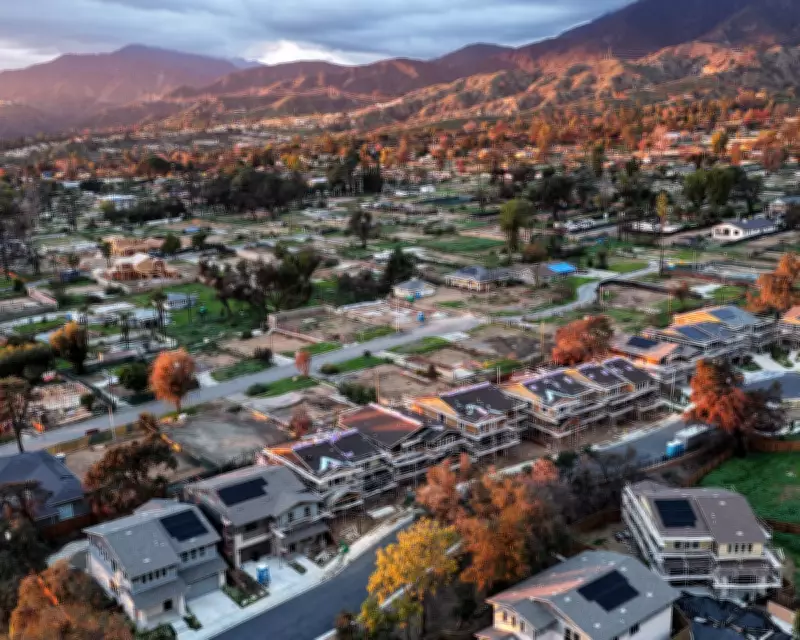
From the wildfire-ravaged neighborhoods of Altadena, California, to flood-prone regions in Europe, commercial insurers are retreating from high-risk areas. State-backed insurers of last resort are seeing their exposure skyrocket, with California Fair Plan experiencing a 230% increase to $724 billion since 2022. In Spain and Portugal, governments have been forced to provide billions in aid following extraordinary rainfall events.
The western United Kingdom has faced relentless drenching since the new year, with one Cornish village enduring 50 consecutive days of rain. This has created warnings about "mortgage prisoners" - homeowners trapped in properties too flood-prone to insure or sell - and concerns about rising bank defaults.
Systemic Risks and Financial Instability
Felicity Alvey of the University of Cambridge's Institute for Sustainability Leadership explains the fundamental problem: "We're seeing more frequent, more severe extreme weather events and that inevitably affects claims and affects pricing - it can't not. And this is happening all over the globe."
The International Association of Insurance Supervisors has warned that reduced insurability of assets linked to bank lending could lead to systemic risk and financial instability. Günther Thallinger, an Allianz SE board member, has gone further, suggesting the climate crisis could ultimately destroy capitalism itself as entire regions become uninsurable.
The Human Cost of Uninsurability
Beyond the financial implications, the human toll is profound. Flood victims describe lasting trauma, with panic triggered by rainfall years after their homes were inundated with filthy water. In south Wales earlier this month, a local authority spent millions buying out residents of 16 terraced homes that could no longer be defended from flooding.
"Insurance protects the things that people have worked incredibly hard for," Alvey emphasizes. "It provides financial stability in moments of shock that mean that people can carry on with their lives."
Potential Solutions and Their Limitations
The UK's Flood Re scheme represents one approach, using a small levy on all premiums to keep insurance affordable for those in flood-risk areas. Since its 2016 launch, over 600,000 homes have benefited. However, concerns are mounting as the program is set to end in 2039, with most mortgages extending beyond that date.
Tracey Garrett of the National Flood Forum warns: "We're storing up a massive problem for people in the future." Flood Re's own assessment indicates the UK's flood resilience has actually deteriorated, potentially leaving hundreds of thousands of homes uninsurable by 2039.
Kelly Ostler-Coyle, Flood Re's director of corporate affairs, stresses the urgency: "The next five to 10 years are crucial. We're working hard to help the UK live better with water - building resilience and making sure recovery after floods is quicker and less disruptive."
The Scale of Future Challenges
Scientists estimate that by 2035, even with carbon emission reductions, flood risk exposure will increase by 25% in China's Pearl River delta region, home to 86 million people including Hong Kong. Meanwhile, the continued construction of new homes in flood-risk areas - 44,000 in England alone from 2022-2024 - exacerbates the problem.
Globally, the challenge extends beyond those losing insurance to include millions who have never been able to afford coverage. While the Insurance Development Forum provided financial protection to 4 million people in 2025, this represents only a fraction of those at risk.
As insurers - the pre-eminent experts in risk assessment - sound increasingly urgent warnings about the climate crisis making coverage unaffordable, the need for comprehensive action becomes undeniable. The insurance crisis has become one of the most vital fronts in humanity's battle against global heating.



