
First UK Climate Evacuees: Welsh Street Residents Relieved as Council Buys Flood-Threatened Homes
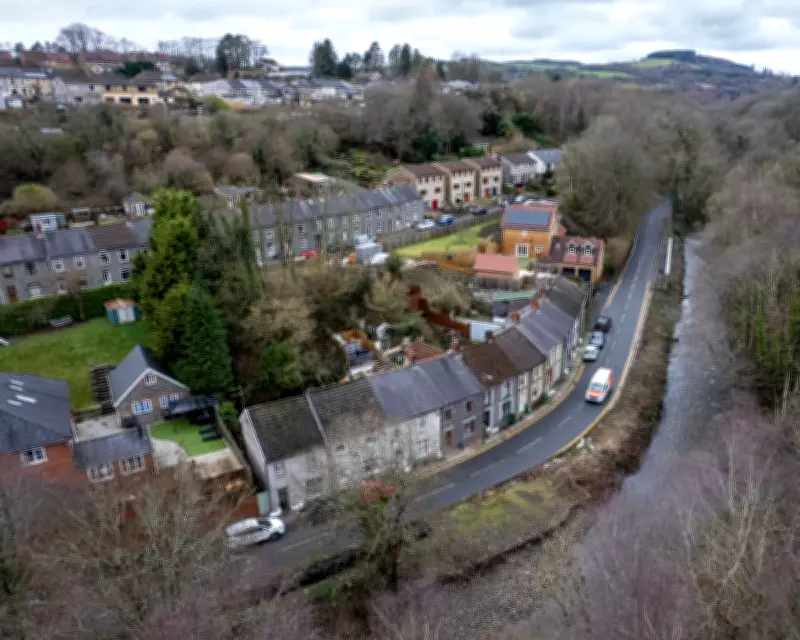
In a landmark decision that highlights the growing impact of climate change on communities across Britain, residents of a small Welsh street have become the nation's first official climate evacuees. The forty-odd inhabitants of Clydach Terrace in Ynysybwl, south Wales, are experiencing profound relief after Rhondda Cynon Taf council voted to purchase sixteen of their eighteen homes at a cost of £2.6 million, with the properties destined for demolition.
Years of Flooding Trauma Finally Ending
For six long years, the residents of this picturesque terrace have lived in constant fear of fast-rising floodwaters from the adjacent Nant Clydach river. The trauma began in earnest during Storm Dennis in 2020, when Paul Thomas, a carpenter who has lived on the street for four decades, found himself thrown against his house by a wall of frigid water from a Taff tributary. "I was holding on to downpipes to stop myself being dragged out again," Thomas recalled. "It was unbelievably strong, the water. You're sitting on the stairs watching it come up each step and wondering when it's going to stop."
The psychological impact has been severe and lasting. Heavy rain or amber weather warnings now trigger sleepless nights for the entire street. Thomas noted that even his grandson has developed a fear of rainfall. "There's so many triggers that take us back to that night," he explained, highlighting how the community has been living with what amounts to environmental post-traumatic stress.
A Street United in Relief and Uncertainty
Clydach Terrace represents a cross-section of contemporary Britain, home to teachers, contractors, NHS employees, retirees, children's carers, and office workers who commute to Pontypridd and Cardiff. Some families have multiple generations living side by side, while others include young couples who purchased their first homes here just before the worst flooding began. Renters also form part of this diverse community now facing displacement.
Paige Didcote, 27, expressed the widespread relief: "I won't have the anxiety if I am at work, and my partner's at work, of having to rush back. We both work over an hour away and anything can happen within that hour." Thomas added emotionally: "Not feeling physically sick when you see a weather warning coming your way ... Not going to bed and wondering: 'Are we going to wake up in the morning?' To live a normal life again, it's a dream come true."
Why This Street Became Uninhabitable
The terrace's vulnerability stems from multiple factors. Built on a natural floodplain in the early twentieth century, the stone houses follow the curve of the Nant Clydach, which was artificially diverted by 1930s mining activity. The street sits in a basin where water levels can rise with alarming speed - a centimetre over the retaining wall can become two metres of floodwater engulfing homes within minutes. "The water will come up the street faster than you can walk," Thomas warned.
Natural Resources Wales, the flooding management authority, spent five years exploring solutions including taller defence walls and enlarging the river culvert. Ultimately, they concluded that no option met viable cost-benefit ratios under current funding rules. The street had been classified as "high risk to life," with insurance becoming either impossible or prohibitively expensive since Storm Dennis.
The Human Cost of Climate Adaptation
Caitlin Gibbs, 24, described living through Storm Bert in 2024 while her three-year-old daughter Layla was dying of cancer. "It was a horrific time for us anyway," she remembered. "It was like: 'What the hell do we do?' What if something happens with her feeding tube? We have got no way of getting out of here." Now, as a renter, Gibbs faces uncertainty about her housing options once the terrace is emptied.
Council leader Andrew Morgan acknowledged the mental health impact on residents, noting that some suffer from PTSD. "Ultimately, if we don't do this, the risk to these residents is going to continue to grow," he stated, explaining that the £2.57 million cost represents a relatively small amount compared to the £130 million spent repairing Storm Dennis damage and £30 million invested in flood infrastructure over recent years.
A Harbinger of Things to Come
Clydach Terrace represents just the beginning of climate-related displacement in the UK. Fairbourne in Gwynedd and Seasalter in Kent have been listed for "managed retreat" over the next two decades due to rising sea levels, while Hemsby in Norfolk recently evacuated residents from clifftop homes. According to the Byline Times, another 713,000 homes - mostly in Lincolnshire, Lancashire, Kent and Doncaster - will face significant flood exposure by mid-century.
The climate crisis is shifting weather patterns and intensifying wind-rain extremes across Britain. During Storm Dennis, the River Taff carried approximately 805 cubic metres of water per second - enough to fill an Olympic swimming pool in just over three seconds. Thomas believes another similar storm could collapse the fronts of the terrace houses entirely.
Moving Forward with Mixed Emotions
Residents are now making practical plans while processing complex emotions. Thomas and his family have started viewing houses elsewhere in Ynysybwl, while a young couple plan to move to Cardiff. The community plans to hold a street party before the September demolition deadline, marking both an ending and a new beginning.
"I would have loved them to fix the river but there's nothing else they can do," Thomas reflected. "You'd be a fool to think there isn't climate change ... The weather has changed, it's as simple as that. My world turned upside down in 2020. Hopefully, now we can move on from this." As Britain faces increasing climate challenges, the story of Clydach Terrace offers both a warning and a template for how communities might adapt to our changing environment.



