
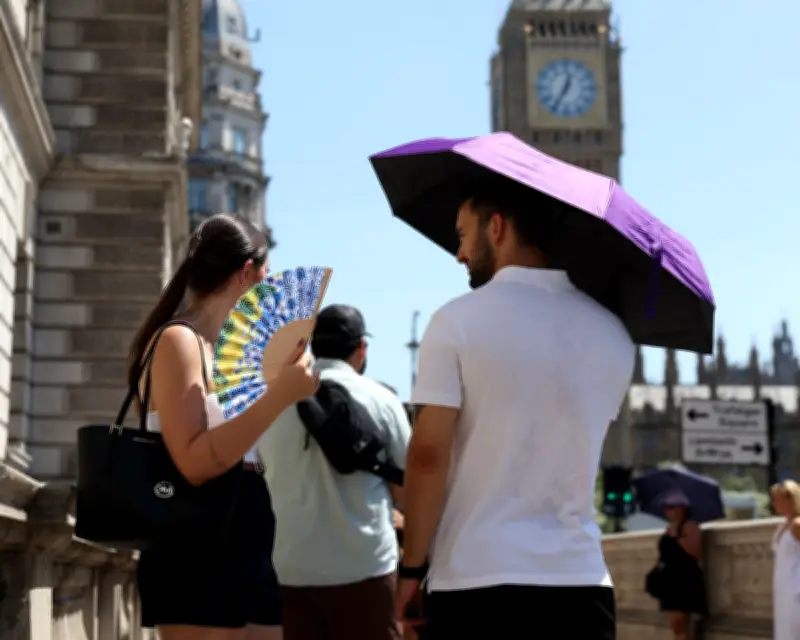
The UK's record-breaking June heatwave feels worse than the all-time high of 40.3°C in July 2022 due to unusually high humidity, according to experts. The Met Office reports that the current heatwave, with temperatures reaching 35°C, feels like 41°C because of the moisture in the air.
Humidity levels far exceed 2022 heatwave
A Met Office spokesperson said: “Humidity is unusually high at the moment.” The dew point temperature, which measures moisture in the air, is “in the low 20s [centigrade] for this heatwave”, a significant jump from the “single figures of the July 2022 heatwave”. The Royal Meteorological Society (RMS) added: “Back in July 2022, when we broke the 40°C barrier for the first time, the air was very dry. In this current June 2026 heatwave, it is very moist. And that means even if the number on the thermometer isn’t as high, it will feel much worse, especially at night.”
Health risks increase with humidity
The RMS spokesperson explained: “Hot and humid weather puts more stress on the body than hot and dry air. We cool down by sweating, but if the air is already very moist there is nowhere for our sweat to go, and that means we can’t cool down and our core temperature will rise.” This poses greater risks of dehydration, heatstroke, and death, particularly among the elderly and young children. The UK is also seeing an increase in tropical nights, where temperatures remain above 20°C all night, exacerbating the danger.
Understanding the role of humidity
According to the RMS, air temperatures alone do not tell the full story. “A better indication of how it will feel in a heatwave is to look at the dew point temperature, the wet bulb temperature or the heat stress index. These all take heat and humidity into account.” Higher humidity creates a muggy, oppressive feeling, as experienced in recent days.
Climate crisis fuels more humid heatwaves
Fossil fuel emissions are heating the planet, and for every 1°C rise, the atmosphere can store 7% more moisture. This increase in water vapour makes modern heatwaves more oppressive and dangerous. The UK and northern Europe are among the most affected regions. The current heatwave is a high-pressure system from the warm subtropics, which passed over France (where temperatures exceeded 40°C) and stalled over the UK, creating a “heat-dome” effect.
Tips for coping with heat and humidity
Dr Heather Massey, associate professor in extreme environments and physiology at the University of Portsmouth, advises limiting exposure during the hottest parts of the day (late morning to early evening), seeking shade or air-conditioned spaces, and keeping indoor spaces cool by closing curtains or blinds during the day and opening windows at night. She recommends wearing loose, light-coloured, breathable fabrics like cotton, taking cool showers, using damp cloths, and drinking fluids regularly even if not thirsty to replace water lost through sweating.



