
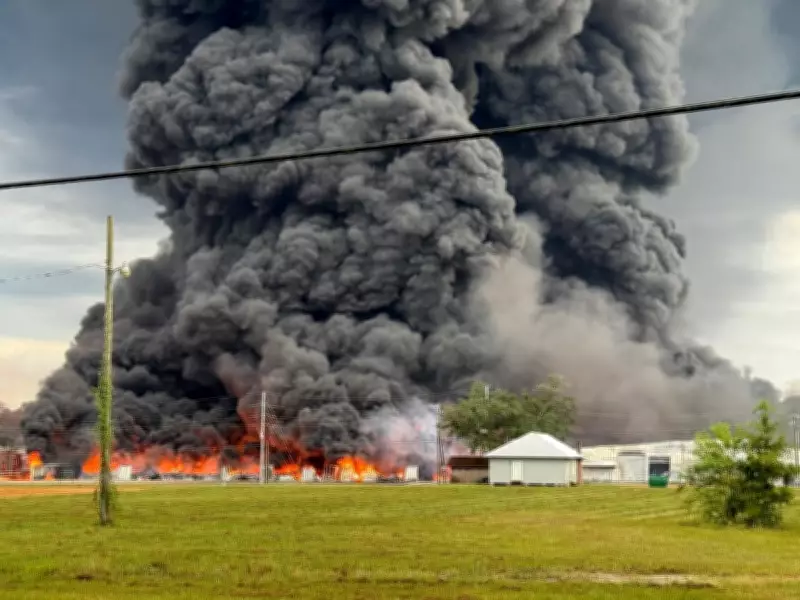
Trump Officials Target Chemical Disaster Protection System
The Trump administration is systematically dismantling the federal disaster management framework designed to shield the United States from catastrophic chemical incidents, including fires and explosions at high-risk industrial facilities. This move comes as chemical corporations argue that the protective provisions within the Response Management Program (RMP) are excessively costly to implement, putting industry profits ahead of public safety concerns.
EPA's Response Management Program Under Fire
The US Environmental Protection Agency's Response Management Program mandates that more than 12,500 high-risk facilities establish comprehensive protocols to either prevent disasters or minimize their impact. Originally crafted to safeguard workers, first responders, and neighboring communities, the RMP represents a critical component of national chemical safety infrastructure.
In 2024, the Biden administration finalized a landmark rule that significantly enhanced these protections after twelve years of development. However, early in 2025, industry groups petitioned the incoming Trump EPA to reverse these strengthened regulations, claiming implementation would impose unreasonable financial burdens on chemical companies.
Chemical Accident Statistics Reveal Ongoing Threat
Between 2004 and 2025, the United States experienced a chemical accident causing harm to humans or the environment approximately every other day on average. Recent high-profile incidents include a Clairton, Pennsylvania steel plant explosion that injured ten people and a Roseland, Louisiana oil facility explosion that sent oil splattering onto homes as far as twenty miles away.
Approximately 180 million Americans reside within several miles of facilities covered by RMP regulations, and dozens have lost their lives in chemical accidents in recent years. These statistics underscore the real-world consequences of weakening chemical safety protections.
Administration Actions and Industry Influence
The Trump EPA has already eliminated a public website that informed communities and first responders about which chemicals are in use at local facilities. Additionally, the White House has targeted the Chemical Safety Board, which investigates accidents and develops preventive measures to avoid recurrence.
"The Trump EPA is stacked with former industry lobbyists, and its attempt to dismantle the RMP is a case study in the administration putting industry profits ahead of public safety," stated Marc Bloom, a former EPA policy advisor and senior director with the Environmental Protection Network. "These standards exist because catastrophic explosions and toxic releases are not theoretical risks – they are real events that devastate communities."
Historical Context and Regulatory Evolution
Congress established the RMP program in 1990 through a Clean Air Act revision following a series of deadly chemical facility accidents worldwide that claimed hundreds of lives. The original law required facilities to implement protective measures including chemical release detection technology, fire suppression systems, and comprehensive emergency response plans for all employees.
Public health advocates argued the initial regulations were insufficient. After additional fatal accidents around 2010, including a Chevron explosion that injured 15,000 people, the Obama administration developed stronger rules. The first Trump administration blocked their implementation before the Biden administration revived and enhanced the Obama-era regulations with additional improvements.
Key Provisions Being Eliminated
The 2024 rules required hazardous facilities to implement newer preventive technology, establish backup measures in case primary defenses failed, and substitute hazardous chemicals with safer alternatives. Specific measures included easily accessible kill switches for employees and automatic shut-off systems that would activate if workers became incapacitated.
The regulations also mandated facilities develop plans for "double disasters" occurring when natural events like hurricanes, earthquakes, or wildfires impact chemical plants. When Hurricane Harvey struck Houston in 2017, flooding disabled refrigeration units at the Arkema chemical plant, triggering a massive explosion that forced evacuations and injured first responders who lacked warning about toxic fumes.
"The new Trump proposal erases most of those requirements," explained Emma Cheuse, an attorney with the Earthjustice legal nonprofit that has litigated RMP issues. "These are common sense measures and yet they want to take them out completely."
Worker Protections and Information Access
The 2024 rule, which has not yet been fully implemented, granted workers increased authority including mandatory consultation with chemical companies during emergency response planning, stop work authority, emergency response training, and mechanisms for reporting unaddressed hazards.
"This administration fundamentally does not care about workers or that so many facilities have had catastrophic events that sometimes lead to mass layoffs and closures," said Rick Engler, a former EPA Chemical Safety Board member and labor advocate who founded the New Jersey Work Environment Council.
The administration has also removed a "public data tool" that mapped hazardous facility locations and listed chemicals used at each site. While the law requires this information to be publicly available, and it might have prevented problems during the Arkema explosion, the EPA has relocated it to a reading room citing national security concerns.
Advocates have dismissed the security justification as pretextual. "This fits into the broader pattern," Bloom added. "They're taking actions that are putting more people at risk, and we're seeing this across the board, but this is particularly egregious."
The EPA maintains its proposed revisions strengthen the law by providing "clearer and more workable" rules that "maintain all core accident prevention protections while eliminating duplicative, contradictory, or unproven requirements that add cost and confusion without improving safety results."



