
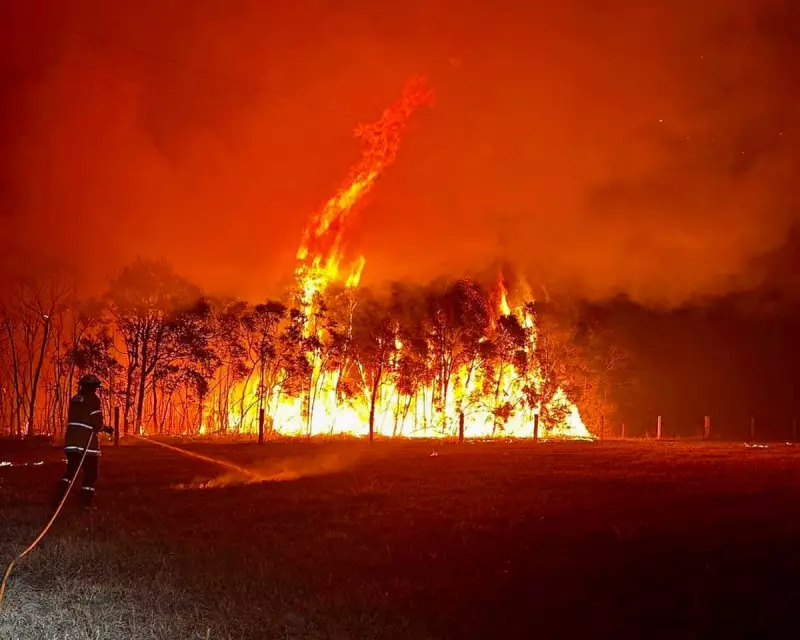
Australia is on high alert as a severe and widespread heatwave, described as the most significant since the catastrophic Black Summer bushfires, is set to engulf more than half the continent this week.
Extreme Temperatures and Fire Danger Forecast
The Bureau of Meteorology has issued stark warnings as a mass of hot air builds, promising a brutal period of soaring temperatures. The heat band, which has been intensifying over Western Australia, will extend into South Australia, New South Wales, and Victoria from Tuesday.
Forecasters predict temperatures will top 45 degrees Celsius in some regions, with coastal areas, including Adelaide and Melbourne, expecting lows in the 40s. The bureau defines a heatwave as three consecutive days of above-average temperatures, a threshold that will be significantly exceeded.
"Most Significant Burst of Heat" Since 2019-20
Senior forecaster Dean Narramore highlighted the severity, stating the core of the event will run from Wednesday through Friday. "We’re likely to see extreme heatwave conditions over a huge part of NSW and northern Victoria," Narramore said. "It is looking like … the most significant burst of heat for southeastern Australia, particularly in terms of multiple days in a row of mid-40 temperatures, since the summer of 2019-2020."
That summer, known as Black Summer, resulted in the deaths of more than 30 people directly and burned through millions of hectares of land. The current conditions are raising fears of a similar crisis, with total fire bans already in place and expected to continue as the mercury climbs.
Widespread Impacts and Climate Context
The consequences of the extreme heat are far-reaching. Fire dangers are predicted to reach extreme levels in South Australia, Victoria, and inland NSW. The energy grid is also under strain, with Ausgrid's Matthew Sweeting warning of an increased risk of unplanned outages as demand for air conditioning skyrockets.
This intense weather event follows another record-breaking year for Australia's climate. 2025 was the nation's fourth-warmest year on record, with temperatures 1.3C above the 1961–1990 average. Climatology Specialist Nadine D’Argent noted that 2024 was Australia's second-warmest year, underscoring a worrying trend.
"Between January and March, and between October and December, large parts of Australia experienced heatwave conditions, reaching extreme severity at times," D’Argent said. The climate crisis is widely acknowledged to be increasing the frequency and severity of such extreme weather events, placing communities and emergency services under growing pressure.



