
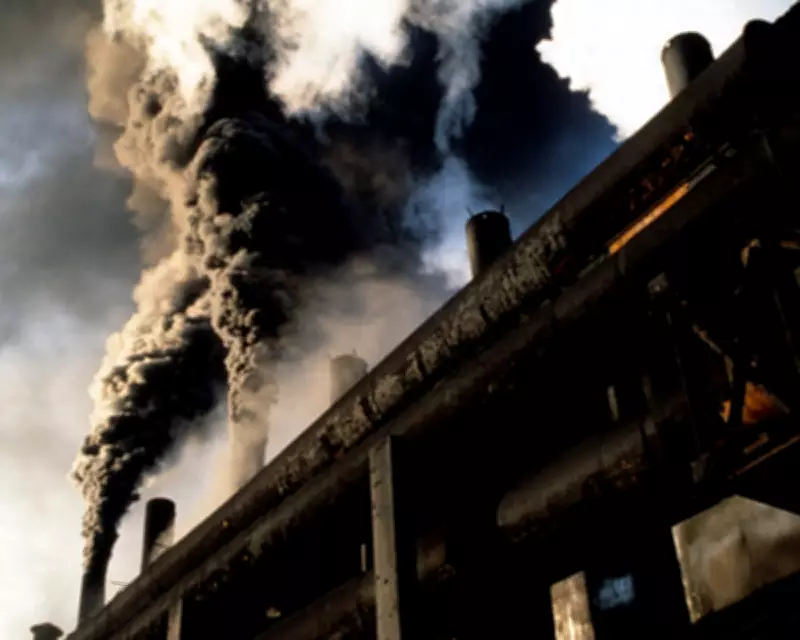
In 1990, a factory in Copsa Mica, Romania, spewed pollution into the air, symbolising the country's industrial and polluted state under communist rule. Today, Romania stands as a remarkable case study in environmental transformation, with emissions plunging 75% since that era. As the nation races forward with breakneck development, questions arise about whether this pace can be sustained and what lessons it offers for the global climate fight.
A Solar-Powered Future Emerges
Once the frozen fields outside Bucharest thaw, construction will begin on Europe's largest solar farm, featuring one million photovoltaic panels backed by battery storage to power homes after sunset. This 760MW project in southern Romania is just the beginning; authorities in the north-west have approved an even larger plant with a 1GW capacity. These sun-lit installations join a growing portfolio of renewable projects that have reshaped the Romanian economy, including an onshore windfarm near the Black Sea that was once Europe's biggest, a nuclear power plant by the Danube with its lifetime extended by 30 years, and a widespread network of solar panels on homes and shops across the country.
Liviu Gavrila, vice-president of the Romanian Wind Energy Association and manager at Enery, the company building the solar farm, asserts, "The trend is irreversible. But we need to play it smart." Few would label Romania a traditional climate leader, yet it has achieved what many consider the holy grail of the energy transition: decoupling economic growth from pollution at an unprecedented rate in Europe, and possibly the world.
Metrics of Success
Data reveals that Romania's net greenhouse gas emissions intensity fell by 88% between 1990 and 2023, meaning each dollar of economic activity now heats the planet almost ten times less than before. Emissions have dropped by 75% overall. This raises critical questions: How did Romania shatter the historical link between economy and climate? And can this rapid transformation maintain its momentum?
The Brutal Transition from Communism
Under the oppressive rule of Nicolae Ceaușescu, Romania's economy became heavily industrialised and polluted, relying on low-grade lignite and heavy oil to fuel energy-hungry factories. After Ceaușescu's fall and the privatisation of industry, factories closed, mines shut, and power plants reduced output, leading to an initial drop in emissions that was more a result of historical upheaval than deliberate policy.
Ioana-Maria Petrescu, a former finance minister of Romania and founder of a climate nonprofit, explains, "The first drop was history happening, not active, policy-led decarbonisation. But it continued, luckily, because Romania joined the EU." Romania's entry into the European Union in 2007 imposed higher standards on polluters, forced the closure of unprofitable state-supported factories, and introduced mechanisms like an emissions trading system and a green certificate scheme to fund renewables.
In the 17 years after the iron curtain fell, the carbon intensity of Romania's power sector decreased by 9.2%. In the following 17 years, it plunged by 52%. The shift to a service-based economy also brought changes in agriculture, with livestock numbers falling and farms modernising, while forests expanded on abandoned plots, increasing carbon absorption by 77%.
Uneven Benefits and Social Fallout
Despite Romania's economic boom, which has doubled real GDP since 1990, the benefits have not been evenly distributed. Entire communities have withered after job losses in factories and mines, with former coal towns depopulating as young people seek work abroad. Petrescu, who runs Pur si Simplu Verde to ensure a just transition in fossil fuel-dependent communities, notes, "It's good that we reduced greenhouse emissions and it's good that now we're relying on different types of industries. But the transition was brutal for a lot of people."
Global Context and Challenges
If industrialised nations could decouple as rapidly as Romania without similar social fallout, the fight against climate breakdown might seem less daunting. Promising signs exist globally, with dozens of countries achieving full or relative decoupling. However, a 2023 study of 36 rich nations found that none had decoupled fast enough to meet Paris Agreement targets, and sectors like buildings and transport pose harder challenges than the power sector.
William Lamb, a scientist at the Potsdam Institute for Climate Impact Research, comments, "Switching off coal plants is really low-hanging fruit. It's happening very fast in some countries, but that's just a chunk of our emissions." Recent setbacks in climate policy, such as the US embracing fossil fuels and the EU revising its Green Deal, highlight the fragility of progress. Some countries, including former Soviet republics like Latvia and Lithuania, have reversed decoupling gains post-2015.
Romania's Oil Heritage and Gas Ambitions
Romania, the birthplace of big oil with the world's first refinery built in 1857, now faces a complex energy future. Despite its renewable strides, the country is pursuing gas projects like Neptun Deep, the largest gas extraction project in Europe, and converting coal plants to gas. Campaigners warn this could leave Romania dirtier and poorer as carbon prices rise and EU climate laws tighten.
Raluca Petcu, a campaigner at Bankwatch Romania, argues, "It's more expensive to transition twice. We're going to have to build more renewables in 2035 or transform the gas plants we're building." Additionally, five coal plants scheduled to close were granted reprieves due to fears of blackouts and job losses, and Romania's National Energy and Climate Plan has been criticised for lacking ambition in renewables and forest protection.
Public Sentiment and Future Prospects
Public appetite for transformational change remains low in Romania, with double the EU average of citizens not viewing climate breakdown as a serious problem, and only three countries showing less support for climate neutrality by 2050. Petrescu observes, "People remember what happened 30 years ago, and they're afraid to be victims of another transition."
Nevertheless, Romania's achievements are notable, with net greenhouse gas emissions falling to just 3 tonnes per person, lower than all Europeans except Swedes. Its journey offers a blueprint for other eastern European nations and middle-income countries worldwide, demonstrating that a manufacturing powerhouse can cut emissions while raising living standards.
Mihnea Catuti, executive director of Energy Policy Group, cautions, "What's happened in Romania should never turn into something preachy." He notes that while clean energy allows developing countries greener growth paths, there is a level of development that requires increased energy consumption. "Romania used to be an oil and gas country for a century before it managed to decouple its emissions. But you get to a point at which growth simply doesn't come from that any more."
As Romania continues its breakneck transformation, the world watches to see if it can sustain this pace and provide a model for balancing economic growth with environmental stewardship in an era of climate crisis.



