
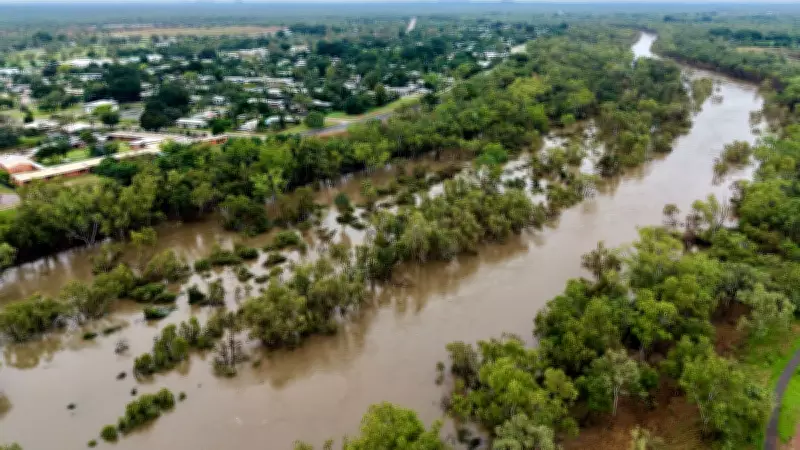
Northern Territory on High Alert as Cyclone Narelle Approaches
The Katherine River is once again rising, threatening the township as Tropical Cyclone Narelle bears down on the Northern Territory. This comes after the region has already endured one of the worst flood events in decades, with patients evacuated from Katherine hospital and communities on edge.
Unprecedented Weather Events Strain Resources
Tropical Cyclone Narelle marks the seventh high-risk weather system to hit Australia's north in just five months. Although downgraded to an ex-tropical cyclone by Sunday midday NT time, it is expected to dump up to 300mm of rain across the already saturated Top End. The Fire and Emergency Services commissioner, Andrew Walton, warns that even minimal rainfall could have significant impacts due to the landscape's saturation.
Flood warnings are active across much of the Territory, with residents advised to leave some hotels and emergency shelters being established. The wet season began early in November 2025 with Tropical Cyclone Fina, causing power outages and road damage. Persistent rainfall has affected up to 85% of roads in central and Barkly regions, and the Todd River in Alice Springs has flowed continuously for a month, breaking its banks twice in February.
Community Impact and Evacuation Challenges
In early March, floods stretching over 500km inundated communities in the Roper, Big Rivers, and Daly regions, leading to one of Katherine's worst floods in living memory. Many residents lost everything, with insurance costs becoming prohibitive since the 1998 floods, some quotes reaching $20,000 annually. Local butcher Jason Scaddon notes that government disaster payments, including $611 for adults and $300 for children, have spurred economic activity, with his business selling about seven tonnes of meat.
However, remote Aboriginal communities face stark disparities in support. Cilia Lake, a Mangarayi traditional owner evacuated from Jilkminggan, describes feeling abandoned during the crisis. Residents had to evacuate themselves with minimal assistance, staying in overcrowded shelters without initial meals or cultural considerations. Initially excluded from disaster payments, these communities later received around $150 per adult, compared to urban residents who accessed funds once shops reopened.
Climate and Policy Criticisms
The federal government's 2025 climate risk assessment warned of increasing natural disasters in northern Australia, with First Nations communities most vulnerable. Dr. Kirsty Howey of the Environment Centre NT criticizes ongoing investments in fossil fuel projects like fracking in the Beetaloo Basin, arguing they exacerbate climate risks while emergency resources remain inadequate. Matthew Ryan, chair of the Northern Land Council, calls for better coordination and inclusion of Aboriginal people in emergency management plans to address inconsistent care and food security issues.
As heavy rain is expected from Sunday afternoon, the Northern Territory braces for further devastation, highlighting urgent needs for improved disaster response and climate action.



