
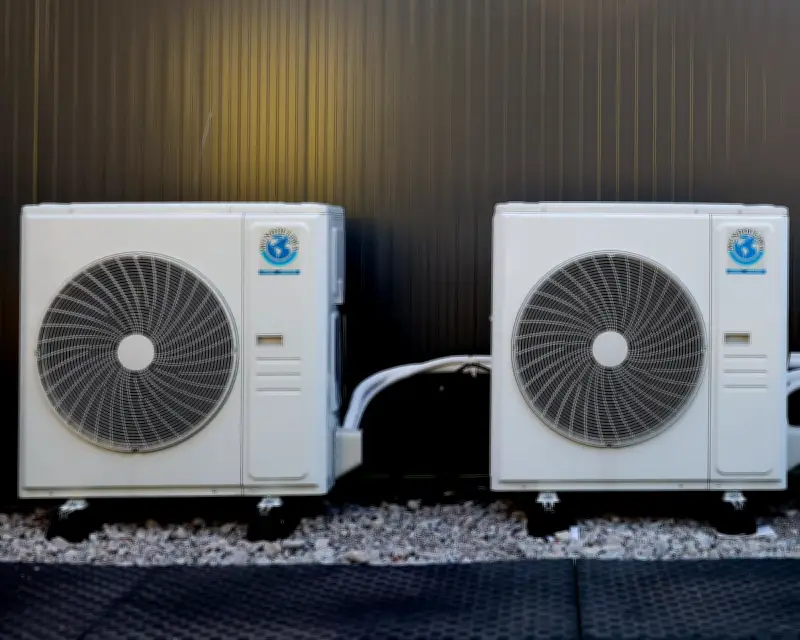
As temperatures hit a record 41.7C in Brandenburg, Germany, on Sunday, 65-year-old Mario was among the few Germans with air conditioning. Only 6% of German homes have fixed AC units. Europe's worst heatwave on record has ignited a culture war over air conditioning, with far-right parties criticizing the lack of cooling as a failure of climate policy. Health experts warn the debate distracts from protecting vulnerable groups.
Far-right criticism intensifies
Marc Bernhard, construction spokesperson for the far-right Alternative für Deutschland (AfD), accused mainstream parties of sacrificing people on the altar of climate ideology. This shift contrasts with the AfD's previous dismissal of heat-related deaths as 'heat panic' just a year ago. In France, Marine Le Pen's National Rally has made air conditioning a focus while opposing energy-efficient renovations and renewable energy.
US commentators fuel debate
US commentators, including Elon Musk, have amplified criticism, with a chatbot-generated text viewed nearly 20 million times stating 'Europeans should just install air conditioning.' However, only about 15% of the 3.5 billion people in hot regions globally own AC. In southeast Asia, the International Energy Agency expects AC numbers to rise ninefold by 2040.
Health experts urge nuanced approach
Hans Kluge, head of WHO Europe, recommends AC for medical necessities but warns against widespread home adoption. Studies show adaptation efforts have reduced heat-related deaths by 75% compared to two decades ago, but over 200,000 people died from heat in Europe in the last four years. The June heatwave is expected to cause thousands of deaths.
Low AC adoption not solely due to climate concerns
In Italy and Spain, over half of homes now have AC; in France, 24% overall but up to 48% in hot southern provinces. In Germany, uptake remains low partly due to many renters. Some residents, like Gabriele Werner in Neuzelle, say brief heat spells don't justify purchase. Reinhard Lange, near the record-breaking weather station, denied climate change, saying 'it was also warm' when he was a child.
Future priorities: AC for those in need
Kluge stresses ensuring AC for medical necessities while building green infrastructure. Dr Chloe Brimicombe of Oxford University highlights inequality, noting data centres consume energy during heatwaves while lives are at risk. 'Lives are more valuable than AI,' she said.



