
Earth's Energy Imbalance Reaches Record High, Pushing Planet Beyond Limits
The World Meteorological Organization has issued a stark warning that Earth is grappling with a record energy imbalance, which is warming oceans to unprecedented levels, intensifying extreme weather events, and jeopardizing global health and food security. The latest State of the Global Climate report reveals that the planet's energy equilibrium has dangerously shifted due to human activities, with oceans bearing the brunt of the accumulating heat.
Unprecedented Heat Accumulation in Oceans
The United Nations body confirmed that the period from 2015 to 2025 represents the hottest 11 years ever recorded. However, a more alarming finding is that the surface temperature increase experienced by humans accounts for only 1% of the rapidly accumulating heat within the broader Earth system. Over 90% of this excess heat is absorbed by the oceans, which reached their highest heat content in history last year. The rate of ocean warming has more than doubled over the past two decades compared to the average over the previous 45 years.
This escalating imbalance highlights the growing vulnerability of our planet as it moves further out of balance due to human-induced factors. The combustion of fossil fuels like oil, gas, and coal, along with deforestation, releases heat-trapping greenhouse gases such as carbon dioxide, methane, and nitrous oxide. These gases are now at their highest concentrations in at least 800,000 years, disrupting the Earth's natural energy equilibrium.
Tracking the Energy Imbalance
In a well-functioning planetary system, the amount of radiation entering and leaving the Earth's atmosphere remains roughly balanced. However, a heat surplus has been accumulating since at least 1960, with a noticeable acceleration in recent years. For the first time, the new report tracks this imbalance, showing an increase of approximately 11 zettajoules per year between 2005 and 2025. This amount is equivalent to about 18 times total human energy consumption. Last year, the imbalance more than doubled that average.
Currently, humans and other surface-dwelling life forms directly experience only a small fraction of this energy backup. The distribution is as follows:
- 91% absorbed by oceans
- 5% absorbed by land
- 1% warms the atmosphere
- 3% melts polar and high-mountain ice
Despite this minimal surface exposure, global temperatures are climbing to alarming levels. Last year ranked as the second- or third-hottest on record, depending on the dataset. World leaders acknowledge that it is now inevitable the planet will temporarily exceed the Paris Agreement target of limiting heating to 1.5°C above pre-industrial levels. The dire consequences are already evident in faltering agricultural harvests, worsening dengue outbreaks, and increasingly severe heatwaves, forest fires, and storms.
Profound and Long-Lasting Ocean Impacts
The effects on oceans are not yet fully understood, but they are expected to be profound and enduring. Sea levels are rising at an accelerating pace, and sea ice has reached its third-lowest level ever recorded. The report's authors note that more heat is penetrating into ocean depths, affecting circulation patterns and locking in consequences for thousands of years.
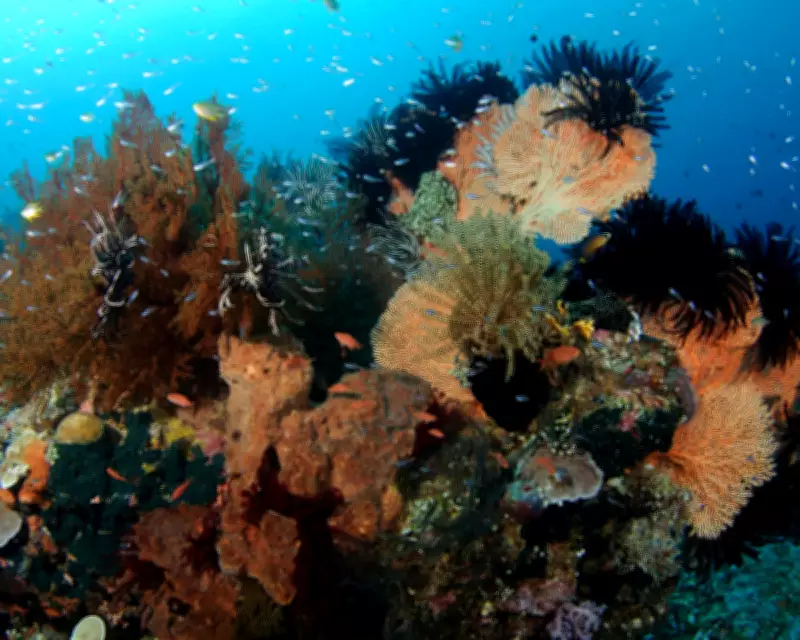
Near the surface, heatwaves and acidification pose growing threats to corals and other marine life. Simultaneously, melting ice contributes to rising sea levels and weakens the planet's ability to reflect solar radiation back into space, exacerbating the energy imbalance.
No Respite in Sight
There is little hope for immediate relief. The Pacific Ocean is concluding a La Niña phase, typically associated with cooler surface temperatures globally. Forecasts suggest that by the end of this year, an El Niño phase could replace it, bringing additional heating. "If we transition to El Niño, we will see an increase in global temperature again and potentially to record levels," warned Dr. John Kennedy, lead author of the WMO report.
UN Secretary-General António Guterres emphasized the urgency: "The state of the global climate is in a state of emergency. Planet Earth is being pushed beyond its limits. Every key climate indicator is flashing red. Humanity has just endured the 11 hottest years on record. When history repeats itself 11 times, it is no longer a coincidence. It is a call to act."



