
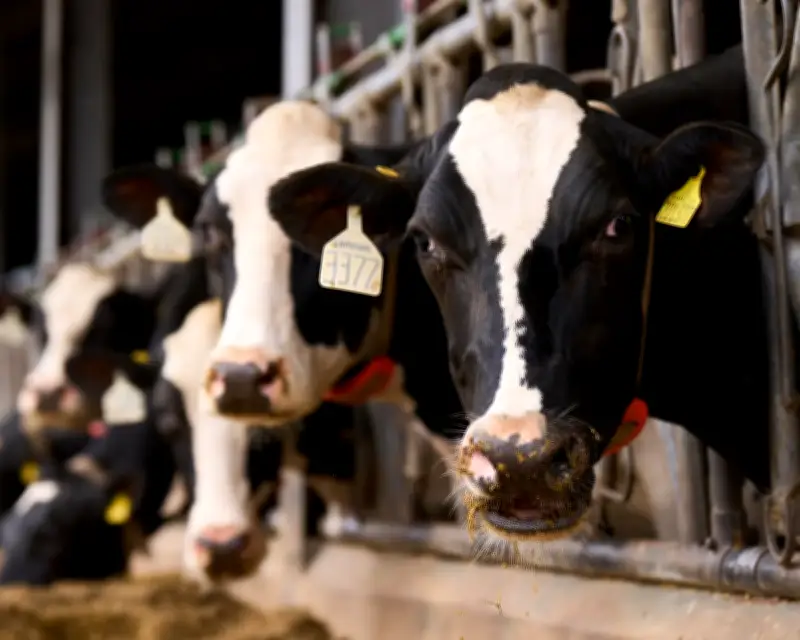
Grosvenor Farms, the dairy operation of the Duke of Westminster's estate, is navigating the challenges of climate change and market volatility through innovative practices. The farm, located near Chester, produces over 34 million litres of milk each year, supplying major retailers like Müller and Tesco. Despite a 50% drop in milk prices this year, the farm remains profitable, thanks to a significant investment in technology and sustainability.
Climate Challenges and Adaptation
The farm has been hit by a series of heatwaves, with temperatures exceeding 36°C in June, causing each cow to produce up to six litres less milk per day. Mark Roach, managing director of Grosvenor Farms, noted that other farms have seen even greater losses, with yields down as much as 10 litres per cow daily. "It's very, very challenging for farming," Roach said, highlighting the broader impact of extreme weather on the agricultural sector.
Mark Preston, an executive trustee of Grosvenor, emphasized the need for resilience: "Extreme weather in many parts of the northern hemisphere is affecting crop yields and farm economics. Farmers are adapting where they can, but the full impact is likely to become clearer over the next growing season."
Financial Performance and Investments
Despite the difficulties, Grosvenor Farms reported a pre-tax profit of £2.6 million in 2024, down from £3.6 million the previous year, with turnover of £16.2 million. The farm's profitability is attributed to a major overhaul that began in 2012, focusing on efficiency and technology. The Duke of Westminster, Hugh Grosvenor, who has an estimated fortune of £9.5 billion, sees the farm as a commercial venture, not a hobby, according to Roach.
The estate is also investing in a biomethane plant, expected to generate 72 gigawatts of renewable gas annually from cow manure, enough to heat about 6,000 homes by 2027. This initiative is part of Grosvenor's commitment to circular farming, which has allowed the farm to avoid buying mined phosphate or potash fertilisers for 15 years.
Operational Details and Animal Welfare
Lea Manor Farm, part of the Eaton Estate, employs 77 staff and manages 2,600 Holstein Friesian cows. The cows are milked three times daily using an automated carousel, with sensors monitoring their health. Grosvenor maintains that its cows are healthy, with minimal antibiotic use, and has welcomed RSPCA representatives who described the herd as "one of the quietest and most content" they had seen.
However, only 8% of UK dairy herds are housed all year round, according to the RSPCA, which advocates for grazing. Grosvenor defends its system, citing the health of the herd and low disease incidence.
Broader Agricultural Pressures
The farm faces additional challenges, including bovine tuberculosis and labour shortages post-Brexit. The near-total blockade of the Strait of Hormuz during the Iran war has led to global fertiliser shortages, described as a "food security timebomb" by David Miliband, head of the International Rescue Committee. Preston echoed these concerns, warning that food price increases could arrive next year.
With half of England and Wales officially in drought, and wheat at half its normal height, the UK is increasingly reliant on imports. Grosvenor's circular farming approach, which turns crop waste into feed and animal waste into fertiliser, is a model for sustainability in a sector under pressure.



