
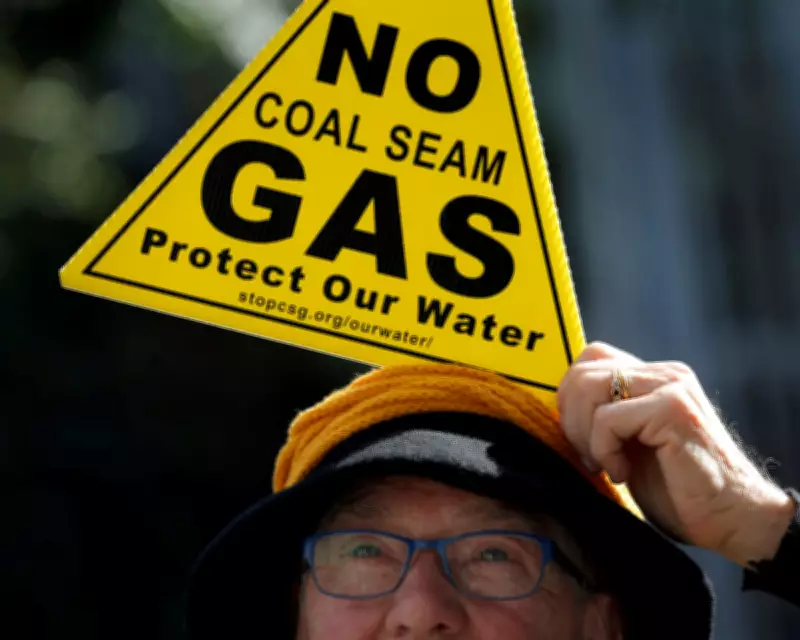
Australia Approves Major Coal Seam Gas Expansion in Queensland Until 2081
The federal government has granted approval for a significant coal seam gas expansion project in Queensland, with authorization extending until the year 2081. This controversial decision permits Australia Pacific LNG to develop new gas infrastructure across the Surat and Bowen basins, despite environmental concerns about substantial carbon emissions.
Project Scope and Environmental Impact
The approved expansion represents one of the largest fossil fuel projects recently authorized in Australia. The development includes plans for up to 1,695 new gas wells, extensive pipeline networks spanning 1,545 kilometers for gas and water transportation, and three processing facilities. These facilities are projected to produce approximately 2,033 petajoules of gas over the project's operational lifetime.
Environmental assessments reveal the project will contribute about 120 million tonnes of carbon emissions throughout its existence. Detailed analysis indicates 9 million tonnes of carbon dioxide emissions will result directly from construction and operational activities, while approximately 111 million tonnes will be generated through the combustion of the extracted gas. This emission total surpasses Australia's annual transportation sector emissions, highlighting the project's significant environmental footprint.
Industry and Government Perspectives
Australia Pacific LNG, a joint venture involving ConocoPhillips, Origin Energy, and Sinopec, welcomed the federal approval under environmental legislation. A company spokesperson emphasized that the Gas Supply Security Project would enable continued production from existing reserves to fulfill export contracts while supplying essential gas to Australia's east coast markets both currently and in future years.
The government defended its decision, stating the project underwent rigorous scientific evaluation before receiving approval. Officials noted the development will be subject to 126 specific environmental conditions and requirements under the strengthened Safeguard Mechanism. According to government representatives, the project must demonstrate annual emissions reductions and achieve net zero greenhouse gas emissions by 2050 in alignment with national climate policies.
Environmental Criticism and Community Concerns
Climate advocates have strongly criticized the approval as contradictory to Australia's climate commitments. Amanda McKenzie, chief executive of the Climate Council, described the decision as "like lighting another cigarette while you're trying to quit smoking," noting this represents the 36th fossil fuel project approved by the current administration. She emphasized that approving new pollution sources undermines efforts to reduce climate impacts, particularly following a summer marked by record heatwaves and destructive flooding events.
Environmental organization Lock the Gate raised additional concerns about landscape impacts, noting Queensland has already been affected by more than 16,000 existing coal seam gas wells. National coordinator Ellen Roberts questioned the project's stated purpose, suggesting the expansion serves primarily to enhance profits for multinational gas exporters rather than addressing genuine energy security needs, especially given existing gas production already exceeds domestic consumption levels in Queensland.
The project is scheduled to operate until 2061, with extended approval timelines designed to ensure environmental compliance throughout the development lifecycle. This decision occurs amid ongoing national debates about balancing economic development with environmental protection and climate action commitments.



