Arizona Desert Town Shatters US March Heat Record Amid Climate Crisis
A small community in the Arizona desert has broken the record for the highest March temperature ever recorded in the United States, as the Southwest endures a blistering late-winter heatwave that scientists attribute to the climate crisis. The astonishing temperature of 110°F (43.3°C) was recorded just outside Martinez Lake, Arizona, on Thursday, according to the National Weather Service.
Record-Breaking Heat Across the Southwest
Martinez Lake, located about 145 miles west of Phoenix near the Arizona-California border in the Yuma desert, surpassed the previous record of 108°F (42.2°C) set in Rio Grande City, Texas, in 1954. This record was tied on Wednesday by North Shore, California, and by Thursday, several more California locations, including Cathedral City and Thermal, had also reached 108°F. Thermal was forecast to hit 110°F on Friday, potentially tying the new record.
The National Weather Service noted that the average first 105°F day of the year typically occurs on May 22nd, highlighting the extreme nature of this early heatwave. This week's scorching temperatures have established record highs in dozens of locations across the Southwest, including Phoenix, San Diego, Los Angeles, Las Vegas, and San Francisco.
Impacts and Local Responses
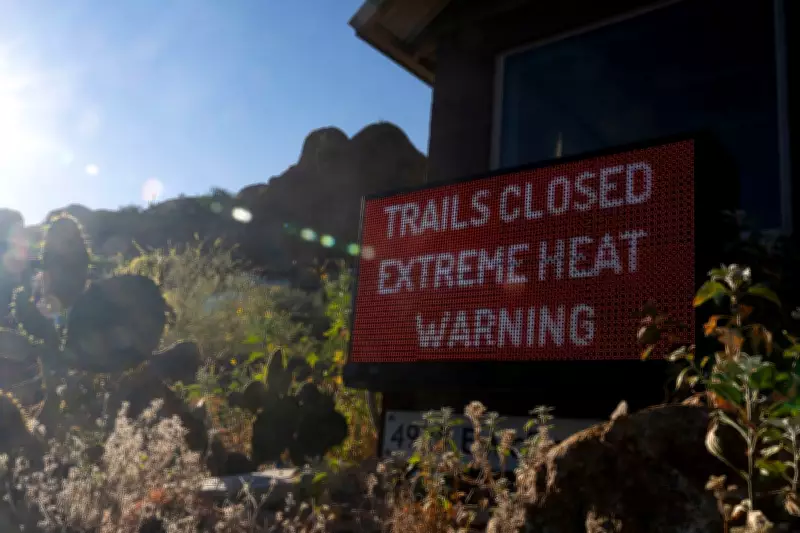
In Phoenix, temperatures reached 105°F on Thursday, surpassing the previous record of 102°F set just a day earlier. This marked the earliest day of triple-digit temperatures in the city, with the last occurrence in March nearly 40 years ago. Due to the risk of heat illness, hiking trails around Phoenix were closed, including at Camelback Mountain, where signs warned of extreme heat dangers.
Despite the intense conditions, some residents, like Ruben Pantaleon in Thermal, remained unfazed. While cleaning car windshields under the blaring sun, he wore shorts and relied on electrolyte drinks, stating, "It's the desert. It gets real hot. I'm not worried about it."
Scientific Link to Climate Change
A team of scientists has determined that this week's scorching weather would have been "virtually impossible" without the climate crisis. An analysis released on Friday found that global heating has made such heatwaves four times more likely over the past decade. The heatwave is expected to persist, with temperatures 20 to 30 degrees Fahrenheit above normal for March in the Southwest before a slight drop on Sunday. Many cities in the region are anticipated to experience their earliest 100-plus°F day on record, according to weather forecasts.
This unprecedented event underscores the growing impact of climate change on extreme weather patterns, raising concerns for public health and safety in affected areas.