
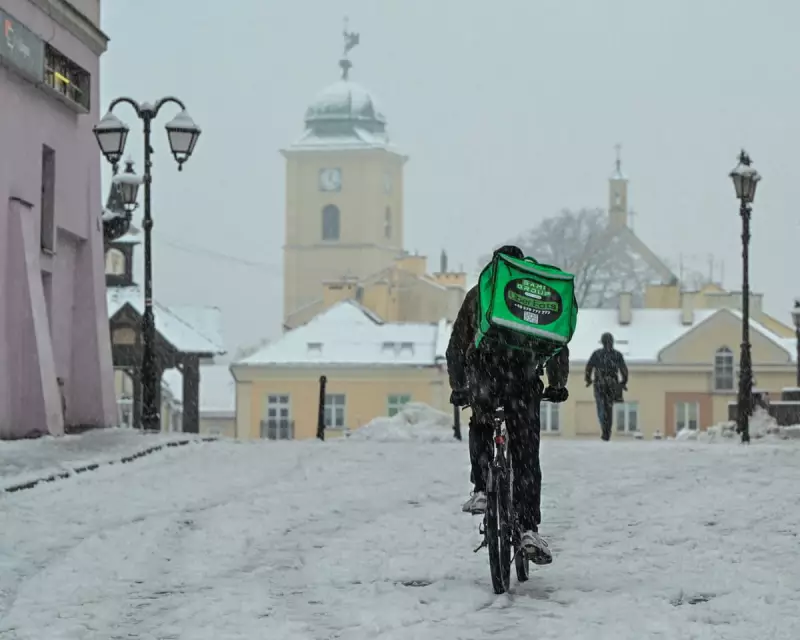
A severe winter storm has plunged tens of thousands of Polish households into darkness and disrupted travel, while on the other side of the world, torrential rains have triggered devastating floods and fatal landslides in Sri Lanka.
Arctic Blast and Power Outages in Poland
Temperatures across Eastern Europe plummeted dramatically this week. The Alps recorded a bone-chilling -20°C, while the Polish town of Zakopane in the Tatras Mountains saw the mercury drop to -8.5°C.
The deep freeze was accompanied by heavy snowfall, with a central swathe of Poland receiving 15-20cm of snow. Areas in the south, closer to the mountains, were buried under more than 40cm of fresh snow. This occurred as an area of low pressure moving from the Balkans collided with frigid Arctic air stationed over Poland.
The sheer volume of snow led to chaos, prompting 2,900 firefighter callouts across the country. The city of Rzeszów was hit particularly hard, where 75,000 homes were left without power.
Travel Chaos and a Runway Incident
The extreme weather also caused significant travel disruption. Adding to the turmoil, an Embraer E170STD aircraft carrying 80 passengers veered off the runway onto a grass verge. The flight was travelling from Warsaw to Vilnius in Lithuania.
This incident resulted in air traffic being delayed for several hours, and the aircraft's return flight was unable to depart.
Catastrophic Flooding and Landslides in Sri Lanka
Meanwhile, Sri Lanka is grappling with the opposite extreme. The island nation was battered by extreme rainfall, with many areas receiving more than 250mm of rain in a 24-hour period. This is particularly significant as Sri Lanka's typical rainfall for the entire month of November is only 250-300mm.
The consequences have been dire, leading to widespread flooding. Authorities report that up to 425 homes have been damaged by mudslides, and 1,800 families are now being housed in temporary shelters. Tragically, the extreme weather has claimed 40 lives and left 10 people injured.
Eighteen of the fatalities occurred in the mountainous tea-growing regions of Badulla and Nuwara Eliya, located 300km east of the capital, Colombo.
The Science Behind the Mountain Deluge
The unique topography of these regions intensified the rainfall through a process known as orographic enhancement. As moisture-laden clouds are forced to rise over the mountains, the air cools and condenses, forming dense orographic clouds.
Preexisting rain from higher clouds then falls through these lower clouds, and the droplets bind together in a process called accretion. This mechanism creates larger, heavier raindrops, leading to significantly higher rainfall totals in mountainous areas.
With more rain forecast for Sri Lanka in the coming days, the situation remains critical for many communities.



