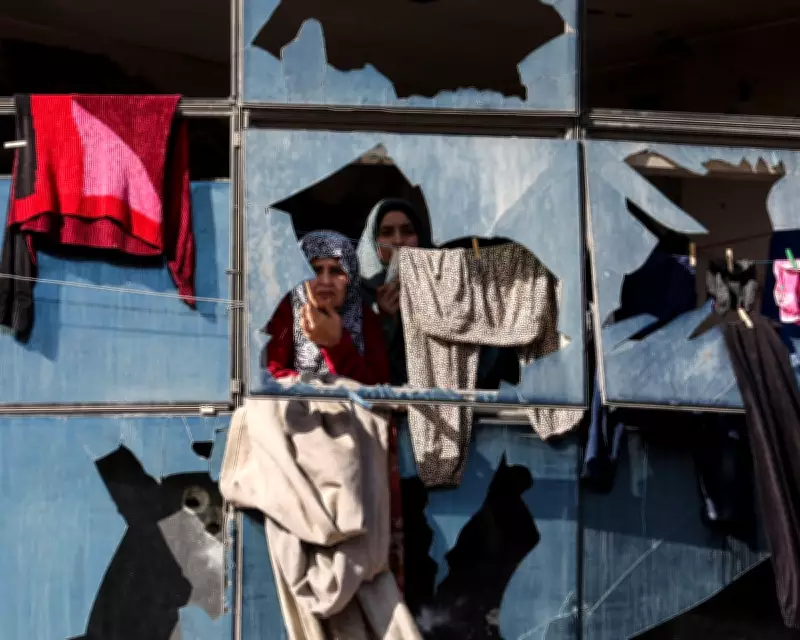
Women observe the funeral of individuals killed during an Israeli airstrike in Gaza City on 31 January 2026. The photograph, captured by Dawoud Abu Alkas for Reuters, depicts a sombre scene of mourning amidst ongoing conflict. This visual documentation coincides with a significant development: Israel has now acknowledged the accuracy of Gaza's official death toll figures, marking a pivotal moment after years of systematic denial.
The Shift from Denial to Admission
Israeli officials have entered a phase of damage control following a senior military official's admission last week that Israel accepts the death toll published by Gaza's health ministry. The current figure stands at more than 70,000 casualties. This represents a dramatic reversal after two years during which Israel and its supporters consistently disparaged and dismissed these statistics, frequently alleging they were exaggerated or fabricated by Hamas.
The list of those who previously repudiated the health ministry's figures includes numerous influential voices:

- Spokespeople for Israel's government and military
- Former US President Joe Biden
- The United States Congress
- Anti-Defamation League chief Jonathan Greenblatt
- The American Israel Public Affairs Committee (Aipac)
- Various commentators at prominent think tanks and policy centres
These denials gained apparent credibility through media outlets that frequently described Gaza's health ministry as "Hamas-run," encouraging audiences to treat the casualty figures with suspicion.
Why the Figures Should Never Have Been Doubted
The reliability of Gaza's official death toll has substantial verification behind it. The United Nations has independently confirmed the accuracy of the health ministry's statistics following each of Israel's previous bombardments of Gaza dating back to 2008. Furthermore, the data published since 7 October 2023 contains remarkable detail, including full names, dates of birth, gender identification, and ID numbers for all confirmed victims.
While some errors inevitably occurred amid the intensity of Israel's military onslaught, which virtually destroyed Gaza's entire healthcare infrastructure, these mistakes proved remarkably few and were promptly corrected. Sky News investigation revealed that entries with missing or invalid ID numbers dropped from 2,769 in early April to just 313 by July's end. Multiple external investigations have confirmed that the published data withstands rigorous scrutiny.
In January 2024, reporting indicated that Israel's military intelligence agencies had even surveilled health ministry personnel in Gaza to verify data accuracy. Upon confirming its reliability, they reportedly began incorporating these figures into internal intelligence briefings. An intelligence source revealed that status updates regularly included slides showing civilian casualty numbers based "almost exclusively on the Hamas health ministry."
The New Goalpost Shifting Strategy
Despite this admission, the Israeli military quickly issued statements claiming that "the details published do not reflect official IDF data" – despite Israeli media outlets clearly reporting they received this information from a senior official during private briefings. This suggests that rather than offering apologies or self-reflection, many former deniers are now shifting their argumentative focus.
The new contention suggests that while the overall death toll of 70,000 may be accurate, what truly matters is the ratio of civilians to militants among the casualties. Israeli leaders have cited civilian casualty ratios as low as 1:1 or 1.5:1 throughout the conflict, now alleging that militants account for as many as 25,000 of Gaza's dead. However, these claims similarly disintegrate under basic examination.
Questionable Definitions and Database Revelations
Understanding why these ratio claims falter requires examining how the Israeli army defines "militant." After invading Gaza in late 2023, the military established militarised areas designated as "kill zones" with arbitrary and often invisible boundaries. Within these zones, any Palestinian entering – including children – could be automatically killed and subsequently labelled as terrorists retroactively.

Investigative journalism provides crucial context here. Last August, +972 magazine and The Guardian published a joint investigation revealing a classified Israeli intelligence database that tracks every Palestinian in Gaza whom Israel suspects of being a militant belonging to Hamas or Palestinian Islamic Jihad. According to data obtained from this database in May last year, Israel had killed fewer than 9,000 militants at a time when the health ministry's overall death toll stood at 53,000.
This database indicated that approximately 83% of Gaza's dead were civilians – a civilian casualty ratio with few parallels in modern warfare. This statistic adds substantial weight to accusations of genocide levelled against Israel by the United Nations, human rights organisations, and leading genocide scholars. The Israeli army responded to these revelations by stating that "figures presented in the article are incorrect" without denying the database's existence or specifying which data it disputed.
The Broader Context of Casualty Counting
It's crucial to recognise that the health ministry's figures represent only part of the tragedy. They do not include approximately 10,000 bodies still thought buried beneath rubble, nor do they account for "indirect" deaths from starvation, disease, hypothermia, and treatable health conditions – fatalities that often exceed direct casualties in war zones. Various scientific studies conducted throughout the conflict have estimated that the true death toll from Israel's military campaign may well exceed 100,000.
The full extent of casualties since 7 October 2023 will remain uncertain until Israel ceases bombing Gaza and stops preventing local and international media from reporting freely across the territory. However, one conclusion appears undeniable: the climate of denial surrounding the health ministry's figures helped enable Israel to continue large-scale military operations against Palestinian populations with perceived impunity.
This admission of accuracy, coming after years of dismissal, represents not just a statistical correction but a moral reckoning with the human cost of prolonged conflict. As the debate potentially shifts toward casualty ratios, the fundamental reality remains that tens of thousands of lives have been lost, with families across Gaza continuing to mourn their dead amidst ongoing uncertainty about the territory's future.