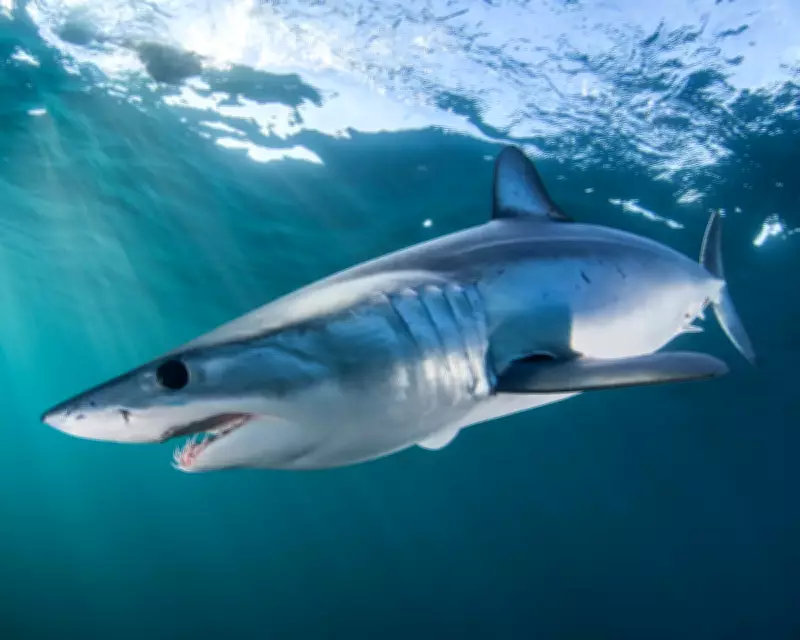
A Mako shark (Isurus oxyrinchus) at Cape Point, South Africa, a relative of the extinct cosmopolitodus hastalis, which once prowled the North Sea. Photograph: Nature Picture Library/Alamy
Last year, water temperatures in the North Sea reached record levels, with average surface temperatures hitting a balmy 11.6°C, the warmest since measurements began in 1969. As waters continue to warm, a new study suggests that great white sharks could start prowling British waters once again.
Fossil Evidence from the North Sea
Olivier Lambert, from the Royal Belgian Institute of Natural Sciences, and his colleagues studied whale fossils recovered from North Sea sediments dated to around 5 million years ago. During that period, North Sea waters were warmer and home to several species of whale and shark. Fossilised tooth fragments embedded in the whale skulls revealed that sharks had feasted on them.

The findings, published in Acta Palaeontologica Polonica, show that one tooth belonged to a bluntnose sixgill shark (common in Mediterranean waters today) and the other to the extinct mako shark cosmopolitodus hastalis, a relative of today's great white shark.
Implications for Modern Ecosystems
This fossil evidence provides a hint of how ecosystems may change as climate breakdown warms our seas. Today's North Sea is too shallow to support modern-day whales, but increasing numbers of dolphins and seals are being attracted to the warming waters. Lambert and his colleagues postulate that this, in turn, could attract great white sharks and other large marine predators back to UK seas.