The latest round of CSIRO job cuts will proceed despite the Australian government announcing $387 million in extra funding in the recent federal budget. Scientists warn that these cuts will leave Australia unable to provide climate projections for global reports and significantly reduce its capacity to forecast future damage to the country.
Planned Reductions in Climate Modeling Team
Multiple sources have informed Guardian Australia that CSIRO intends to dismiss a third of the team working on the national climate model, which supplies projections used by governments, councils, industry, and farmers for future planning. Senior scientists assert that this will result in Australia no longer possessing an international-standard climate model to contribute to major assessment reports by the Intergovernmental Panel on Climate Change (IPCC).
CSIRO management is expected to confirm at a staff meeting on Thursday that approximately 100 scientists will be made redundant as part of a plan announced last November to cut full-time research positions by 300 to 350. This follows the dismissal of 818 support staff last year.

CSIRO Chief Executive Doug Hilton has stated that the cuts will go ahead despite the Albanese government's announcement of $387 million in extra funding, which is largely designated for upgrading buildings and research infrastructure, including the Australian Centre for Disease Preparedness in Geelong.
About five of the 15 CSIRO scientists working on the Australian Community Climate and Earth System Simulator (ACCESS) have been informed that they are likely to lose their jobs.
Impact on Climate Science Capability
CSIRO management told a Senate inquiry in February that the impact of the cuts would be minimal, as about 60 people work on the climate model. However, Andy Hogg, a professor of ocean and climate modeling and director of ACCESS-NRI, which supports the software underpinning the CSIRO projections, contested this claim.
“If you look at the team of people on the core capability it’s 12 to 15, and we understand that it’s about five that are going,” Hogg said. “These cuts will make us suboptimal in core climate science capability in atmospheric and oceanographic modeling, and in understanding the concepts that really drive our weather and climate.”
Christian Jakob, a professor at Monash University’s School of Earth, Atmosphere and Environment and a leading climate modeler, concurred. “It is a relatively small number developing climate models. It’s certainly not 60,” he said. “They are making sure we have a better model in a year’s time. That will go away.”
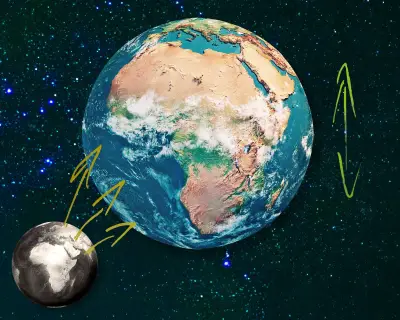
ACCESS is a computer-based model that integrates international and national data on the atmosphere, oceans, land, and ice to simulate future scenarios. Led by CSIRO, it provides high-level projections of how Australia may change under different greenhouse gas emissions scenarios. The model underpins climate information used by scientists, governments, councils, industry, and farmers for detailed analysis that shapes planning and investment decisions.
Jakob emphasized that cutting CSIRO’s climate modeling expertise would “remove a basic foundational capability” to prepare for the future. “Australia will no longer be seen as a credible contributor to international assessment of climate change. Full stop,” he said. “I feel angry. I have been a climate modeler for 30 years. It will mean I can’t stand up in front of people and say we’re giving the best information we can.”
CSIRO's Response and Future Risks
A CSIRO spokesperson stated that the agency’s climate science capability would be retained. “CSIRO will continue to provide climate data, models and scenarios to manage the impacts of climate change,” they said. “The proposed changes sharpen our effort by reducing activity in selected areas including atmospheric chemistry modeling, Indo-Pacific ocean dynamics and some operational support so we can better align our climate portfolio with our future science priorities, and deliver the strongest possible outcomes for Australia.”

However, Hogg warned that there is a risk Australia may not be able to submit projections this year to inform the IPCC’s seventh major assessment report, due in 2028 and 2029. He noted that CSIRO has no plan for how it will continue to contribute meaningfully to future global climate projections beyond that, despite Australia being the only country with modeling focused on the southern hemisphere. “That capacity will be difficult to rebuild. It would cost twice as much to get it back in later,” he said.
Jakob highlighted potential ramifications, including Australia losing the ability to attract top international scientific talent and having less capacity to understand issues such as what the melting of the Greenland and Antarctic ice sheets would mean for the Australian coastline. “We need to know how other countries’ climates are changing because they will matter to us … and there is a question of whether we can rely on other countries for information as we used to,” he said. “I think it’s a very foolish path to go down.”
Funding and Structural Issues
While scientists criticized the CSIRO decision, researchers—including some within CSIRO who spoke on condition of anonymity—said the cuts primarily result from years of federal governments not increasing the agency’s direct funding in line with rising costs. CSIRO managers are expected to secure 70% of funding from external sources, usually from industry or another government department agency, before a new research project is approved.
The Albanese government states that CSIRO receives about $1 billion in recurrent annual funding and that it has provided an additional $278 million in 2025 and $387 million over four years in the latest budget. Science Minister Tim Ayres did not respond to questions about cuts to climate modeling capacity.