Chimpanzee Civil War: First Recorded Case of In-Group Violence in Uganda
In a groundbreaking discovery, researchers have documented what may be the first observed "civil war" among wild chimpanzees, shedding light on the dark parallels between primate and human behavior. The study, published in the journal Science, focuses on the Ngogo chimpanzee group in Uganda's Kibale National Park, where a once unified community turned on itself in a series of lethal attacks.
The Unfolding Conflict
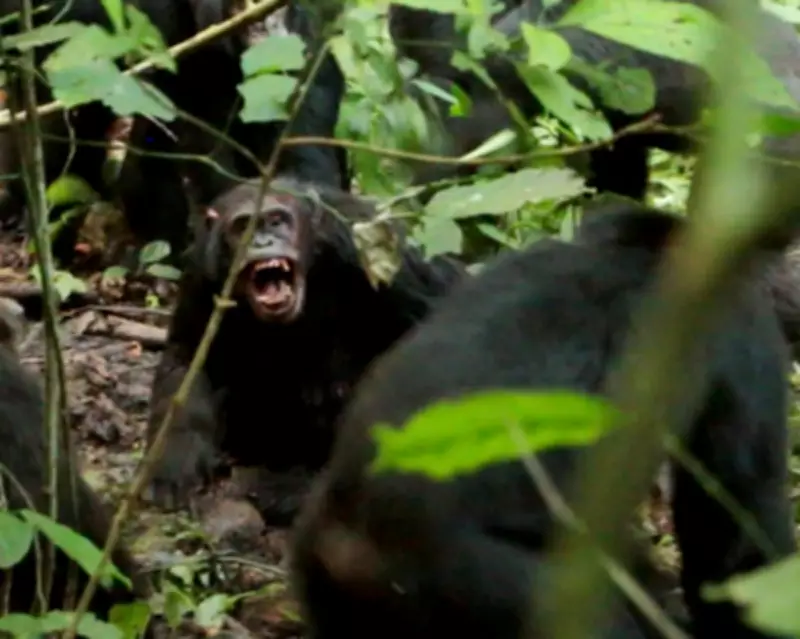
In June 2015, primatologist Aaron Sandel noticed unusual behavior among the Ngogo chimpanzees. As other group members approached, the chimps displayed nervous grimaces and sought reassurance through touch, acting as if they were meeting strangers rather than lifelong companions. This moment marked the beginning of a years-long bloody conflict that would split the group into two factions: the western and central chimpanzees.
Drawing on over three decades of behavioral observations, the study reveals that from 1995 to 2015, the chimps were socially cohesive. However, by 2018, a permanent split had occurred, leading to 24 coordinated attacks by the western group on the central one. These assaults resulted in the deaths of at least seven adult males and 17 infants, highlighting a rare case of in-group violence in the animal kingdom.

Human-Like Dynamics
Aaron Sandel, the lead researcher, emphasized the troubling similarities to human conflicts. "Cases where neighbors are killing neighbors is more troubling and, in a way, it gets closer to the human condition," he said. "How do we have this seeming contradiction within us where we are able to cooperate, but then also very quickly turn on one another?" The study suggests that shifting group identities and dynamics, common in human civil wars, have a parallel in chimpanzee societies.
Researchers believe a change in social hierarchies triggered the fracture. In 2015, the group's alpha male submitted to another chimpanzee, signaling a power shift. Additionally, the deaths of key older individuals weakened social connections, and a disease outbreak in 2017 likely expedited the split. This combination of factors led to organized aggression and violence within the once close-knit community.
Historical Context and Conservation Implications
Scientists speculate that a similar rupture may have occurred in the 1970s within Jane Goodall's observed chimpanzee group in Gombe, Tanzania, but limited understanding at the time prevented full recognition. The Ngogo case is now the first thoroughly reported instance of chimpanzee civil warfare, underscoring the fragility of social ties in primate groups.
Brian Wood, an evolutionary anthropologist at UCLA, explained the Darwinian fitness aspect: "The western chimps have increased their Darwinian fitness by decreasing the survival and reproduction of their competitors." The central chimps now face the lowest survivorship ever documented in a wild chimpanzee community.
Sylvain Lemoine, a professor at the University of Cambridge, noted that social ties and network connectivity are crucial for group cohesion. "These ties can be fragilised in specific circumstances, especially when they rely on few key individuals," he said.
Broader Impact on Conservation
The study raises significant concerns for ape conservation, as chimpanzees are threatened with extinction. While genetic evidence suggests such civil wars occur only every 500 years, human activities like deforestation, climate change, and disease outbreaks could disrupt social cohesion and make inter-group conflicts more common. Sandel warned that any disruption to chimpanzee societies could exacerbate these violent tendencies, posing a threat to already endangered populations.
This research not only advances our understanding of primate behavior but also highlights the urgent need for conservation efforts to protect these complex social structures in the wild.