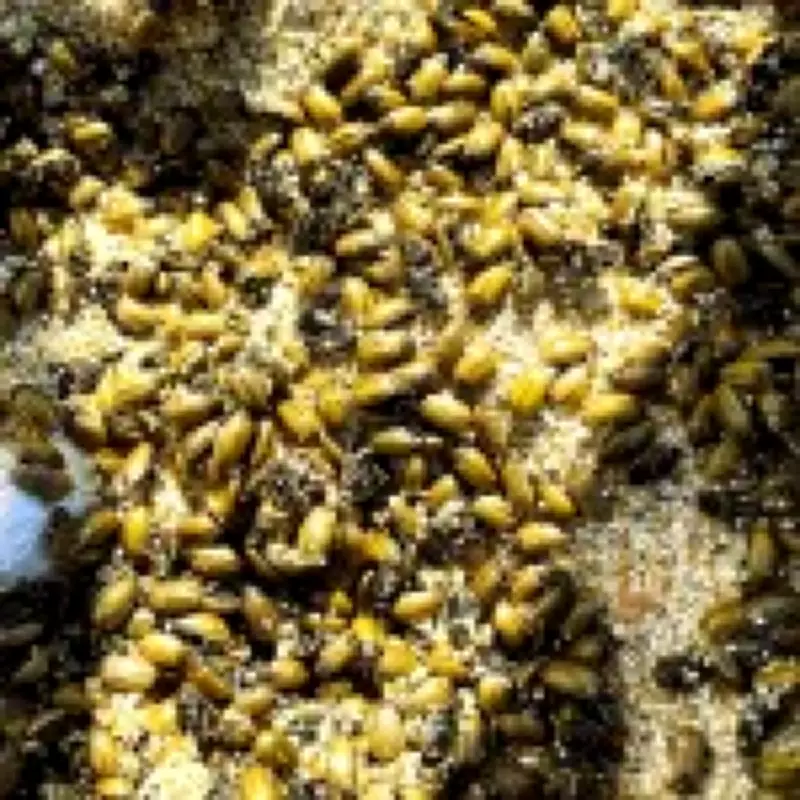
An 'astonishing' infestation of beetles has transformed the Scottish coast, with billions of the dead insects lining the beaches. The moorlands of Caithness, known for their purple heather, have seen an unprecedented population explosion of heather beetles (Lochmaea suturalis).
Beach Carpet of Beetles
A volunteer beach cleaner recently came across a surreal scene at Sandside beach near Reay – a thick band of dark mass along the high tide line. They initially thought it was shredded seaweed, until a closer inspection revealed a 'carpet of beetles an inch thick extending the length of the beach'. While the tides have begun to disperse the remains, sightings of the beetles have been reported in Wick, Thurso, Thrumster, Tannach, Lybster, and as far inland as Watten and Helmsdale.
Caithness residents have reported beetles entering gardens and houses in Watten, while in Sutherland, along the straths of Helmsdale, the insects have been seen 'literally covering' the riverbanks.

Destructive Feeding Phase
As the beetles move through their destructive feeding phase – which lasts until August – landowners are left with few options. Traditional muirburn – or controlled burning – is often used to encourage regeneration. But the sheer scale of the current damage makes large-scale burning impractical and subject to strict licensing.
The population explosion is disastrous for local flora, as the larvae strip the leaves of heather plants down to the stalk, effectively bleeding the moorland of its vibrant colours and turning the purple landscape a drab, rusty brown known as 'ghost heather'. Dead, dry heather turns the moors into tinderboxes, significantly increasing the risk of wildfires. The loss of food and shelter also affects species such as the emperor moth and the red grouse.
Climate Change Link
While the beetles are a natural part of the Highland ecosystem, climate change is believed to be driving more frequent and severe outbreaks. Milder winters and warmer, damper springs improve beetle survival rates, allowing them to decimate up to half of the heather cover in affected areas.
Catherine MacLeod, of the Thrumster Estate, has observed the devastation firsthand, noting that the damage was already significant last year. She explained that the destruction is caused by a specific biological process where the larvae inject a type of enzyme into the heather to make it digestible, a process that inadvertently kills the plant.
'There are lots of estates that are struggling with their grouse because of the heather beetle numbers; they have absolutely killed the heather,' she said. 'I remember my mother had gone to Reiss and she said she saw this big black line all the way across the entire beach. When she looked up closer, it was like a two-foot-wide stretch of dead heather beetles.'
'They're just not very good at flying, so any kind of breeze just floats them off, then they land on the water, can't get up, and just get washed up in the tide.' Ms MacLeod also mentioned a similar occurrence back in 2019 when 'a plague of black fever flies' descended upon the county. 'I remember seeing a massive cloud of them coming off Watten Loch. From a distance, I actually thought someone was having a bonfire at first.'
David Glass, secretary of the Caithness Biodiversity Group, said he had never come across the beetles locally. 'I am only aware that there are spasmodic outbreaks elsewhere that cause serious localised damage to heather.'