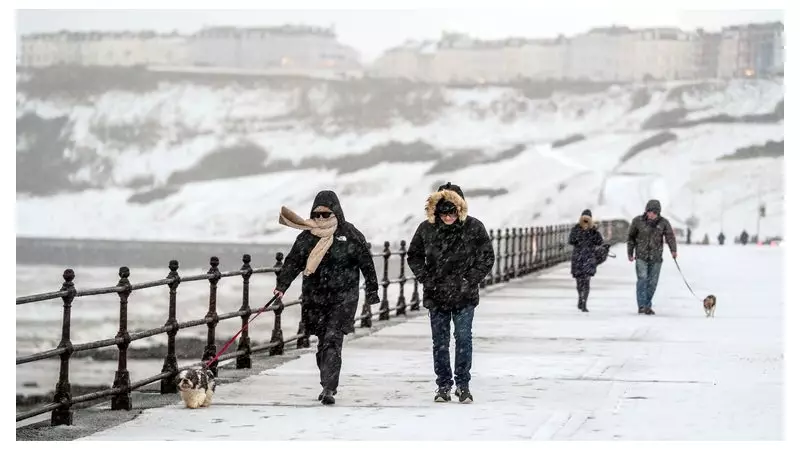
The United Kingdom is in the grip of a severe Arctic freeze, with forecasters warning temperatures could plummet to a bone-chilling -12C in some areas. A relentless barrage of snow, sleet, and hail showers has swept across the nation, triggering significant travel disruption, flight cancellations, and the closure of hundreds of schools as the new week begins.
Record Lows and Widespread Warnings
The extreme cold has already set notable records. On Monday 5 January 2026, the mercury dropped to -10.9C in Shap, Cumbria, while a staggering 52cm of snow was recorded in Banffshire, Scotland by the Met Office. As we move into Tuesday, areas with lying snow could see lows approaching -12C.
The wintry conditions are far from over. A mix of rain, sleet, and snow is forecast to move southeastwards across Scotland and Northern Ireland, later pushing into parts of Wales and England. A further band of snow is expected to hit central and northern Scotland this morning, persisting into the early evening.
Consequently, the Met Office has issued yellow weather warnings for snow and ice covering the whole of Scotland, Northern Ireland, and northern England. Additional warnings are in place for eastern England, west Wales, Devon, and Cornwall. Matthew Lehnert, Chief Meteorologist at the Met Office, stated: "The UK will continue to experience a range of winter weather hazards through this week, with low temperatures as well as snow showers and the risk of ice for many."
Transport Network Grinds to a Halt
The Arctic onslaught has severely impacted travel networks across the country. The AA reported a 40% spike in callouts compared to a typical Monday. Rail services in northern Scotland are facing disruption until at least the end of Tuesday, according to National Rail.
Air travel has been heavily affected. Flights were cancelled from Aberdeen and Inverness airports due to heavy snowfall, and the runway at Liverpool John Lennon Airport was closed on Monday morning. Both City of Derry Airport and Belfast International Airport experienced numerous cancellations and delays.
International rail travel also felt the chill, with Eurostar advising passengers on routes between London and the Netherlands to delay journeys on Monday, as services could not proceed beyond Brussels due to the severe weather.
Health Alerts and Further Hazards Ahead
Alongside the travel chaos, the cold poses a significant health risk. Amber cold weather health alerts are active for all regions of England until Friday, urging the public to take precautions.
Looking further ahead, the weather picture remains concerning. Deputy Chief Meteorologist Mike Silverstone indicated that strong winds and heavy rain later in the week could create additional hazards. "While we're confident an area of low pressure will move in from the west on Thursday and into Friday, the exact position is uncertain," he said, emphasising the importance of staying updated with local forecasts.
Despite the freezing conditions, the first small boat arrivals of the year were recorded in Dover on Monday, with migrants seen disembarking a Border Force vessel. Elsewhere, the cold snap provided some recreational opportunities, with people photographed playing ice hockey on a frozen field in Cambridgeshire and on the frozen Loch Insh near Aviemore.