
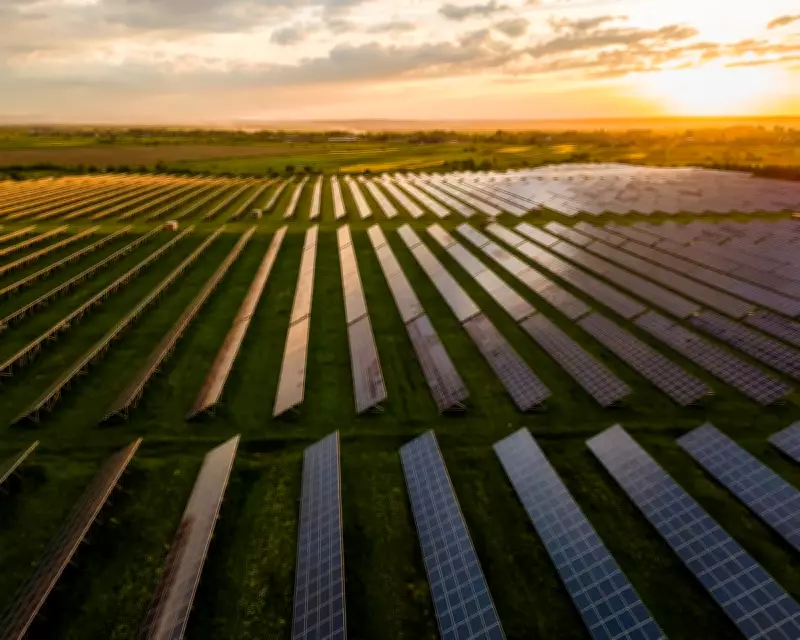
The recent energy price shocks have the potential to disrupt the status quo and provide politicians with a short-term incentive to invest in wind and solar power, according to a Guardian editorial. If this occurs, the consequences of the current crisis will not be entirely negative.
Political Divisions Over Energy
Energy has not been a prominent topic in the run-up to Thursday's UK elections. In England, this is logical since major policy decisions are made by Westminster ministers, not local councils. However, the stances of the new governments in Scotland and Wales are significant, as they will influence the national climate debate in the coming years.
In both nations, as in England, divisions have deepened. The Conservatives have moved away from supporting net zero, while Reform UK has intensified its opposition to renewables. Among Scottish parties, only the Greens are categorically against new fossil fuel developments in the North Sea. Under John Swinney, the Scottish National Party's earlier opposition to the Rosebank oilfield has softened ahead of the decision on whether it should proceed. Scottish Labour, in contrast, has endorsed new nuclear power.
Global Responses to Energy Prices
Across the UK and other countries, views on how to respond to the latest spike in energy prices are divided. Carbon Brief analysis found that fuel tax cuts were the most popular government measures worldwide. Energy conservation policies like fuel rationing have been adopted in Asia, while Japan and Italy have temporarily increased coal reliance. However, European leaders such as Keir Starmer and India's Narendra Modi have emphasized the need to accelerate the transition to renewables.
India was not invited to last week's climate conference in Colombia due to its refusal to commit to a fossil fuel phaseout at the recent COP talks in Brazil. The conference, co-hosted by Colombia and the Netherlands, focused on a roadmap away from fossil fuels and was timely given the disruption from the US-Israel war on Iran. While this new climate coalition cannot compel cooperation, its existence is encouraging.
The Urgency of the Green Transition
The growing danger from carbon emissions remains the strongest reason for a global shift to clean, sustainable energy. The COP process's greatest failure has been its inability to overcome resistance from petrostates and businesses to phasing down coal, oil, and gas. However, if energy price shocks jolt the status quo and incentivize investment in wind and solar, the crisis may have positive outcomes.
Governments are the world's most powerful actors, and energy policy must not be reduced to consumer choice. But businesses and individuals also play a role in market societies. Recent increases in electric vehicle and solar panel sales in the UK and continental Europe show that people alter their behavior in response to circumstances. This upturn, like the Colombia gathering, offers hope.
Local Governments' Role
Once this week's elections conclude, new administrations in Scotland, Wales, and across England will have vital roles. Although major energy policy decisions are made in Westminster, the green transition requires broad support. The shift to renewables is urgent, and public backing is essential.



