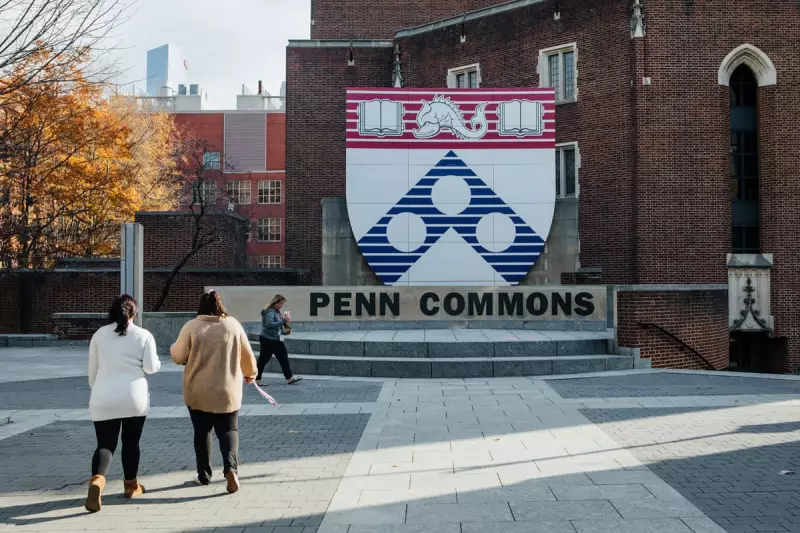
Several prominent faculty groups at the University of Pennsylvania have issued a fierce condemnation of efforts by the Trump administration to obtain detailed personal information about Jewish professors, staff, and students, labelling the move as government overreach with deeply troubling historical echoes.
A Demand Echoing a Dark Past
The controversy centres on a subpoena from the US Equal Employment Opportunity Commission (EEOC), which is demanding the university hand over names, personal emails, phone numbers, and home addresses of Jewish members of the Penn community. This demand is part of a federal investigation into alleged antisemitism on campuses following the 7 October 2023 Hamas attacks and Israel's war in Gaza.
However, the request has sparked widespread alarm. In a joint motion filed in federal court on Tuesday, groups including the American Association of University Professors, the Penn Jewish Law Students Association, and the American Academy of Jewish Research argued the demand is a "visceral threat to the safety" of those who would be identified. They stated that compiling and turning over 'lists of Jews' to the government "conjures a terrifying history."

University Resistance and Legal Battle
The University of Pennsylvania, which established an antisemitism taskforce and shared hundreds of documents with investigators, refused to comply with the EEOC's July subpoena for this specific personal data. A university spokesperson said in November that violating the privacy and trust of its community was "antithetical to ensuring Penn’s Jewish community feels protected and safe."
Instead, the institution offered to inform all employees of the EEOC investigation and invite those interested to contact the agency directly. The EEOC deemed this insufficient and sued the university in November to enforce its subpoena. EEOC Chair Andrea Lucas argued that an employer's obstruction "undermines the EEOC’s ability to investigate harassment."
Scholars Sound the Alarm on Historical Parallels
The EEOC's request has prompted strong rebukes from Jewish scholars and organisations on campus, including Penn Hillel. Steven Weitzman, a professor in Penn’s religious studies department and a member of the university’s antisemitism taskforce, said the mere request "instills a sense of vulnerability among Jews."
He drew a direct historical parallel, noting, "The Nazi campaign against Jews depended on institutions like universities handing over information about their Jewish members to the authorities." Beth Wenger, a professor of Jewish history at Penn, echoed this sentiment, stating, "As Jewish study scholars, we know well the dangers of collecting such information."
Norm Eisen, co-founder of the Democracy Defenders Fund, which is representing the faculty groups, warned on a press call, "We are entering territory that should shock every single one of us... This is an abuse of government power that drags us back to some of the darkest chapters in our history."
This is not the first instance of the EEOC's antisemitism investigations causing concern. Last spring, the commission texted Barnard College employees a survey asking if they identified as Jewish or Israeli, a move that also raised privacy alarms.