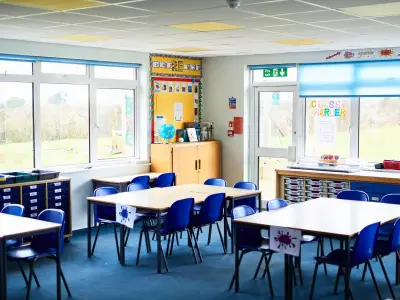
Growing School Readiness Crisis Alarms Educators and Parents
New research has uncovered a deepening crisis in school readiness across England and Wales, with teachers reporting that nearly 40% of children now arrive for their first day of primary education without the fundamental life skills required to engage in learning. This alarming statistic represents a steady increase from previous years, highlighting a significant challenge for the education system.
The Reality Behind Reception Classroom Doors
Reception teachers describe spending substantial portions of their working day managing basic care needs rather than delivering educational content. On average, educators dedicate approximately 1.4 hours daily – equivalent to a full school day each week – to supporting children who are not toilet trained when they begin formal education. This diversion of teaching time away from structured learning has profound implications for classroom dynamics and educational outcomes.
Felicity Gillespie, chief executive of Kindred², the organisation conducting the school readiness survey, emphasises the scale of the problem. "Teachers and parents are telling us that this is a national crisis," she states. "We're seeing almost 40% of children arriving for their very first day at school without the basic life skills they need to access learning."
Understanding the Drivers Behind the Crisis
Multiple interconnected factors contribute to this growing readiness gap:
- Economic pressures including rising living costs and longer working hours
- Reduced access to early years support services and health visitors
- Significant cuts to Sure Start programmes during austerity years
- Increased screen time among very young children affecting development
The long-term impact of coalition-era austerity measures continues to reverberate through communities, with deprived areas experiencing the most severe consequences. The scaling back of Sure Start initiatives between 2010 and 2019 has particularly affected regions with higher levels of poverty, including the north-east, West Midlands, north-west and London.
The Screen Time Factor in Early Development
Primary school staff now identify screen use as the single most significant factor affecting school readiness. Evidence indicates that almost all two-year-olds now watch screens daily, often for more than two hours, while close to 40% of three- to five-year-olds use social media platforms.
Teachers report observing children who struggle with fundamental skills including:
- Sitting still and maintaining attention
- Holding pencils and developing fine motor skills
- Speaking in complete sentences
- Demonstrating creativity and problem-solving abilities
Gillespie explains the developmental implications: "What matters most in the early years is the two-way 'serve and return' interaction between a child and a caregiver, which drives brain development. Sitting passively in front of a screen is like the child's brain playing tennis with no one on the other side of the net."
Parental Expectations Versus Classroom Reality
A significant disconnect exists between parental perceptions and educational reality. While nearly 90% of parents believe their children are school ready, teachers report that only 63% nationally meet this standard. Furthermore, more than one in five parents consider it acceptable for children to begin school without being toilet trained, and almost half do not believe children need independent dressing skills by reception age.
"This isn't about blaming and shaming parents," Gillespie clarifies. "It's about acknowledging that there is a genuine gap in understanding about what being school ready actually means – and then getting that information out clearly and early."
Special Educational Needs and Mental Health Considerations
The report highlights that special educational needs and disabilities (Send) form an increasingly significant part of the school readiness landscape. Nine percent of parents report formal Send diagnoses for their children, while 21% strongly suspect additional needs. However, some educators express concern that suspected Send might sometimes be used to explain developmental delays before other potential causes have been fully explored.
Parental mental health also emerges as a contributing factor. Recent research from the campaign group Make Mothers Matter reveals that 71% of UK mothers feel overloaded, with 47% experiencing mental health issues including depression. Working mothers attempting to balance employment with care responsibilities report handling up to 71% of household and caregiving tasks independently.
Potential Solutions and Future Directions
Kindred² has welcomed government plans to publish new guidance on screen use for children under five this spring. The organisation is collaborating with early years groups to develop practical, government-backed resources for parents, including a national potty training guide and a clear framework outlining expectations for children starting reception.
"The message from parents is really clear," Gillespie concludes. "They want information earlier, they want it to be simple, and they want support – not judgment." The growing consensus among teachers, parents and policymakers that school readiness represents a national rather than niche educational issue offers hope for coordinated action to address this critical challenge.