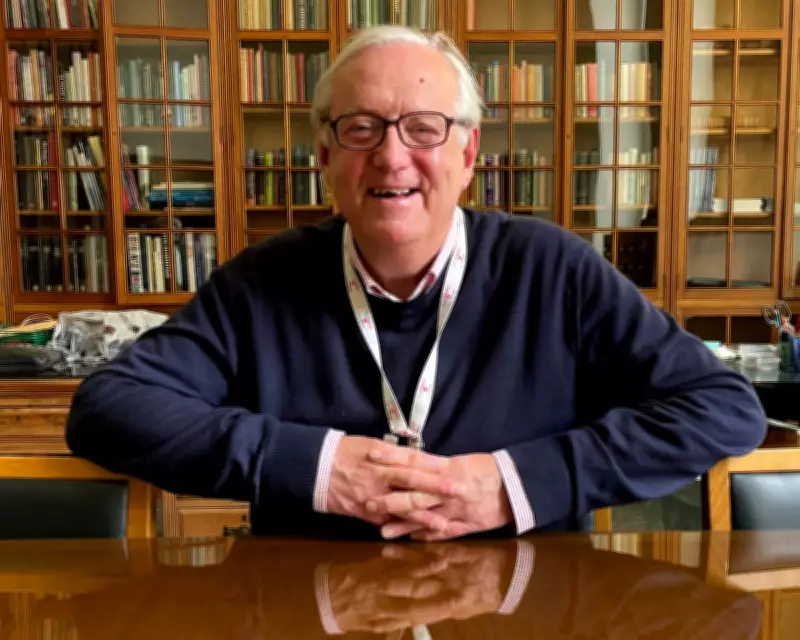
Paul Ayris: A Legacy of Open Science and Library Innovation
The library and academic world has lost one of its most influential figures with the death of Paul Ayris at the age of 68 from cardiac failure. A formidable force in the movement for open science, Ayris dedicated his career to making scientific research freely accessible while transforming university library services across the United Kingdom.
From Cambridge Trainee to University Leader
Paul Ayris began his remarkable career in 1978 as a graduate trainee at Cambridge University Library, where he quickly demonstrated his forward-thinking approach. He became the founding head of IT services, overseeing major shifts in automation and early adoption of web technologies that would lay crucial foundations for supporting the university's extensive and complex network of libraries.
In 1997, he moved to University College London, where his impact would become truly transformative. Serving as director of library services and subsequently as pro-vice-provost with responsibility for libraries, museums, theatres and open science, Ayris embodied the ideals of radical thinking and widening access to higher education.
Transforming UCL and Championing Open Access
At UCL, Ayris led comprehensive modernisation programmes that revolutionised how students and researchers accessed information. He championed innovative learning spaces including the UCL Student Centre and strengthened a culture of service built entirely around user needs. His most significant achievement came in 2015 with the launch of UCL Press, the first fully open access university press in the United Kingdom.
This groundbreaking initiative now boasts a global reach with an astonishing 30 million downloads, making academic research accessible to scholars and students worldwide regardless of their financial circumstances or institutional affiliations.
Academic Roots and Historical Scholarship
Born in Gainsborough, Lincolnshire, Ayris was the son of Irene, a shop assistant, and Walter, who co-owned a decorating business. After attending Queen Elizabeth's Grammar School in his hometown, he enrolled at Selwyn College, Cambridge to study theological and religious studies. He completed a PhD on Thomas Cranmer, beginning a lifelong engagement with Reformation history that would culminate in the posthumous publication in January 2026 of Thomas Cranmer's Register.
This significant work provides a first-hand record of administration and power dynamics in the Church of England under Henry VIII. In recognition of his historical scholarship, Ayris was elected a fellow of the Royal Historical Society in 2019.
European Leadership and Global Influence
Ayris's leadership extended far beyond UCL's campus. As president of LIBER (the Association of European Research Libraries) and later through his work with LERU (the League of European Research Universities), he travelled tirelessly across Europe, playing a decisive role in shaping the continent's approach to open science. In recent years, he contributed significantly to conversations about developing open science practices in China to benefit the global south.
Colleagues across the sector remember him for his remarkable work ethic and generosity with time and advice. European colleagues expressed awe at his responsiveness, with one noting his characteristic promptness: "Tout de suite, he replies!"
A Collegial Mentor and Cultural Enthusiast
Warm, energetic and endlessly collegial, Ayris mentored and encouraged library leaders to share his belief in openness, collaboration and ambitious thinking to effect meaningful change. He inspired a generation of librarians through his clarity of purpose, intellectual curiosity and unwavering commitment to excellence.
Beyond his professional achievements, Ayris loved fine wines, good food and medieval music. He particularly enjoyed listening to classical music both at home and in his office, with a special appreciation for the Gesualdo Six ensemble.
Paul Ayris is survived by his twin brother, Stevan. His legacy as a pioneer of open science and transformative library leadership will continue to influence academic institutions and research accessibility for generations to come.