Southend-on-Sea Faces a Bleak Future as University Campus Shuts Down
The seaside city of Southend-on-Sea, nestled on England's east coast, presents a sombre scene on a winter afternoon during term-time. Its cobbled high street, adjacent to the university campus, is thinly populated with market stalls, vape shops, and discount retailers, exuding an eerie quietness. "There used to be lots of shops, restaurants, and youth clubs around here," remarks 23-year-old Nathan Doucette-Chiddicks. Now, the city is poised to lose a vital institution it can hardly afford to be without.
A Sudden Announcement Rocks the Community
Just before Christmas, Essex University revealed it would close its Southend campus this summer, citing a significant decline in international students who pay higher fees. This move affects 800 students and staff, but its repercussions extend far beyond, deeply impacting a city that has grown reliant on the university in numerous ways.
Doucette-Chiddicks, an adult nursing student, proudly identifies as Southend "through and through." He sports Southend United merchandise from head to toe and has lived in the town all his life. His mother was among the first students when the campus opened in 2008. "She used to sneak me into the computer labs so she could study," he fondly recalls. The campus, just a few doors from his home, has long symbolised opportunity for local residents. His mother now works as an A&E nurse, and he aims to follow her path. "It's a big loss," he states. "Not just for students – for the city as a whole."

A Beacon of Hope Now Extinguished
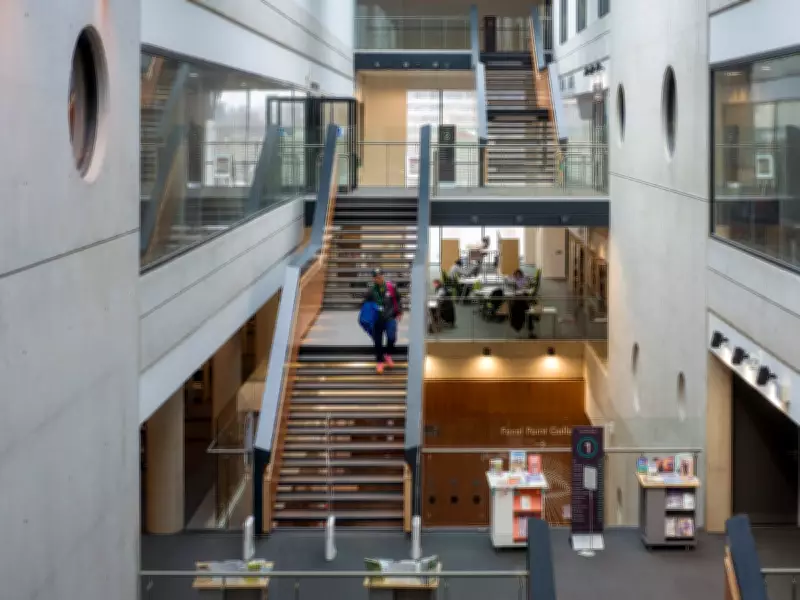
Seventeen years ago, the arrival of a university in what was considered a "left behind" seaside resort was heralded as a beacon of hope. Its £26 million glass building, offering striking views of the Thames estuary, was intended to revitalise the town's struggling economy. It signalled that young people here could aspire to more, suggesting Southend was on an upward trajectory.
Colin Riordan, former vice-chancellor of Essex University, remembers the optimism when establishing the Southend campus. "We wanted the university to be a place people felt part of," he says. "We wanted to create a campus feel but one that was there for local people." Initially, the campus housed a GP surgery and a dental clinic providing free treatment to locals, later expanding to include a library and art gallery shared with the community.
Riordan witnessed Southend transform over the years, noting it became "much more vibrant" with "young people everywhere" and new independent shops and cafes emerging. However, he acknowledges the harsh realities facing universities today, contrasting the past public funding with current reliance on student demand. "It is a great pity. It was a wonderful project," he laments.
Economic and Social Fallout Looms Large
Across Essex University, 18% of students are local, but in Southend, this figure jumps to 52% for those in health or social care courses. Doucette-Chiddicks highlights a tight-knit community rarely found in larger institutions, where lecturers know students and their families personally. The closure threatens this unique environment.
George Bejko-Cowlbeck, director of Caddies crazy golf, notes that students are significant customers and that the drama school provided lively part-time staff. He fears Southend will lose more than just revenue. "Having the university here was a big part of the city's feeling of youthfulness, and the idea that you can be here and learn and grow," he explains.
Lauren Ekins, a Southend primary school teacher, expresses deep concern for local children. "If I think about what this means for the children who are at school here now, I want to cry. So many children have lost access to their potential futures," she says. She criticises the government for not intervening, feeling that deprived cities like Southend are being abandoned.

Students Face Uncertain Futures and Hardships
Bayo Alaba, the Labour MP for Southend East and Rochford, describes the university as a "clear ladder to social mobility," particularly for poorer locals with caring responsibilities. He estimates the university contributes over £100 million annually to Southend's economy, with small businesses bracing for the loss of student patronage. The closure, he argues, sends a negative signal to potential investors.
Alaba reveals the decision was made abruptly, with minimal consultation, leaving the community reeling. The university has offered Southend students the option to complete their courses at the Colchester campus, 45 miles away, but Alaba points out the impracticality for many. "Some students have already dropped out," he reports. "They have taken on debt for something they thought would change their life."
Radek Hanus, a mature nursing student, discovered the closure via a local newspaper article during a work placement. "It's a joke," he fumes. "I've lost two years of time and money and education. People are devastated." As a disabled individual with Crohn's disease, he faces prohibitive commuting costs of around £800 monthly for petrol, making continuation nearly impossible.
Despite these challenges, Doucette-Chiddicks remains determined. "There are some people who have decided to quit, or they've just not been turning up to lessons. But I'm going to finish my degree," he asserts, working long hours to afford rent alongside his studies.
A Wider Crisis for Coastal Communities
As dusk falls and a fine drizzle descends, deepening the gloom along the high street, a local business owner, who wished to remain anonymous, labels the closure "catastrophic." He sees it as part of a broader decline affecting many coastal areas and Britain's youth. "How can you have a city without a university?" he questions. "It's shocking." This sentiment echoes the ongoing struggles highlighted in the Against the Tide series, which reports on young people in coastal communities across England and Wales, underscoring the urgent need for support and investment in these neglected regions.