Europe's Linguistic Diversity Under Threat
Representatives from approximately 60 European minority languages gathered recently in Barcelona to confront a pressing question: what does it mean to lose a language, and what will it take to save it? The conference highlighted how languages like Breton are dying out as their speakers age, while younger generations increasingly gravitate toward dominant languages in our digital world.
The Catalan Success Story and Its Challenges
Catalan stands as a remarkable success story among minoritised languages, spoken by around 10 million people and understood by approximately 93.4% of Catalonia's population. This achievement stems from decades of linguistic immersion in public education, creating a society that moves effortlessly between Catalan and Spanish.
However, recent statistics reveal concerning trends. Only 32.6% of adults now report Catalan as their habitual language, with usage declining particularly among younger demographics. Many Catalans legitimately fear their language risks being overwhelmed by Spanish and English.
This anxiety has led to what some describe as over-protectionism. Catalan media employ 'correctors' who maintain linguistic purity, potentially making the language appear rigid and outdated to younger speakers.
The Kneecap Effect: How Irish Found Its Cool
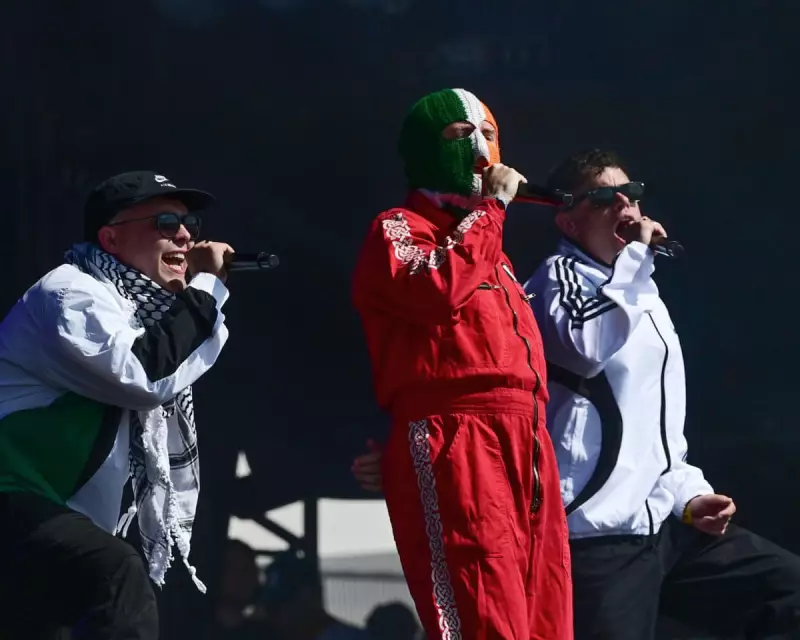
In stark contrast to this purist approach, the Irish language is experiencing a remarkable renaissance, largely driven by unexpected cultural forces. The Belfast rap group Kneecap has become a powerful catalyst for language revival, making Irish relevant and exciting for younger generations.
Conchúr Ó Muadaigh of Irish language association Conradh na Gaeilge explains their impact: "Kneecap are rooted in the reality of young people. They reflect the life and diversity of young people through the medium of Irish. But it's not an academic language. Young people in their thousands are gravitating to them because of their authenticity."
Currently, about 1.9 million people can speak Irish in the Republic, with approximately 624,000 using it daily. The language received an unexpected boost during the Troubles when Republican prisoners began learning Irish in what became known as the 'Jailtacht' - a play on Gaeltacht, the traditional Irish-speaking regions.
Other Language Communities Face Similar Struggles
Mirjam Vellinga, a Frisian speaker from the northern Netherlands, advocates for creative freedom in language use. "If it means introducing some Dutch or English, that's fine," she stated. "We don't want to put it in a museum. When we lose a language, we lose a way of being and the connection with our ancestry."
Vellinga acknowledged the envy many language communities feel toward Irish's success story: "There are rock bands that sing in Frisian, but we don't have a Kneecap unfortunately. We're a bit jealous of Kneecap."
Meanwhile, Welsh faces challenges from rural depopulation, according to ELEN president Elin Haf Gruffydd Jones. "If you don't have proper investment, you're going to have depopulation, young people moving away, and if other people with more capital are buying second homes, you have a complete mismatch," she observed. "What we see is that wealth inequality equates with lack of language equality."
Basque: A Model of Language Revival
The Basque language, Euskera, presents another success story. Despite suppression during the Franco dictatorship, close to 90% of families in Spain's Basque region now choose full Euskera education for their children when presented with three options: 100% Spanish, 50% Spanish and Euskera, or 100% Euskera.
Manex Mantxola Urrate of the Euskera language association Kontseilua emphasises the community aspect: "To us, the mystery isn't where it came from or when, but how it managed to get to where it is today, despite the hegemonic French and Spanish states, and the answer is because of an enduring sense of community."
He adds a powerful perspective: "What we need to protect is ourselves, it's we who are in danger. We don't have to save the language, the language is what will save us."
The Digital Challenge and Path Forward
A recent Eurobarometer survey revealed that 84% of Europeans support the EU's minority languages. However, their limited presence on digital platforms and social media threatens to accelerate their marginalisation.
The success of languages like Irish, driven by authentic cultural expressions like Kneecap's music, suggests that language preservation requires more than purity enforcement. It demands allowing languages to evolve naturally, embracing creativity, and connecting with younger generations on their terms.
As Europe's linguistic diversity faces an increasingly monolingual digital future, the message from Barcelona is clear: to save minority languages, we must let them live, breathe, and adapt to the modern world.