From Electronics Trainee to Palaeontology Professional
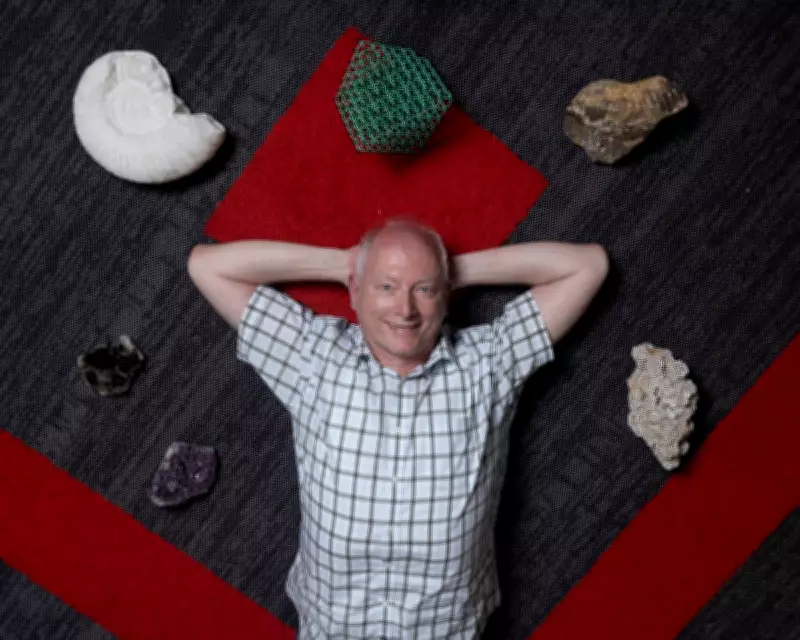
Craig Munns, now 65, has embarked on an extraordinary journey that defies conventional career timelines. After decades in electronics, computer engineering, sales, and even running his own business, Munns decided to pursue a long-held academic dream. He enrolled as a part-time student and graduated with honours in palaeontology from the University of New England in Armidale, New South Wales, at the age of 62.
A Desk Dinosaur Sparks a New Direction
Munns recalls the pivotal moment that inspired his career shift. Sitting in his study, surrounded by books and evolution charts, his eyes landed on a model Tyrannosaurus rex he had acquired years earlier. This simple figurine prompted a profound question about his future path. Despite a successful career that included tech support, adult teaching, and entrepreneurship, Munns had always regretted not obtaining a university degree.
"What am I going to do next in my life?" he wondered, setting in motion a transformation that would lead him to the world of ancient fossils and geological research.
Geoscience Australia and Fossil Discoveries
Today, Munns works at Geoscience Australia, a government agency dedicated to geoscientific research. While his primary responsibility involves monitoring mineral deposits, his true passion lies in palaeontological investigation. He is currently preparing a research paper on two drill cores extracted east of Alice Springs during the late 1990s.
These long tubes of rock have remained in storage for decades, but Munns sees them as treasure troves of biological history. "I'm interested in the animals that are in there," he explains, describing his work in biostratigraphy—the study of biological remains within different geological strata.
His methodology involves carefully sectioning the cores along planes where fossils might be visible, revealing clues about ancient ecosystems and evolutionary processes.
Invertebrates and Evolutionary Fascination
Contrary to what his desk dinosaur might suggest, Munns specializes in invertebrate palaeontology. "I'm more of an invertebrate sort of guy," he admits, with particular interest in worms, insects, and crustaceans.
During a video interview, he proudly displayed a 500-million-year-old trilobite fossil—a creature that once rolled into a defensive ball. "This one has got about 30 legs, and eyes on the top of its head," Munns described. "It lived in the mud and could see out. This is the thing with invertebrates—their body style is flexible."
This adaptability of life forms represents Munns' central fascination: "How a life form copes with certain pressures, I suppose. I mean, that's how life works."
Library Work and Personal Growth
While pursuing his degree, Munns took a position at a public library in Canberra—a significant change from his previous business career. The role exposed him to diverse community members and allowed him to develop new skills, from conducting children's rhyme sessions to assisting non-English speakers with translation services.
"I loved it," he reflects. "I'm always interested in expanding my horizons, and understanding more about the things that interest me." Despite the reduced income, Munns and his wife managed financially, valuing the experience over monetary compensation.
Overcoming Challenges and Looking Ahead
Munns' path hasn't been without obstacles. While completing his research paper, he endured multiple traumatic events including the deaths of both parents, the COVID-19 pandemic, and a bicycle accident that resulted in two broken arms.
Yet his enthusiasm remains undiminished. Looking forward, Munns hopes to transition into evolutionary palaeontology, rejecting traditional notions of retirement. "I don't understand this retirement stuff," he states. "It doesn't make any sense to me. Why would I do that? I think it's more of a cultural thing. You're expected to retire, so you retire."
Rather than guarding museum specimens, Munns wants to actively investigate evolutionary changes. His story serves as powerful testament to the possibilities of lifelong learning and career transformation at any age.