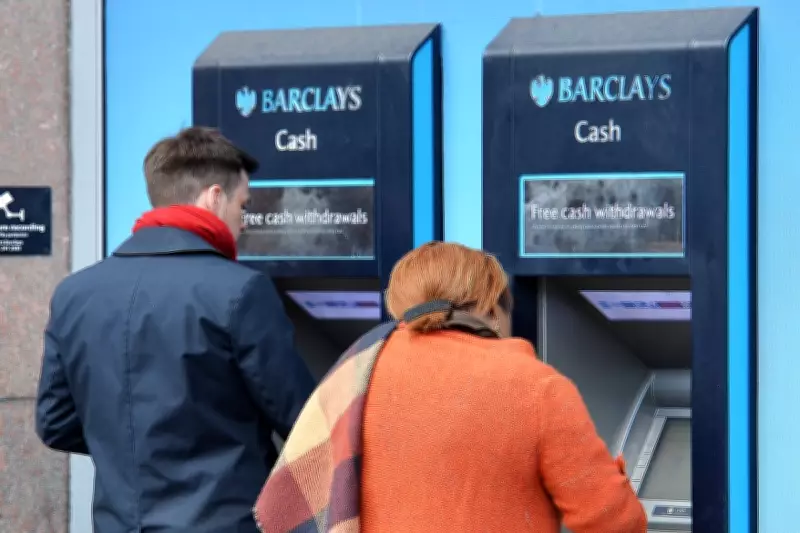
Barclays reported that consumer spending via its credit cards declined for the first time in 18 months, signaling fresh turbulence in the global economy. Total spending on Barclaycard fell 0.1% year-on-year in April, marking the first drop since November 2024, when Britons were still reeling from Labour’s first Budget.
Non-essential spending falls, essential spending rises
Consumers primarily cut back on non-essential items, which dropped 0.3%. However, essential spending grew 0.3%, driven largely by a 10.4% surge in fuel costs – the highest increase since December 2022 – as motorists stocked up amid soaring oil prices. Oil briefly breached a four-year high of $126 per barrel weeks ago, and crude prices have continued climbing due to supply disruptions from the Middle East conflict, particularly through the Strait of Hormuz, where a fifth of the world’s oil flows.
Consumer adaptation and confidence
Jack Meaning, chief UK economist at Barclays, said: “This data shows consumers are already adapting in response to the shock from the Middle East, for instance, by building up a savings buffer.” Confidence in the global economy hit a one-year low of 20%, while confidence in the UK economy edged up to 22% from 21% last month. “With uncertainty high both at home and abroad, it is unsurprising to see confidence falling,” Meaning added. “The key unknown for the UK outlook is how long this uncertainty will last. If confidence remains subdued for too long, and consumers continue to limit their spending as a result, it will be a challenge for households and businesses to weather the storm.”
Businesses warn of cost pressures
Businesses have issued stark warnings over the dramatic surge in prices following the outbreak of war in the Middle East. Wetherspoons, the UK’s best-known pub chain, said it could miss profit targets due to “substantial increases in costs,” as pubs brace for soaring energy and shipping prices linked to the Iran conflict. Meanwhile, JD Sports said it was preparing for “muted market growth” in the coming year, “shaped by a weaker spending outlook.”
Travel sector hit hard
Barclays data showed travel spending was among the hardest hit, falling 5.7% as consumers’ holiday plans were disrupted by growing fears of a jet fuel shortage. Spending on airlines dropped 8.3% in April. Heathrow Airport reported that passenger volumes fell 5% in April to 6.7 million, blaming the “ongoing impact of the Middle East conflict,” with travelers heading to that region declining by 50%.