Slovenia's coastline is one of Europe's shortest at just 29 miles (47km), stretching from Trieste to Croatia, yet it offers a wealth of experiences: unspoilt nature reserves, vibrant Venetian towns, and a burgeoning gastronomy scene. The Istrian peninsula, 90% in Croatia with smaller parts in Slovenia and Italy, provides a backdrop for this unique coastal region.
Horseback Riding Through the Dragonja Valley
Riding a salt-coloured horse through the Dragonja valley, deep in the green hills of Slovenian Istria, electric-blue dragonflies zip over the river as we gallop past olive trees and vineyards. The landscape rises steeply in grassy terraces; at the hilltop, we rein in the sweating horses to view the huge grids of solinas (salt pans), glittery and light-blue in the early morning light, elegant against the wild sea beyond.
We return to Kmetija Medljan, the farm where I'm staying, for breakfast at long communal tables under a mulberry tree: freshly laid eggs, strawberries from the garden, and homemade bread. The Kodarin family bought the land in the 1980s; today Marina, Marko, and their son Tilen run the farm. Simple rooms near the stables and rustic apartments in the old farmhouse offer peace just 10 minutes from the coast, with Marina's home cooking, especially her traditional Slovenian noodle soup, a highlight.

Sečovlje Salt Pans: History and Wildlife
Nearby, the Saltworks Museum, housed in three former salt-workers' houses, offers interactive displays and abandoned pans. Historian Prof Flavio Bonin explains that salt is still harvested by hand in the working part of the salt pans. Istrian salt is prized for its quality and whiteness; the solni cvet (salt flower) has a delicate, slightly sweet taste. The solinas are also a haven for wildlife: a black-winged stilt stalks through the pans, and snow-white egrets rise from the marshlands.
Piran: Venetian Influence and Marine Life
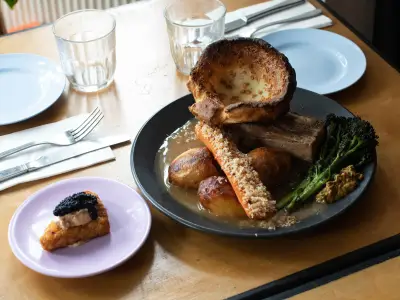
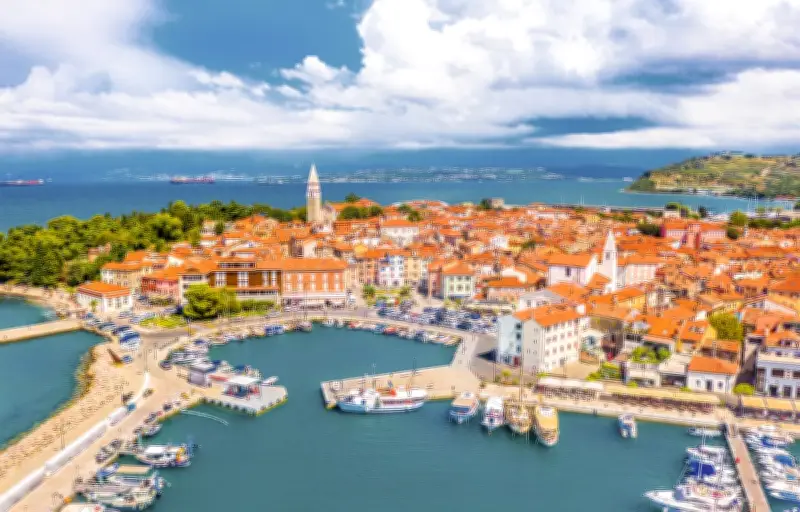
Medieval Piran, perhaps Slovenia's most beautiful seaside town, shows Venetian influence everywhere: elegant painted houses in lemon, orange, and coral, and Italian-inspired cuisine. At Rostelin, handmade pasta is a specialty, but raw scallops with thin slices of black truffle steal the show. I stay at Benečanka Casa Veneziana in Tartini Square, the finest example of Venetian gothic architecture. Legend says a 15th-century Venetian merchant built it for a beautiful Piran girl, with the inscription "Lasa pur dir" (let them talk) on the front wall.
The water around Piran is a protected marine area. I go scuba diving to spot seahorses in sea grass meadows near shore. Though seahorses prove elusive, we see other marine life, including a hairy crab wearing an orange marine sponge. People swim from the rocky waterfront with ladders into the water.
Coastal Walk to Izola and Strunjan Park
From Piran, a coastal path leads to Izola, 7 miles east, through Strunjan landscape park, passing Moon Bay, one of Slovenia's loveliest beaches. Lunch at Belvedere hotel on a breezy terrace offers excellent seafood and sweeping views to Trieste. Izola is laid-back yet vibrant. At DeGrassi hotel, I stroll to Ljubljanska Ulica, a street with artists' workshops, pink and peach houses, and colourful bunting. At a tiny museum, cultural heritage expert Gregor Benčina recounts history: Izola was a poor fishing village, and "Piran was our mortal enemy. In medieval times, a law forbade Izolans from leaving anything to people from Piran."
Ebike Tour and Local Produce
Local guide Matic Horvat takes me on an ebike tour through Šavrini hills planted with vines, olive, cherry, fig, and almond trees. We descend from Gažon to Koper, stopping for orange and ginger ice-cream. In the evening, Manzioli wine bar offers fresh rosé from local winemaker Zaro; owner Marko explains that the salt informs the minerality, giving depth of flavour. Across the square, Bujol, a favourite of Slovene chef Ana Roš, serves plump mussels and fritto misto with homemade tabasco sauce.

At the Pier of Tastes food market (monthly April-October, except July-August), Istrian producers set out wares. With tourist board's Nina Golob, I visit artisan producers: Tilen Praprotnik revives indigenous grape varieties, producing extraordinary malvasia; at Korenika & Moškon, we taste olive oils, including belica with a powerful kick. We finish at Gostilna Korte, where owner Lejla serves steak with wild asparagus sauce.
Final Morning Swim
On my final morning, I wake early and swim in the warm sea past the lighthouse as the sun rises. Summertime on the Slovenian Riviera may not be big, but it hits the spot for a different kind of seaside break.
The trip was provided by the Slovenia tourist board, Visit Izola and Portorož & Piran. Kmetija Medljan has apartments sleeping up to 4 from €115 B&B (3 nights minimum); Benečanka Casa Veneziana in Piran has rooms from €165, including breakfast at a cafe; DeGrassi hotel in Izola has rooms from €130 B&B (2 nights minimum). Laura Coffey's book, Enchanted Islands: Travels Through Myth & Magic, Love & Loss, is published by Summersdale at £10.99.