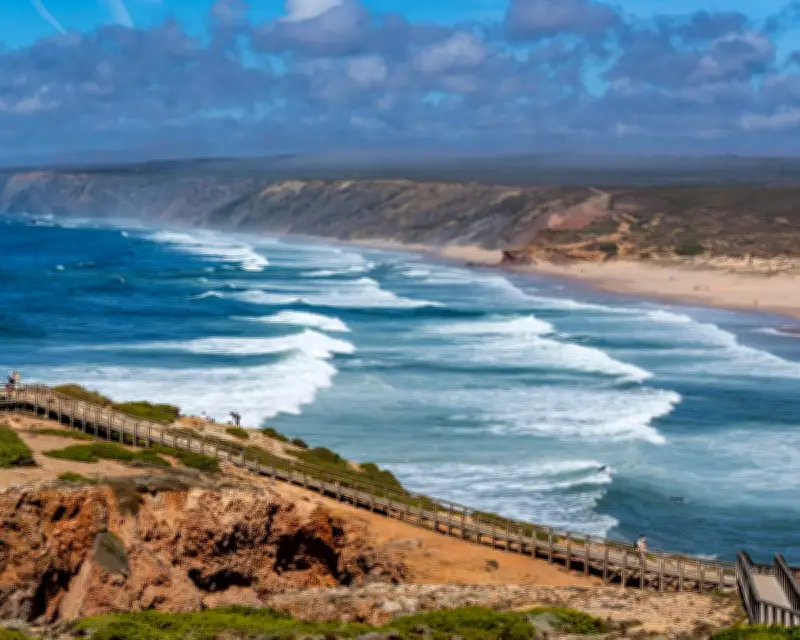
Hiking Portugal's Fishermen's Trail offers a wild coastal experience far from the crowded Algarve resorts. The fluorescent green gaiters seemed ridiculous at first but proved essential while plodding across a wide, crescent-shaped beach under a high sun. Slivers of light flickered through thick sea fog as 6ft waves crashed against towering limestone cliffs.
The Fishermen's Trail: From Lagos to São Torpes
The Fishermen's Trail, part of the Rota Vicentina, is a 140-mile (226km) trek from Lagos to São Torpes in Alentejo. Originally carved by fishers to reach remote fishing spots along the Atlantic, it now traverses cliffs leading to wild beaches. The Rota Vicentina spans 466 miles across Portugal for hiking and cycling.
Starting in Salema, a fishing village 25 minutes from Lagos, the trail offers a glimpse of the Algarve before mass tourism. Over 20 million tourists visited the Algarve last year, with 5.7 million from the UK, according to reports. Salema remains sedate, with cobbled streets, traditional cottages, and family-run seafood restaurants.

Day One: Salema to Sagres
After pastéis de nata and bica at Pastelaria Solmar, the hike follows a flat, clay-coloured coastal path marked by blue-and-green striped logos. Keeping the sea to the left, navigation is easy with views of the Atlantic glinting in the summer sun. Steep rocky embankments require scrambling, but rewards include serene beaches like Barriga beach near Vila do Bispo, which attract only the hardiest beach-goers.
Over nearly 12 miles, the group saw hardly another soul. Arriving in Sagres, a seafaring town where Henry the Navigator spent his final years, they stayed at Alojamento Mareta, a cliffside apartment with sea views for about £78 per night. Dinner at Cafe Conchinha featured piri-piri chicken and local wine, avoiding the surfers at Three Little Birds.
Day Two: Sagres to Vila do Bispo
Early morning included a meditation session on empty Mareta beach followed by a plunge into the icy sea. Yoga and breakfast at Laundry Lounge, a boho laundrette-cum-brunch spot, preceded the hike. At Cabo de São Vicente, mainland Europe's most southwesterly point, a 19th-century lighthouse sits on a rocky headland. Known as the "end of the world," the spot features craggy cliffs bathed in golden light, considered sacred by Greeks and Romans.
Inland, the trail crosses flat arid shrubland with purple thistles. After 12 miles, Vila do Bispo appears like a spaghetti western town, with low-rise pastel houses and dusty cars under purple wisteria. Dinner at Pisco offered vegetarian Mediterranean dishes, sourdough pizzas, and organic wines.
Day Three: To Carrapateira
Returning to the coast, the trail reaches Praia da Pena Furada, a windswept beach with tall sea stacks battered by waves. The atmosphere is silent except for the hissing sea. At Bordeira beach near Carrapateira, the scene shifts to busy Portuguese holidaymakers and surfers. A burger at hillside beach bar Amadobar provided a deserved break.
Accommodation at Carrapateira Lodge (about £52 per night) sits in a whitewashed town with restaurants and surf shops. Dinner at O Pontal included tender octopus, roasted salt cod, and beef entrecote.
Final Day: Arrival at Arrifana
The final destination, Arrifana in Aljezur municipality, is popular with surfers but relatively low key. A single lane road leads to a postcard-worthy beach with bars and restaurants. The group ended the trip watching sunset at Café Restaurante Sol E Mar, a no-frills bar overlooking the beach, which was busier than previous spots but not as crowded as other Algarve hotspots. The hike covered remote beaches, towering cliffs, and tasty pitstops, revealing the Algarve's wild side.